

By Deborah Coker
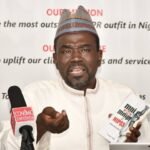
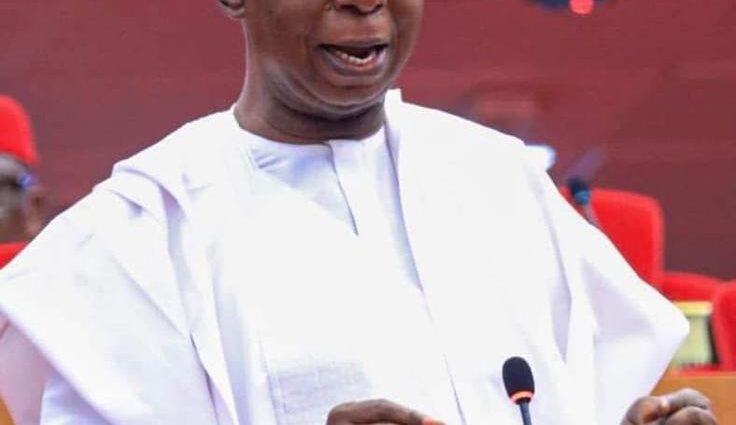
Sen. Ned Nwoko (APC-Delta) has donated transformers to five communities in Delta North Senatorial District in his bid to ensure power supply across the district.
Nwoko, in an interview with the News Agency of Nigeria (NAN) Abuja on Thursday, said that the transformers were expected to improve electricity access, support businesses and enhance the quality of life of residents.
He said that a total of 15 transformers would be delivered and installed in phases across communities in the district, adding that the five already delivered were the first batch.
According to him, the delivered transformers include one 11\500 KVA and four 33/500 KVA, adding that they will be installed at Airport community and Akwuose communities in Asaba, Oshimili South Local Government Area.
Others, he said, would be installed at Nsukwa community in Aniocha South Local Government Area as well as Okpanam and Illah communities, both in Aniocha North Local Government Area.
The lawmaker, who is the Senate Committee Chairman on Reparation and Repatriations, also said that he had facilitated the construction of three strategic roads with drainage systems at Obiaruku in Ukwuani Local Government Area to ensure that more communities felt the impact of democracy and good representation.
“These roads include Uzorji Street, Osamezu Street and Osondu Street. Contractors have already been mobilised and work is currently ongoing there.
“I have also just constructed a solar-powered borehole for my Nkwu-nzu people and another industrial borehole for my Kwale people in Ndokwa West Local Government Area. The boreholes, as we speak, have started reticulating.
“I have also ensured land reclamation in Aboh,’’ he said.
The senator assured constituents in the senatorial district that more projects and developmental interventions would be done in the next phase.
Nwoko also said that his bill “Bill for an Act to Establish the National Agency for Malaria Elimination and for Related Matters, 2025 (SB.172),” was passed by the senate on Wednesday after passing the third reading.
He described the passage of the bill as a landmark step in Nigeria’s fight against malaria, expressing confidence that the country would finally move from managing the disease to eliminating it.
Nwoko also said that the development marked a historic turning point in the battle against one of Nigeria’s most persistent public health challenges.
According to him, malaria elimination is not only possible but had been achieved by several countries around the world.
“Malaria has been eliminated in several countries around the world. It is achievable. Nigeria can end malaria, and Africa can end malaria. What is needed is focus, coordination and political will.
”The bill seeks to create a dedicated institution to coordinate a comprehensive, data-driven and results-oriented national response to malaria.
“The legislation, which passed second reading on May 15, 2025, was subsequently referred to the Senate Committee on Health (Secondary and Tertiary) for further scrutiny before receiving final approval,’’ he said.
The senator said that the proposed agency would provide the institutional framework required for driving prevention, environmental management, research, surveillance, public awareness campaigns and elimination strategies across the country.
He also said that the senate’s approval represented the culmination of years of advocacy and personal commitment to the cause of malaria eradication in Africa.
Recalling his efforts to draw global attention to the disease, Nwoko said he undertook a symbolic expedition to Antarctica nearly two decades ago and subsequently drafted similar legislation as a private citizen.
“Although the proposal failed to gain legislative support at that time, I remained committed to the vision and revived it after my election into the senate.
”Malaria has continued to claim thousands of lives across Africa, particularly among children and vulnerable groups, in spite of being largely preventable and treatable.
”Many people have come to accept malaria as a normal part of life. It should not be. We must move beyond treatment to outright elimination,” he said.(NAN)(www.nannews.ng)
Edited by ‘Wale Sadeeq