


By Rukayat Moisemhe / Aderonke Ojediran
Gov. Babajide Sanwo-Olu of Lagos State says predictable policies, functional infrastructure and efficient public services are vital to attracting investment and boosting the state’s global competitiveness in the next 30 years.
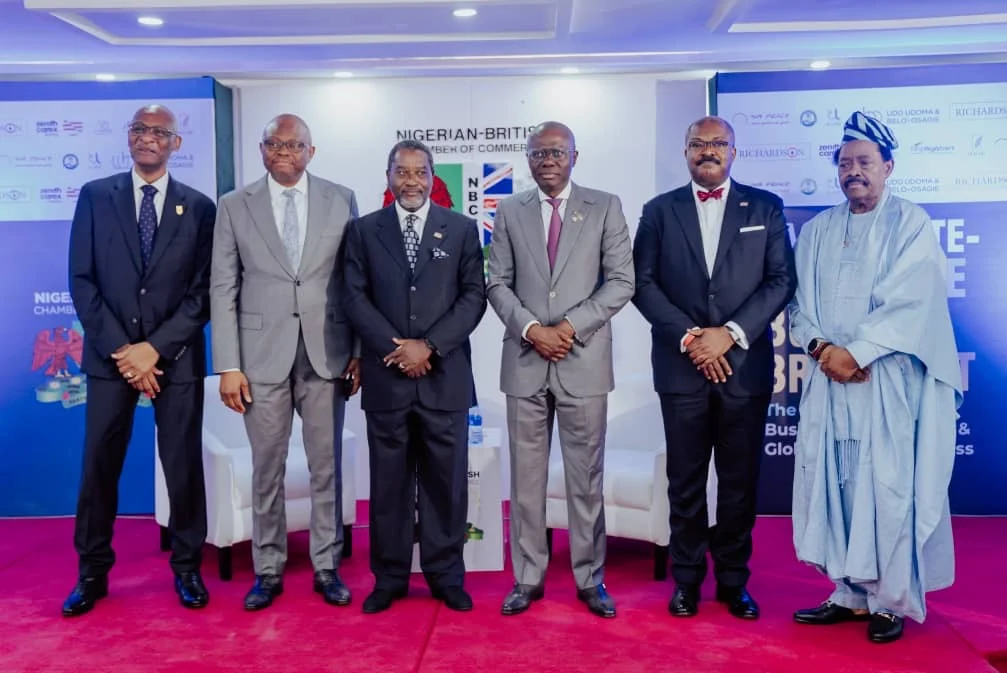
Sanwo-Olu said this on Wednesday in Lagos at the 2026 Nigerian-British Chamber of Commerce (NBCC) Meet the Governor Series 2.0, with the theme, “The Future of Lagos: Business, Investment and Global Competitiveness”.
He said investors required more than market opportunities, stressing the need for an enabling business environment, reliable infrastructure and institutions capable of meeting their obligations.
“Investments require confidence. They want infrastructure that functions, policies that remain predictable and institutions that will honour their obligations,” he said.
The governor described Lagos as a national economic asset, noting that its commercial, financial, manufacturing, technology and maritime activities had significant implications for Nigeria’s economic growth.
He said that, although Lagos occupied about 0.45 per cent of Nigeria’s landmass, it attracted between 60 per cent and 70 per cent of foreign direct investment in some years.
According to him, the state’s large consumer market and strategic position as a financial, commercial, manufacturing, technology and maritime hub makes it a major gateway for international trade and investment.
He said that improvements in Lagos’ infrastructure and business environment would generate benefits beyond the state.
“We seek more than capital alone. We want partnerships that bring expertise, technology, skills, local enterprise participation and long-term value.
“We want investments that create jobs, strengthen supply chains, support exports and improve public services,” he said.
Sanwo-Olu said that the state had developed a 30-year development blueprint, the Lagos State Development Plan 2052, to transform Lagos into a globally competitive economic and financial hub.
He said that the plan contained more than 447 initiatives across 21 strategic sectors, focusing on economic growth, human development, modern infrastructure and effective governance.
The governor identified healthcare, energy, manufacturing, technology, logistics and maritime trade as sectors offering significant investment opportunities.
Sanwo-Olu said that the government was investing in educational facilities and healthcare infrastructure, including specialised hospitals, to improve access to services and strengthen human capital.
He called for stronger collaboration between government and the private sector to mobilise the capital, expertise and technology needed to implement the state’s development plans.
The governor said that NBCC was well positioned to facilitate partnerships between Nigerian and British businesses by connecting credible investors with viable projects.
‘’NBCC can facilitate partnerships by promoting technology transfer and providing feedback on regulatory challenges, ‘’ the governor said.
Earlier, President of NBCC, Abimbola Olashore said the chamber’s Meet the Governor Series was designed to promote direct engagement between government and business leaders.
Olashore said that the series was designed to also identify practical opportunities for private-sector participation.
The NBCC boss described Lagos as a major centre for financial services, trade, technology, manufacturing, real estate, logistics and professional services.
‘’The concentration of businesses, entrepreneurial talent and financial institutions, alongside access to local and international markets, gives Lagos a distinctive position in Nigeria’s economy and the wider African business environment, ‘’ he said.
He said, however, that sustaining the position required continuous investment, innovation, efficient infrastructure and an enabling environment for businesses to operate and expand.
Olashore identified predictable policies, effective regulation and access to finance as important to attracting investments and strengthening Lagos’ global competitiveness.
He said that manufacturing, technology, financial services, real estate, trade and logistics offered opportunities for investment, innovation and employment generation.
‘’Public-private partnerships can mobilise the capital and expertise required to support infrastructure development and economic growth.
‘’Also, stronger cooperation between Nigerian and British businesses can promote trade, technology transfer and long-term investment. (NAN)
Edited by Esenvosa Izah

Comments