


By Funmilayo Adeyemi
Stakeholders have urged students to report bullying rather than remain silent, warning that failure to speak up fuels a culture that undermines learning, mental health and school safety.
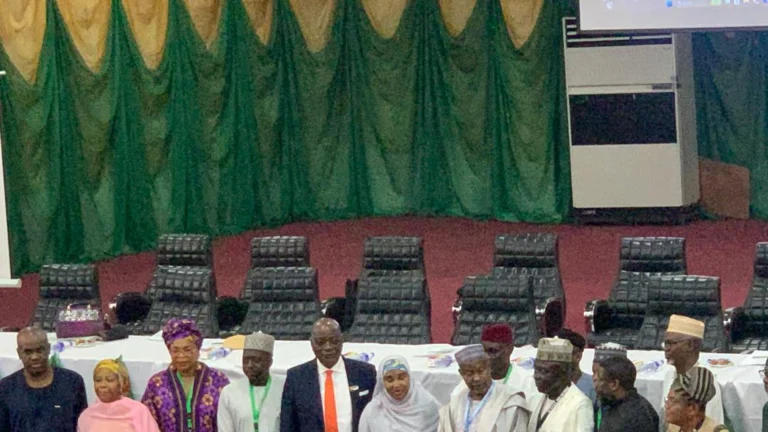
They gave the charge on Wednesday in Abuja during a one-day sensitisation workshop for students and teachers on the National Policy on Anti-Bullying.
The News Agency of Nigeria (NAN) reports that the workshop was organised by the Federal Ministry of Education in collaboration with the Universal Basic Education Commission (UBEC).
The workshop formed part of ongoing efforts by the ministry and UBEC to strengthen awareness and implementation of the National Policy on Anti-Bullying across schools in the country.
The Executive Secretary, UBEC, Dr Aisha Garba, said students who witness bullying should not see it as someone else’s problem, stressing that reporting incidents promptly could prevent lasting psychological and academic consequences.
Garba was represented by the Deputy Executive Secretary of UBEC, Olajuwon Rasaq.
“As we are aware, bullying is an informed, physical, verbal, social and digital remains of serious concern in our schools.
“It does not only affect the academic performance but also undermine the extreme and negative impacts on the mental health and overall well-being of our students.
“No child should feel unsafe, unsecured, unwanted and environment-designed to emotionally and in their personal growth. On this note, that the ministry developed a national policy on anti-bullying.
“This policy provides clear guidelines and practical steps for preventing, identifying and addressing bullying in our educational institutions. It cuts across from primary school to university.
“If you see something, say something. You can report without being noticed. Walk to your teacher or head teacher and report what is happening,” he said.
According to her, many victims remain silent out of fear of retaliation after school hours, leaving them emotionally traumatised and unable to concentrate in class.
She said bullying often causes fear, anxiety and withdrawal, making affected students reluctant to answer questions or participate in classroom activities despite knowing the correct answers.
She said the National Anti-Bullying Policy provided practical guidelines for preventing, identifying and addressing bullying across all levels of education, from primary schools to universities.
She urged teachers and school leaders to create safe learning environments where students could report cases confidentially without fear of victimisation.
Garba also advised parents to reinforce moral values at home, noting that family upbringing remained critical to shaping children’s behaviour.
She expressed concern over the erosion of societal values, attributing part of the trend to negative influences from social media and foreign lifestyles copied by young people.
Also speaking, the Director-General, African Principal Conference Initiative, Mr Ayodele Joseph, called for regular tracking and evaluation of the National Anti-Bullying Policy to ensure its effective implementation in schools across the country.
Joseph said the success of the anti-bullying policy would depend on continuous monitoring rather than mere awareness campaigns.
He said the organisation had been promoting safe learning environments since 2019 through seminars and symposiums on anti-bullying, ahead of the ministry’s nationwide sensitisation programme.
According to him, the organisation conducted a nationwide baseline study on bullying and violence in Nigerian schools in 2023, which would serve as a benchmark for assessing progress.
“This is actually the first time that, at the level of the ministry, a session has been organised on the anti-bullying policy.
“At our own level, since 2019, we have been organising seminars and symposiums on anti-bullying initiatives.”
“In 2023, we conducted a baseline study on bullying and violence in Nigerian schools. By March next year, we will carry out a tracking study to assess how effectively schools are implementing anti-bullying policies.”
Joseph said schools must domesticate the national policy by ensuring that teachers, students and parents understood what constituted bullying and how to respond to it.
The Keynote Speaker, Ayotola Ilori, said bullying affected not only victims but also perpetrators, bystanders, families and the wider school community.
Ilori, who is also the Executive Director, Sustainable Solution for Youth and Vulnerable Initiative (SSYVI), identified verbal, physical, social and cyberbullying as the major forms of bullying.
She urged students, teachers and the general public to become “upstanders” against bullying instead of remaining silent.
She described bullying as a growing generational problem fuelled by a cycle in which victims later become perpetrators.
“We need to have these difficult conversations because bullying is becoming generational. Some children believe that when they become seniors, it will be their turn to bully others.
“We need to be upstanders, not bystanders. Keeping quiet when someone is being bullied is part of the problem.”
Ilori commended the Federal Ministry of Education and UBEC for organising the workshop and called for greater collaboration among government agencies, civil society organisations, development partners, the media and the private sector to safeguard schools.
The World Bank Education Team, led by Elia Elegbe, commended the ministry for its commitment to setting up policies and guidelines to protect young Nigerians from the act of bullying. (NAN)(www.nannews.ng)
Edited by Deji Abdulwahab

Comments