


By Martha Agas
Stakeholders have urged Nigeria to leverage its energy and mineral resources to drive economic diversification, industrialisation and inclusive development through a just energy transition.
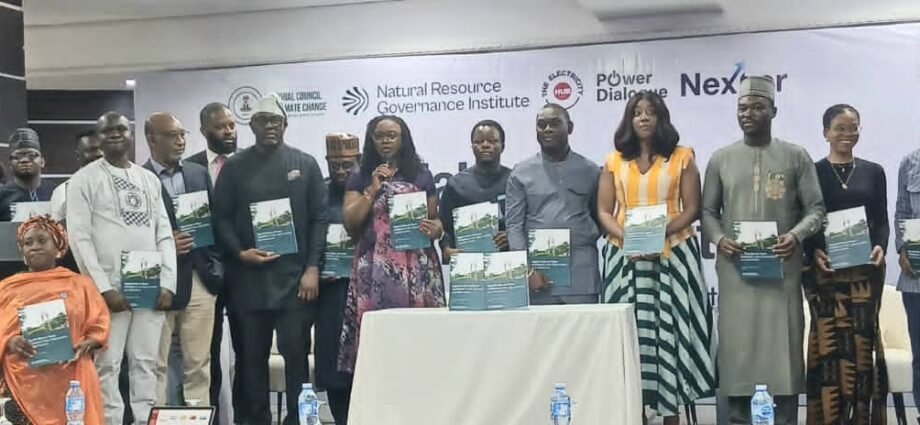
They made the call on Monday in Abuja at the National Dialogue on Nigeria’s Energy Transition themed ‘Exploring Energy and Economic Diversification Pathways’.
The dialogue was convened by the Natural Resource Governance Institute (NRGI) in partnership with the National Council on Climate Change, Nextier and Electricity Hub.
Speaking at the event, NRGI Country Manager, Tengi Okoli, said Nigeria stood at a defining moment in its development journey amid growing energy demand and global decarbonisation efforts.
According to her, in spite of possessing over 200 trillion cubic feet of proven gas reserves and vast critical mineral deposits, Nigeria continues to face severe electricity access challenges.
She said the country’s abundant natural resources should be harnessed to deliver affordable electricity, create jobs and achieve broad-based prosperity.
Okoli said growing global demand for renewable energy technologies and critical minerals presented Nigeria with opportunities to boost exports, industrialisation and employment.
Okoli said the dialogue aims to review progress made since Nigeria launched its Energy Transition Plan in 2022 and identify practical pathways for future reforms.
She said the dialogue provided an opportunity for stakeholders to propose practical measures to position Nigeria for a rapidly evolving global energy transition
“Nigeria possesses significant mineral potential that, if managed effectively, could contribute to exports, public revenues, industrial development and jobs.
“These realities are not new, but they make today’s conversation not simply about energy conversation, but fundamentally a development conversation. The question before Nigeria is not whether we have resources, we have the developments.
“The question is how we use those resources to achieve broad-based prosperity,” she said.
Also speaking, NRGI Deputy Director for Africa, Dr Ibrahim Aidara, said the energy transition should be viewed as an economic transformation agenda rather than merely a climate response.
Aidara said African countries must use natural resources to reduce energy poverty, strengthen domestic industries and build resilient economies.
According to him, Nigeria’s oil, gas, renewable energy resources and critical minerals provide a strong foundation for industrial growth and economic diversification.
He said the country must convert its resource wealth into productive assets, quality jobs and sustainable economic opportunities for citizens.
He added that NRGI had supported reforms to strengthen transparency, accountability and evidence-based policymaking in Nigeria’s extractive sector over the past two decades.
Delivering a goodwill message, a representative of host communities, Chief Zion Kientei urged policymakers to place host communities at the centre of the energy transition process.
Kientei, the Chairman, Council of chiefs. Lasukugbene community in Southern Ijaw in Bayelsa, said communities that had borne the environmental and social impacts of resource extraction should be priortised as beneficiaries of the transition.
He also called for greater investment in alternative livelihoods, skills development and decentralised renewable energy to tackle poverty in resource-producing communities.
The community leader advocated stronger community participation in the governance of Nigeria’s natural and renewable resources.
The News Agency of Nigeria (NAN) reports that NRGI also unveiled its report on Nigeria’s Gas-to-Power Ambitions: Limits, Opportunities and Alternatives to mark its 20th anniversary.
The report recommends expanding renewable energy, particularly off-grid and small-scale solar, to complement gas, improve affordable electricity access, reduce reliance on polluting generators and drive a sustainable, inclusive energy transition through stronger policies and increased investment.(NAN)(www.nannews.ng)
Edited by Yakubu Uba