


By Joan Odafe
Goge Africa and stakeholders in diplomacy, government, and the creative sector have urged that culture be used as a strategic tool for economic growth, diplomacy, and foreign policy, not just entertainment.
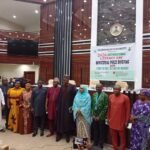
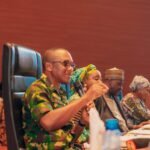
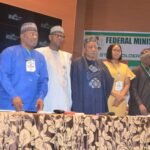
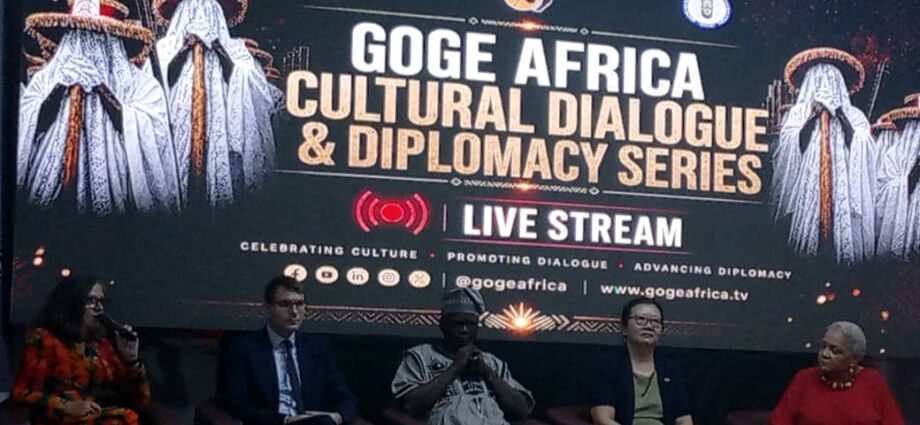
The stakeholders made the call at the inauguration of the Goge Africa Cultural Dialogue and Diplomacy Series 2026 on Thursday in Lagos.
The News Agency of Nigeria (NAN) reports that the event was organised by Goge Africa in collaboration with the Nigerian Institute of International Affairs (NIIA) and the Centre for Black and African Arts and Civilisation (CBAAC).
The theme of the event is ‘Eyo, Culture and Soft Power: Driving Diplomacy, Integration and Economic Growth’.
The stakeholders said culture was now a leading instrument of soft power that could strengthen international relations, attract investment, boost tourism, foster peace, and advance regional integration.
They said Nigeria and Africa could strengthen global influence and unlock new opportunities by harnessing their cultural heritage.
Opening the dialogue, Isaac Moses, Chief Executive Officer and Co-Founder of Goge Africa, said the initiative was created to place culture at the centre of public policy rather than leave it as an occasional spectacle.
“We strongly believe that after traversing the length and breadth of Africa, we have seen all the cultures we are able to see.
“So, it’s about time we added culture to policy level, not just for entertainment, and then it’s done thereafter,” he said.
Also speaking, Nneka Isaac-Moses, Managing Director and Co-Founder of Goge Africa, recounted the organisation’s journey since 1999.
She said many corporate organisations initially declined to support the platform because they viewed culture as “fetish”.
She said the decision to unveil the dialogue series in Lagos reflected the city’s place as the birthplace of Goge Africa and underscored the need to institutionalise cultural conversations through government policy.
“We realised that whatever they are doing today will not be washed out because anything that enters a policy document becomes actually truly sustainable,” she said.
Director-General of NIIA, Prof. Eghosa Osaghae, said diplomacy was no longer confined to government-to-government engagements.
Osaghae, who was represented by the Director of Research, NIIA, Prof. Chinasa Ohiri, noted that culture had emerged as one of the most powerful tools for fostering dialogue, strengthening partnerships and advancing Nigeria’s foreign policy objectives.
He said Nigeria’s rich cultural assets – from Nollywood and Afrobeats to festivals, literature, fashion and cuisine – continued to enhance the country’s soft power and global image.
Dr Aisha Augie, Director-General of CBAAC, said culture remained one of the strongest platforms for uniting people across ethnic, religious, and national boundaries amid growing global divisions.
Augie said preparations for the 50th anniversary of FESTAC ’77 in 2027 would provide another opportunity to reconnect Africans on the continent with the diaspora.
She urged stakeholders to ensure the dialogue generated policies that would strengthen cultural exchange, heritage preservation and international cooperation.
Director-General of the Nigerian Tourism Development Authority, Dr Olayiwola Awakan, said storytelling remained Nigeria’s greatest tourism asset and should be deployed to reshape global perceptions of the country.
Awakan announced plans to launch Nigeria’s first tourism-dedicated streaming platform to showcase festivals, heritage sites and cultural experiences.
He added that authentic storytelling would help counter negative narratives while attracting tourists, investors and international partnerships.
Also, Obi Asika, Director-General of the National Council for Arts and Culture, said Nigeria possessed enormous cultural wealth that could only realise its economic potential if properly protected through intellectual property rights.
Asika said the country’s new intellectual property framework would allow creators to use their IP as bankable assets.
He added that it would also encourage Nigerians to recognise the value in their culture, rather than let others commercialise African stories.
The event also featured a diplomatic representatives’ question-and-answer session with panellists including Jetta Bjerrum, Danish Consul General to Nigeria; Maxime Bengaly, Consul General of Burkina Faso in Lagos; Consul General of the People’s Republic of China in Lagos, Yan Yuqing; and Simon Field, Deputy Head of British Mission in Lagos.
Field described diplomacy as a people-to-people business, adding that understanding culture helped diplomats appreciate people’s histories, values and perspectives.
“Diplomacy is a contact sport. The only way that you can really go out and do diplomacy is by going out and meeting people, going out and understanding people, going out and listening to people,” he said.
Bengaly said culture should not be confined to festivals or ceremonial occasions but embraced as a way of life capable of strengthening African identity and unity.
“Culture is not a matter of weekend or free day or festival.
“It should be something that we have like daily life property or principle in our heart first and in our behaviour,” he said.
On his part, Yuqing said dialogue among civilisations was essential to peaceful coexistence, adding that China would continue to expand cultural, educational and people-to-people exchanges with Nigeria.
Bjerrum described culture as the cohesive that binds societies together, adding that Nigeria’s creativity, resilience and vibrant cultural industries have become important assets for innovation, trade and economic diplomacy.
The stakeholders agreed that Nigeria must move beyond celebrating culture as heritage alone and begin deploying it deliberately as a strategic pillar of diplomacy, economic growth, tourism, continental integration and sustainable national development.
NAN also reports that a documentary screened at the event showcased the historical significance of the Eyo Festival.
It described the festival as one of the highest traditional honours in Lagos.
It also illustrated how the centuries-old tradition supports artisans, traders, transport operators, hospitality businesses and tourism, reinforcing the narrative that culture is both a heritage asset and an economic driver.(NAN) (www.nannews.ng)
Edited by Folasade Adeniran