


By Eniola Elewude
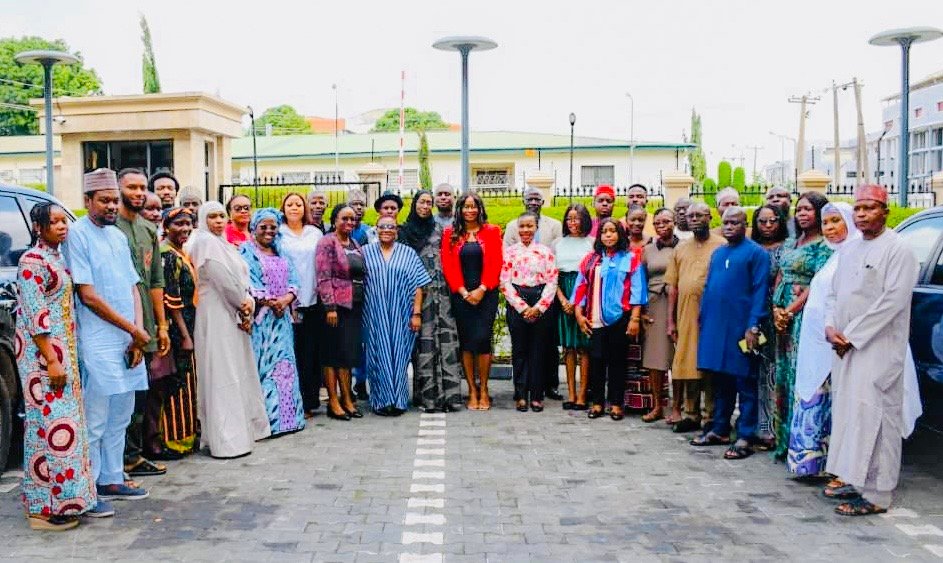
The Sustainable Urban and Rural Water Supply, Sanitation and Hygiene (SURWASH) Programme has trained communication officers on strategic communication, impact storytelling, ethical reporting and digital publishing.
The two-day workshop focused on story development, humanising data, digital content creation and managing the programme’s Blog Content Management System (CMS).
The News Agency of Nigeria (NAN) reports that the World Bank-funded programme aims to strengthen sector policies and institutions to improve water and sanitation services in urban, small-town and rural areas.
SURWASH Programme Coordinator, Mr Abdulhamid Gwaram, represented by Mr David Oyedokun, on Wednesday declared the workshop open in Abuja and said communication officers were key to documenting programme impacts.
He said communication should go beyond infrastructure delivery by highlighting human experiences, lessons, innovations and successes from SURWASH interventions.
Gwaram said the training would equip participants with skills in storytelling, content development, digital publishing and content management.
Awa Diagne, SURWASH Task Team Lead at the World Bank, said the workshop would strengthen officers’ capacity to identify impactful stories, develop engaging content and publish articles through the CMS.
The first day focused on “The Art and Craft of Storytelling,” with sessions on ethical storytelling, finding story angles, humanising data and writing for digital audiences.
Mrs Olufunke Olufon of Iwa Consulting spoke on “The Anatomy of a Good Digital Story: Development Story Arc, Structure and Frameworks.”
She said strong digital stories required clear structures connecting people, challenges, interventions and outcomes to effectively communicate impact.
Mr Chuka Agu, a World Bank communications specialist, spoke on “Consent and Ethical Storytelling in Development Communication.”
Agu stressed the need for informed consent before publishing photographs or personal information of beneficiaries and community members.
He said consent was required regardless of whether images were taken with professional cameras or mobile phones.
Agu cautioned against portraying communities only through poverty and vulnerability, urging communicators to highlight challenges, resilience, solutions and impact.
“Good development communication is not just about documenting problems; it is about telling truthful, respectful and human-centred stories,” he said.
Speaking on “Moving Beyond Dry Reporting: Humanising Data and Complex Technical News,” Mrs Tosin Kolade, NAN Features Editor, said development communication went beyond information sharing.
She said it involved creating understanding, building trust, influencing behaviour and supporting sustainable change.
“A communication officer is not only a reporter of activities but a storyteller of impact,” Kolade said.
She urged participants to combine data with human experiences, noting that data provided credibility while people gave meaning to development stories.
Mr Nneotabase Egbe, a communications specialist, spoke on “Identifying the Hook and Writing for Impact.”
Egbe stressed the need for clarity in public communication, saying impactful messages should be relevant, emotional and active.
He urged participants to create content that connects with audiences rather than relying on technical language.
Mr Innocent Agboma of TakeOut Media said effective storytelling required more than statistics, stressing the need to connect data with human experiences.
“If you have a great story within the data that you collect, but there is no arc that keeps people engaged, all you have are numbers,” he said.
He urged communication officers to prioritise accuracy, obtain consent before publishing, protect vulnerable people and uphold ethical standards.
Also, Mrs Maryam Laushi Da-Silva and Mr Patrick Schindler spoke on strategic communication and stakeholder engagement in programme delivery.
Laushi-Da-Silva stressed the need for organisations to strategically tell their stories to capture audiences, communicate impact and achieve desired results.
She said effective storytelling required clear messaging and a deliberate approach to reaching target audiences.
Schindler said stakeholder engagement was a powerful enabler for improved WASH service delivery, promoting collaboration, institutional strengthening and sustainable outcomes.
He emphasised the need to build stronger communication channels among stakeholders, including vulnerable communities, to ensure that no one was left behind.
Schindler cited Sabesp, Brazil, as an example of how effective stakeholder engagement could attract global support and strengthen institutional performance.
The Co-Task Team Lead, Mrs Judith Warmate, in her closing remarks, appreciated the commitment and determination of state communication officers throughout the two-day workshop.
She urged them to develop impactful stories that would enrich the SURWASH Newsletter and enhance visibility of the programme’s interventions.
The workshop featured practical sessions on story development, lead writing, peer reviews and coaching.
Participants were expected to produce human-interest stories highlighting SURWASH interventions and their impact on communities.(NAN)
SURWASH equips communication officers with storytelling skills

This training was great, the hand-on practical lessons were worthwhile.