


By Adesewa George/Grant Onyeke
WaterAid Nigeria has urged the Federal Government to sustain investment in water supply and handwashing facilities to strengthen preparedness against infectious disease outbreaks.
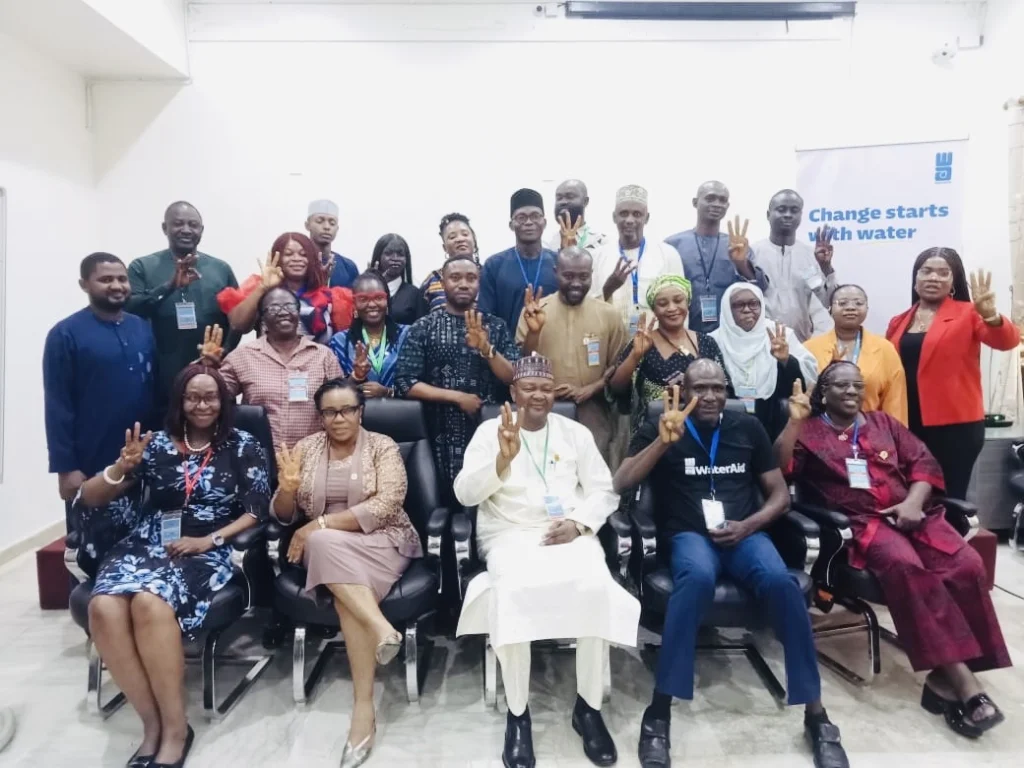
The Country Director of WaterAid Nigeria, Ms Evelyn Mere, made the call on Friday in Abuja at a roundtable on handwashing for effective infection prevention and control of Ebola, diphtheria and other communicable diseases.
Mere said handwashing with soap and running water remained a critical defence against infections, but awareness campaigns alone could not guarantee sustained hygiene practices.
Citing the 2019 WASH National Outcome Routine Mapping (WASHNORM), she said although 81 per cent of household heads knew at least two critical times for handwashing, only 10 per cent demonstrated proper handwashing with soap under running water.
She said only 16 per cent of households had access to basic hygiene services, while 14 per cent of schools had basic water and sanitation services.
According to her, only seven per cent of healthcare facilities and 14 per cent of markets and motor parks had access to basic water and sanitation services.
Mere said Nigeria’s experiences during the Ebola outbreak in 2014 and COVID-19 pandemic in 2020 exposed gaps in water and hygiene infrastructure, adding that handwashing facilities were often abandoned after outbreaks subsided.
She said Nigeria had recorded more than 10,000 confirmed diphtheria cases and over 65,000 suspected cholera cases across 35 states in 2026, while a confirmed Ebola case in Abuja in October had heightened public health concerns.
She regretted that the National Roadmap to Hand Hygiene for All (2021–2025), launched in 2022, was neither costed nor implemented before its target period elapsed.
Mere said the roundtable, organised in partnership with the World Health Organisation (WHO) and the Federal Ministry of Water Resources and Sanitation, aimed to mobilise stakeholders towards sustainable investment in hand hygiene.
Also speaking, Mr Habu Jamilu, Director, Water Quality Control and Sanitation, Federal Ministry of Water Resources and Sanitation, said sustained handwashing required reliable water supplies, functional facilities, adequate funding and regular maintenance.
He called for improved WASH infrastructure in schools, healthcare facilities, markets and motor parks, as well as stronger community participation and coordination among the three tiers of government.
Jamilu urged stakeholders to review the national hand hygiene roadmap and incorporate its priorities into the next planning cycle, stressing the need to consider women, girls, children and persons with disabilities in WASH interventions.
Similarly, Dr Muzzammil Gadanya, Infection Prevention and Control (IPC) Pillar Lead for Ebola Virus Disease at the Nigeria Centre for Disease Control and Prevention (NCDC), said average hand hygiene compliance among healthcare workers stood at 26 per cent.
Gadanya attributed the low compliance largely to inadequate WASH infrastructure and shortages of essential supplies, rather than workers’ negligence alone.
He said 33 per cent of healthcare facilities lacked basic drinking water, while 54 per cent lacked basic sanitation.
He urged government and development partners to prioritise infrastructure improvements alongside behavioural change, adding that healthcare workers should observe the five critical moments for hand hygiene to prevent infections.
Also, Mrs Kogbara Ayaba, Chief Scientific Officer and Deputy Director, Hygiene Promotion, Federal Ministry of Water Resources and Sanitation, called for an end to Nigeria’s reactive approach to disease outbreaks.
Ayaba said only seven per cent of healthcare facilities had complete basic water and sanitation services, while 40 per cent of Nigerians still practised open defecation.
She regretted that handwashing facilities installed during the COVID-19 pandemic were neglected after the immediate threat subsided.
“Knowing is not doing,” she said, calling for predictable funding, better coordination among government agencies and adequate provisions for routine maintenance of WASH facilities.
Ayaba also advocated climate-resilient infrastructure and greater community participation to ensure sustainable access to water and sanitation services.
“Nigeria must move from counting facilities to guaranteeing reliable, inclusive, climate-resilient facilities,” she said.
The roundtable was organised to promote handwashing as an integral part of Nigeria’s pandemic preparedness and public health strategy. (NAN)
Edited by Tosin Kolade
Comments