


By Emmanuel Oloniruha
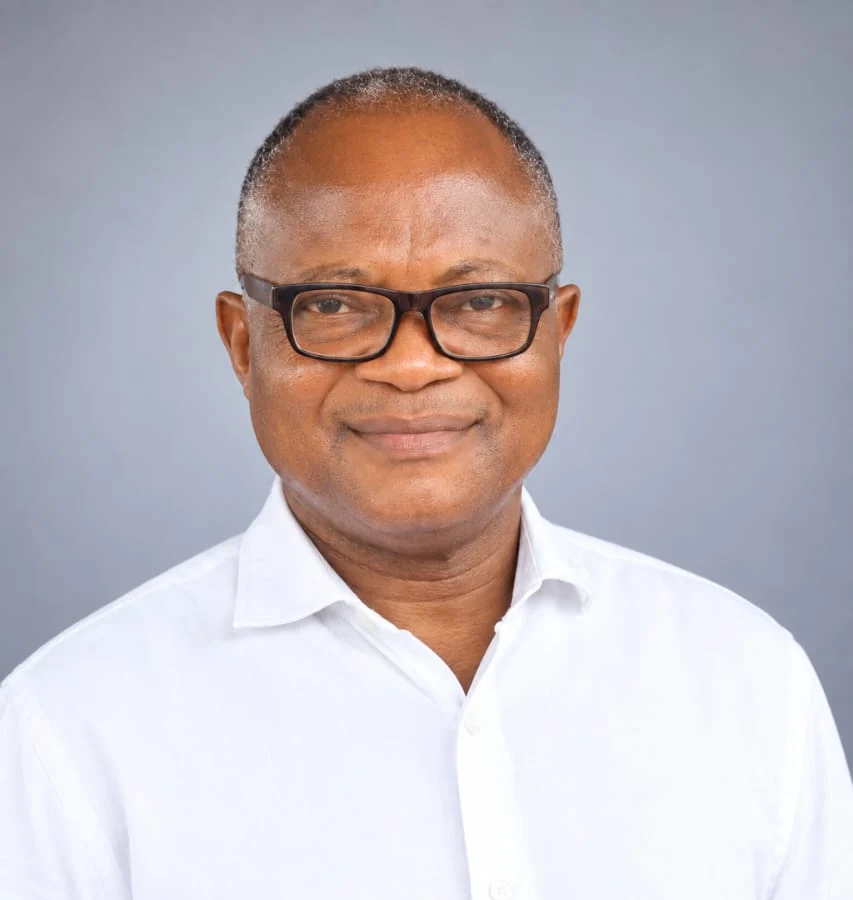
Chief Philip Orji, an author and tax reform advocate, has called on the Federal Government to introduce tax education in secondary schools and establish an independent revenue inspectorate to improve transparency in tax administration.
Orji made the call in an interview with the News Agency of Nigeria (NAN) on Wednesday in Abuja, ahead of the launch of his book titled “Global Tax Heist: How Multinationals Undermine the Wealth of Nations.”
NAN reports that the public presentation of the book is scheduled for Nov. 11 at the Shehu Musa Yar’Adua Centre, Abuja.
Speaking on his proposed “Catch Them Young, Tax Transparency and Accountability Initiative,” Orji stressed the need to educate young Nigerians on public finance and corporate taxation before they enter the workforce.
“Young Nigerians are yet to know about tax. Tax awareness ought to reach our local elites and parents through their children who attend senior secondary schools.
“When young people read my book, the question they ask is, ‘Why not borrow ideas rather than borrow money?’
“If our children are caught young, they will understand that paying tax is not just an obligation, but a demand for accountability, asking, ‘what do you gain when you pay your taxes?’” he said.
Orji, who is National Coordinator, Association of Concerned Citizens of Nigeria on Revenue and Economy (ACCNRE), also proposed an independent revenue inspectorate to curb leakages in tax collection.
The tax analyst said Nigeria continues to lose over 50 billion dollars annually in untapped international tax revenue because of systemic audit gaps.
According to him, the gaps include a lack of specialised oversight and limited integration with international frameworks such as the Organisation for Economic Co-operation and Development (OECD).
To bridge the gaps, he proposed the establishment of the Independent Revenue Inspectorate Agency of Nigeria.
“You cannot be a judge in your own case.Currently, revenue collection authorities audit themselves and issue their own receipts, which is fundamentally flawed.
“An independent tax inspectorate would not collect tax directly; it would inspect receipts of what was collected and report to the National Assembly every three months to ensure total accountability,” he said.
Orji said countries such as Kenya, Uganda, South Africa and Ghana had successfully deployed tax inspectors and aligned with global standards such as the Foreign Account Tax Compliance Act (FATCA).
He added that a tax inspection agency would help curb tax evasion and multiple taxation in Nigeria.
The advocate said higher tax rates did not translate to higher revenue, adding that transparency and public trust drive compliance.
“Tax increases do not bring money; what brings money is transparency and accountability.
“Ghana previously charged higher Value Added Tax (VAT) rates, but when they reduced rates on essential commodities consumed by the poor, they actually generated more revenue because compliance and accountability improved.
“When people pay taxes blindly without transparency, it breeds inefficiency,” he said.
He also likened tax waivers to “robbing Peter to pay Paul,” arguing that they offer little benefit to ordinary citizens while heavily enriching beneficiaries.
Recalling his legislative advocacy dating back to 2017, Orji said his proposed bill for a National Tax Crimes Commission reached key stages in the 8th and 9th National Assemblies.
He said the bill passed first and second readings in both chambers, but stalled because of the general election cycle.
Orji expressed optimism that his book would help Nigeria get tax revenue right, saying tax collection remained the hallmark of any nation’s prosperity.
“If we connect with global best practices and institutionalise transparency today, Nigeria will no longer need to rely on external loans to finance its national budget,” he said.
Mr Raymond Nnah, Chairman of the book launch planning committee, said Nigeria had neglected taxation because of its over-reliance on natural resources such as oil, gas and gold, which had been plagued by corruption.
Nnah said most prosperous countries survive primarily on taxation rather than mineral resources.
“If we educate our children on taxation and also adopt the recommendations from this book, Nigeria will be better than Singapore and other Western countries.
“We have lost a lot in taxation, both in multinationals and individuals,” he said.
On why citizens are reluctant to pay taxes, Nnah said people fear taxation because of a lack of accountability and visible public infrastructure.
He said citizens would willingly fulfil their tax obligations when they see functional roads, electricity, water and healthcare facilities provided by the government.
Describing the book as entirely non-partisan, Nnah said it was not tied to any political party or government, but was meant to help all Nigerians understand the role of taxation in societal growth.
He said that despite Nigeria’s immense wealth potential, wealth remained concentrated in the hands of a few, whose funds were often stashed abroad, leaving the general populace in hardship.
Nnah urged local and national leaders to provide proper public amenities so that citizens could see direct value for their taxes.
Also speaking, Mr Bede Ihentuge-Ekeh, a member of the planning committee, expressed concern over the country’s reliance on borrowing despite untapped tax potential, citing financial bottlenecks and weak checks and balances.
Ihentuge-Ekeh, popularly stressed the need to review the operational framework of revenue agencies, such as the Nigeria Revenue Service, to accommodate independent oversight, balance accounts, and prevent institutional monopolies over revenue collection.
“Ordinary businesses have audits and balancing of accounts. FIRS cannot be a judge in its own cause.
“There should be a parallel agency, one collecting the money while the other keeps the receipt, to ensure transparency,” he said.
He maintained that Nigeria’s revenue generation capacity would increase significantly if the recommendations in the book were adopted and fully implemented.
He also stressed the need for early tax education, citing outreach visits to urban and rural communities.
“When we went to educate children and asked if their parents knew about tax, we found out that parents are always afraid when they hear about taxation.
“They don’t know there is something in it for them, that taxes paid can act like loans to the government or that they are entitled to refunds and Value Added Tax (VAT) rebates at the end of the year if proper records are submitted.
“If we implement what is in this book and teach taxation in schools, our children and future generations will grow up fully understanding how the system works,” Ihentuge-Ekeh said.
Dignitaries expected at the launch include the Minister of the Federal Capital Territory (FCT), Chief Nyesom Wike, as chief host, and the Deputy Speaker of the House of Representatives, Rep. Benjamin Kalu, as keynote speaker.
The Director of the Institute of Capital Market Studies, Prof. Uwaleke Joseph, will review the book.
Special guests of honour expected include Senate President Godswill Akpabio, Speaker of the House of Representatives Tajudeen Abbas, former Vice-President Atiku Abubakar and former Anambra Governor Peter Obi.
Others expected are Govs. Francis Nwifuru of Ebonyi and Alex Otti of Abia, the Minister of State for Foreign Affairs, Amb. Bianca Odumegwu-Ojukwu, the Minister of Finance and Coordinating Minister of the Economy, Mr Wale Edun, and the Executive Chairman of the Federal Inland Revenue Service (FIRS), Dr Zacch Adedeji, among others. (NAN)
(Edited by Emmanuel Yashim)
Comments