


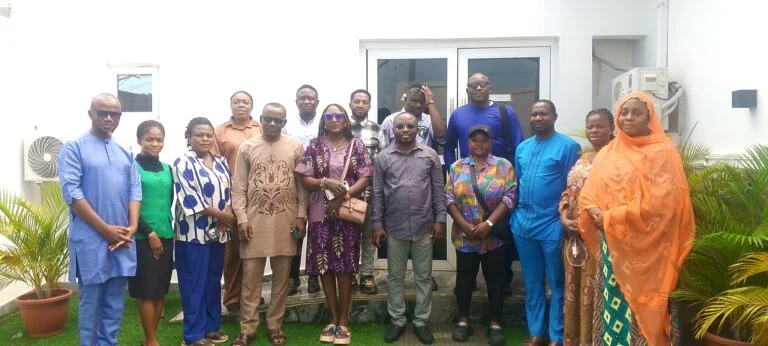
 He said the Global Fund GC7 I-CLM Project was being implemented by the TB Network, the Network of People Living with HIV and AIDS in Nigeria (NEPWHAN), and the Civil Society for Malaria Control, Immunisation and Nutrition (ACOMIN).
The project is being implemented in collaboration with the Institute of Human Virology Nigeria.
He said the project aimed to improve community participation, strengthen accountability and address healthcare delivery gaps.
Salifu-King said the initiative enabled communities to identify barriers affecting access to HIV, TB and malaria services.
“The initiative enables communities to identify service delivery gaps, prioritise their needs and work collaboratively with healthcare providers, government agencies and other stakeholders to advocate for practical solutions.
“It also promotes domestic resource mobilisation, community ownership and accountability in the delivery of health services,” he said.
According to him, the project had recorded achievements through community mobilisation, infrastructure support and improved healthcare access in the FCT.
Salifu-King urged the government, development partners and communities to sustain support for I-CLM and increase investment to enable communities to continue identifying healthcare gaps and advocating for solutions.
“We call for sustained investment in I-CLM as a practical mechanism for community ownership, economic inclusion and people-centred healthcare.
“Also, we should ensure that poverty, stigma and social exclusion do not prevent anyone from accessing essential health services with dignity,” he said.
Mr Samuel Simon, State Programme Officer of the TB Network, identified manpower shortages as a major challenge affecting health facilities.
“Shortage of manpower has been a serious challenge cutting across facilities,” Simon said.
He said some facilities had only one permanent government staff member, while others relied on volunteers.
Simon urged the government to address staffing challenges to ensure adequate healthcare teams in facilities.
He also identified shortages of consumables as another challenge affecting healthcare delivery.
“Supply of consumables has also been a very big challenge,” he said.
Simon said previous shortages of TB drugs had improved with support from the FCT TB and Leprosy Control Programme.
He added that community ownership remained central to sustaining the project beyond its implementation period.
Mrs Nneka Eze, FCT TB and Leprosy Control Programme (FCTBLCP) State Monitoring and Evaluation Officer, said donor funding for HIV, TB and malaria programmes was declining, making greater government ownership necessary.
Eze called for increased government counterpart funding to sustain essential health interventions.
“Now we need to take ownership of these programmes, and that’s what he mentioned.
“The Government of Nigeria has to come up with strategies to ensure that cartridges for tests and essential drugs are readily available for its citizens,” she said.
Eze said FCT facilities had testing capacity, including 21 GeneXpert machines, to support TB diagnosis.(NAN)

Comments