


By Lengnan Tobias
The Minister of Defence, retired Gen. Christopher Musa, says technology is no longer optional but essential to improving military strategy and operations.
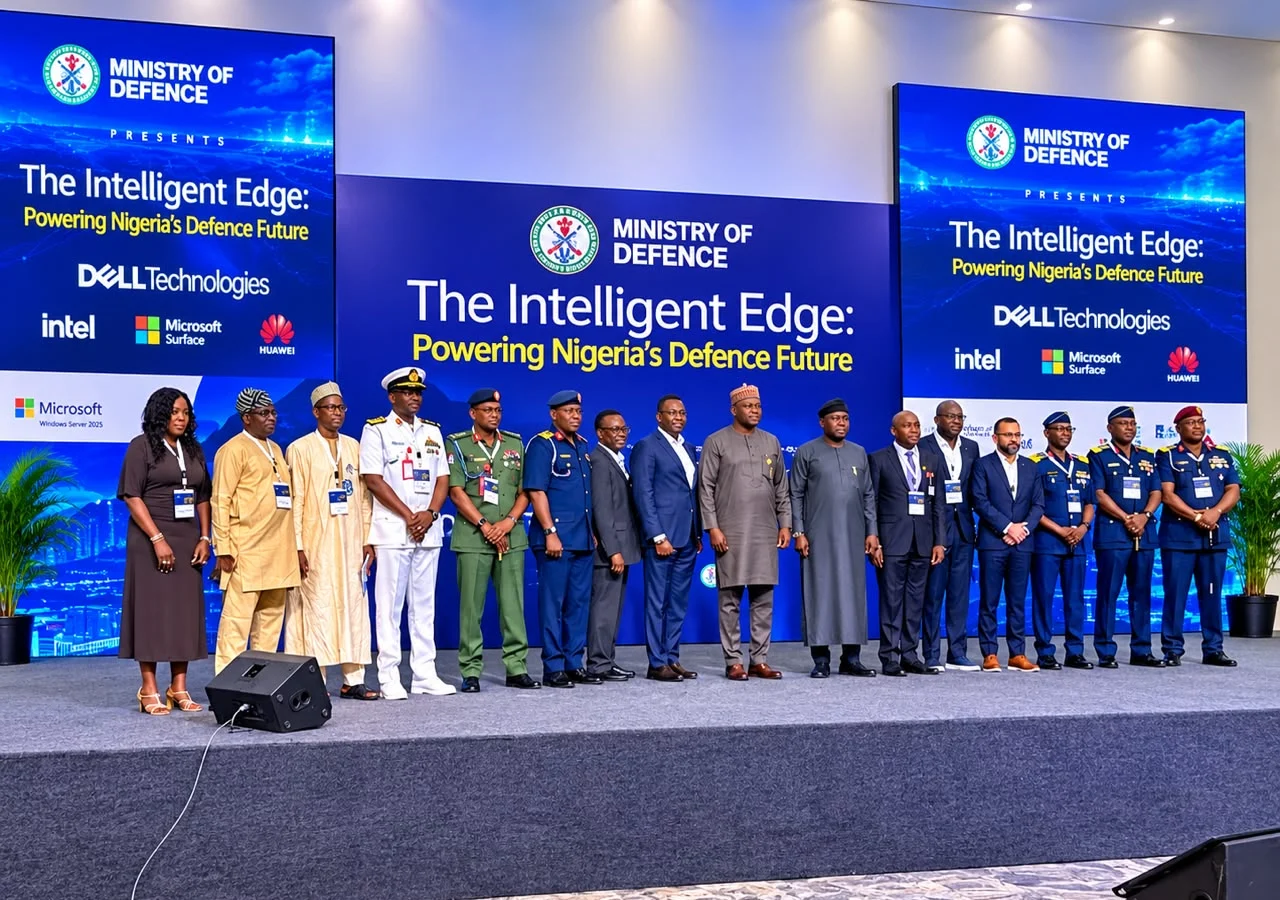
Musa said this on Tuesday in Abuja, at the opening of a two-day strategic technology workshop co-hosted by the Ministry of Defence and Dell Technologies.
The workshop has as theme “The Intelligent Edge: Powering Nigeria’s Defence Future”.
The minister said the theme resonated with what the nation’s defence posture should be, which was supporting personnel with appropriate technology for operational effectiveness.
He also said that global advances in Artificial Intelligence (AI), data analytics and digital systems were significantly changing the character of warfare and how security threats were identified and addressed.
He commended Dell technologies for its commitment to the partnership and interest in supporting Nigeria’s evolving defence requirements through technology and innovation.
The minister also noted that the workshop was an important step towards strengthening the technological capabilities of the ministry, the Armed Forces and other partners.
According to him, technology is no longer optional; it is essential to improving all aspects of strategy and operations, including enabling commanders to make better-informed decisions.
“The pursuit of technological advancement for the armed forces must be in tandem with development of local capacity.
“Nigeria must not remain merely a consumer of technology. We must improve ourselves and also develop partnerships with reputable international companies for knowledge transfer, technical training and development of indigenous expertise.
“Our objective must be to progressively build the capacity to operate, maintain, adapt and, where feasible, manufacture technologies suited to our national requirements.”
Musa urged participants to examine how the partnership could support technology transfer, local capacity building and manufacturing.
He said the technical knowledge and skills from the engagements should contribute to wider national development, particularly by preparing Nigerians and young people for opportunities of a technology-driven future.
The minister also charged participants to make the discussions practical and focused on implementable solutions.
“The ministry expects clear areas of action, not simply presentations and recommendations. We must identify our technology requirements, existing capacity gaps and steps needed to translate discussions into practical outcomes.
“The joint communique at the end of this workshop should capture key agreements, priority requirements and actionable recommendations, providing a basis for follow-up and implementation.
“On our part, we shall assess your recommendations to see areas of intervention,” he said.
The minister reassured that the ministry remained committed to partnerships that strengthened national security institutions and enhanced defence capabilities in line with President Bola Tinubu’s vision for a safer and more secured Nigeria.
Also speaking, the Special Assistant to the minister on technology, retired Air Vice Marshal Amos Bulus, said the initiative started in February 2026.
Bulus expressed appreciation to the minister for his visionary leadership, strategic foresight and commitment to prioritising technology in the ministry’s operations and institutional development.
“This partnership is intended not only to provide access to technology solutions, but also to promote knowledge transfer, develop institutions and identify sustainable solutions that address our specific defence requirements,” he said.
He stressed that adoption of proven and interoperable systems would help reduce institutional silos, improve coordination between the ministry and the services, and strengthen records and workforce management.
He welcomed senior management staff, ICT professionals and other experts drawn from relevant departments and institutions to the workshop.
He said their participation reflected a shared recognition that the future and effectiveness of Nigeria’s defence architecture would depend on how intelligently the nation embraced integrated and employed technology.
Also speaking, the Country Head of Dell technologies in Nigeria, Mr Abimbola Owoeye, said the company was privileged to partner with the ministry to accelerate Nigeria’s defence modernisation.
Owoeye said Dell had evolved from a device manufacturer to a frontline technology provider driving artificial intelligence, secured computing and data centre solutions.
He said the partnership came at a time when technology evolution was impacting everyday life.
He advised that the conversation should not be about how much technology costs, but the cost of not adopting it as seen in advanced militaries where drones and robots were used to reduce risk to personnel.
Owoeye said Nigeria must move from technology experimentation to strategic investment, from fragmented infrastructure to integrated digital platforms, and from dependency to indigenous capabilities.
He cited recent indigenous drone developments in Nigeria as encouraging, noting that military decisions were now driven by intelligence and data.(NAN)
Edited by Deborah Coker



Comments