


By Mark Longyen
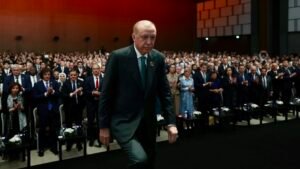
Antalya (Türkiye) Turkish President Recep Erdogan on Friday said the world was currently facing a deepening crisis in both power and direction, warning that the international system had reached a “serious and dangerous threshold.”
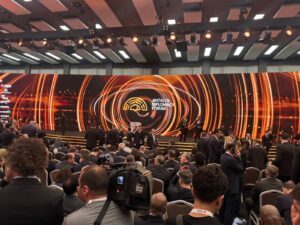
Erdogan gave the warning at the opening ceremony of the Antalya Diplomacy Forum 2026, which kicked off in Türkiye’s southern Mediterranean city of Antalya.
The President said that global mechanisms tasked with protecting human rights and security had remained ineffective, and at times indifferent, in the face of major crises.
He described the current global turmoil as “primarily a moral and existential crisis,” pointing to developments in Gaza following the events of Oct. 7 as evidence of the scale of the breakdown.
“Reading what is happening in Gaza merely as a humanitarian tragedy would be incomplete,” Erdogan said, adding that the situation revealed the limits of the current international order.
He also criticised the global system’s response to conflicts across the region, saying it had failed “the most basic test of humanity” in places such as Syria, Gaza, the West Bank, and Lebanon.
Erdogan stressed the importance of preserving diplomatic channels, saying disputes should not be resolved through violence.
“No matter how deep the disagreements, we must not allow words to be replaced by weapons or negotiations by bloody conflict,” he said.
Referring to the current conflict involving the U.S., Israel, and Iran, Erdogan said the opportunity created by a ceasefire should be used effectively to establish lasting peace.
Erdogan urged the U.S. and Iran to guard against any provocations by Israel and use their current ceasefire to push for lasting peace, stressing the importance of acting with ‘prudent understanding’ to end the war.
“We must not allow weapons to again replace words. Let it not be forgotten, the shortest path to peace is dialogue and diplomacy. Peace is not a one-winged bird,” he further warned.
He also stressed the need for a conciliatory approach, warning that parties should remain “ready and vigilant” against any attempts by Israel to undermine the negotiation process.
Highlighting the strategic importance of the Strait of Hormuz, Erdogan said access to open seas for Gulf countries should not be restricted.
“The essential point is to ensure freedom of navigation based on established rules and to keep the Strait of Hormuz open to commercial shipping,” he said.
On Syria, Erdogan said strengthening stability and normalisation in the neighboring country was vital for the region’s future.
He reiterated Türkiye’s readiness to support direct negotiations, including a possible leaders’ summit, if the parties in the Russia-Ukraine war were willing.
Erdogan also reaffirmed Türkiye’s commitment to its EU membership goal, while calling on the bloc to overcome what he described as a “direction problem” and remain faithful to its founding vision.
He said Türkiye aimed to turn the region into a “basin of stability and prosperity,” while rejecting “maximalist unilateral approaches” that seek to exclude Ankara and Northern Cyprus.
Erdogan added that Türkiye would continue to pursue a peaceful foreign policy across regions while strengthening its existing alliances, and remaining open to cooperation with neighboring countries through strategic initiatives.
The News Agency of Nigeria (NAN) reports that the three-day forum, themed: “Mapping Tomorrow, Managing Uncertainties,” focuses on “Navigating Uncertainty in a Changing World.”
The forum opened amid several globally sensitive issues, such as the U.S.-Israel-Iran war, and its attendant energy security and maritime routes crisis, the Russian-Ukrainian war, among others.
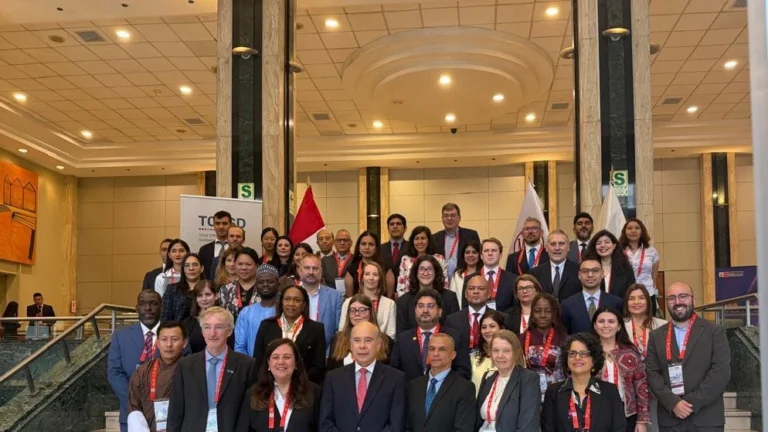
The event, attended by participants from about 150 countries, includes 20 heads of state and government, 40 foreign ministers, 5,000 decision-makers, 60 foreign media, academics, experts and diplomats, among others.(NAN/AA)(www.nannews.ng)
Comments