


By Adesewa George
The WASH Systems for Health (WS4H) Programme, implemented by Self Help Africa, has expanded access to safe water and sanitation services for more than 320,000 people in Kano and Cross River States.
The organisation disclosed this on Tuesday at the WS4H National Results and Learning Workshop in Abuja, where stakeholders reviewed achievements and lessons from the intervention.
Speaking at the event, Self Help Africa Country Director, Joy Aderele, said the programme demonstrated that sustainable WASH improvements require strong institutions, effective governance, adequate financing and collaboration.
Aderele said the UK-funded programme was designed to strengthen systems that support sustainable access to water, sanitation and hygiene services.
According to her, the intervention focused on improving governance, planning, financing, accountability and sector coordination to ensure resilient service delivery.
“More than 320,000 people now have improved or restored access to water services through programme-supported interventions,” she said.
She added that more than 5,520 household toilets were constructed in Yala and Makoda Local Government Areas, boosting sanitation, public health and efforts to end open defecation.
Aderele said the programme also strengthened public investment in WASH, with Cross River increasing its sector budget by 211 per cent in 2026 and Kano by 169.07 per cent.
She added that dedicated WASH budget lines had been established across 40 Ministries, Departments and Agencies in both states, strengthening accountability and institutional commitment.
According to her, both states reviewed and adopted updated WASH policies, while key planning documents were developed to guide future investments and service delivery.
She said Cross River also recorded a major legislative milestone through the passage of the Water Law and Open Defecation Prohibition Bill.
Aderele added that lessons from interventions in Yala LGA were already informing expansion efforts in Obubra Local Government Area.
While commending the achievements, she noted that capacity gaps, resource constraints and climate-related pressures remained challenges to sustainable WASH services.
“The sustainability of these gains will depend on continued government leadership, adequate financing, strong partnerships and investment in institutional capacity,” she said.
Also speaking, the Programme Manager of WS4H, Mr Timothy Ibeawuchi, said the intervention focused on strengthening systems needed to sustain gains and attract future investments.
According to him, the programme engages stakeholders in developing strategies that preserve achievements and support long-term service delivery.
“System strengthening work takes time because it addresses the fundamental issues responsible for sustainable and resilient service delivery,” he said.
Ibeawuchi said the programme strengthened policy development, planning, financing, monitoring and evaluation systems across the WASH sector.
He said two pilot local government areas were supported to develop WASH strategic plans outlining sector goals, targets and activities between 2026 and 2030.
According to him, the plans will guide future interventions and improve service delivery in the affected councils.
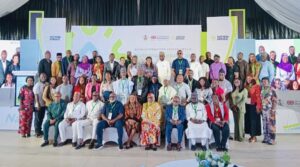
Earlier, the representative of the UK Foreign, Commonwealth and Development Office (FCDO), Chidera Chukwu, reaffirmed support for Nigeria’s development efforts in spite of the programme nearing completion.
Chukwu commended the Self Help Africa-led consortium for delivering the programme with professionalism and a strong focus on systems strengthening.
He said the consortium contributed greatly to strengthening Nigeria’s WASH sector through policy reforms, improved coordination and enhanced accountability.
“Together, we have advanced key policy and legislative reforms, including open defecation-free laws and strengthened state WASH frameworks,” he said.
According to him, the reforms represent enduring system-level changes that will continue delivering benefits beyond the programme’s lifespan.
In his remarks, Mr Jamilu Habu, Director of Water Quality Control and Sanitation, Federal Ministry of Water Resources and Sanitation, commended the programme’s achievements.
Habu, who represented the Permanent Secretary, said the intervention strengthened governance, coordination, evidence-based planning and institutional capacity in the WASH sector.
He described the workshop as an opportunity to review achievements, share lessons and identify pathways for sustaining and scaling successful interventions.
According to him, the programme’s innovations and best practices will guide future policies and investments aimed at expanding access to safe WASH services.
Habu stressed the need for continued collaboration among governments, development partners, civil society organisations, the private sector and communities.
He said stronger partnerships remained essential to achieving universal access to water, sanitation and hygiene services and meeting Sustainable Development Goal 6. (NAN)
Edited by Tosin Kolade
Comments