


By Sumaila Ogbaje
The Defence Space Administration (DSA) has been urged to strengthen indigenous space capabilities, intelligence gathering and technology integration to boost military operations and tackle emerging security threats.
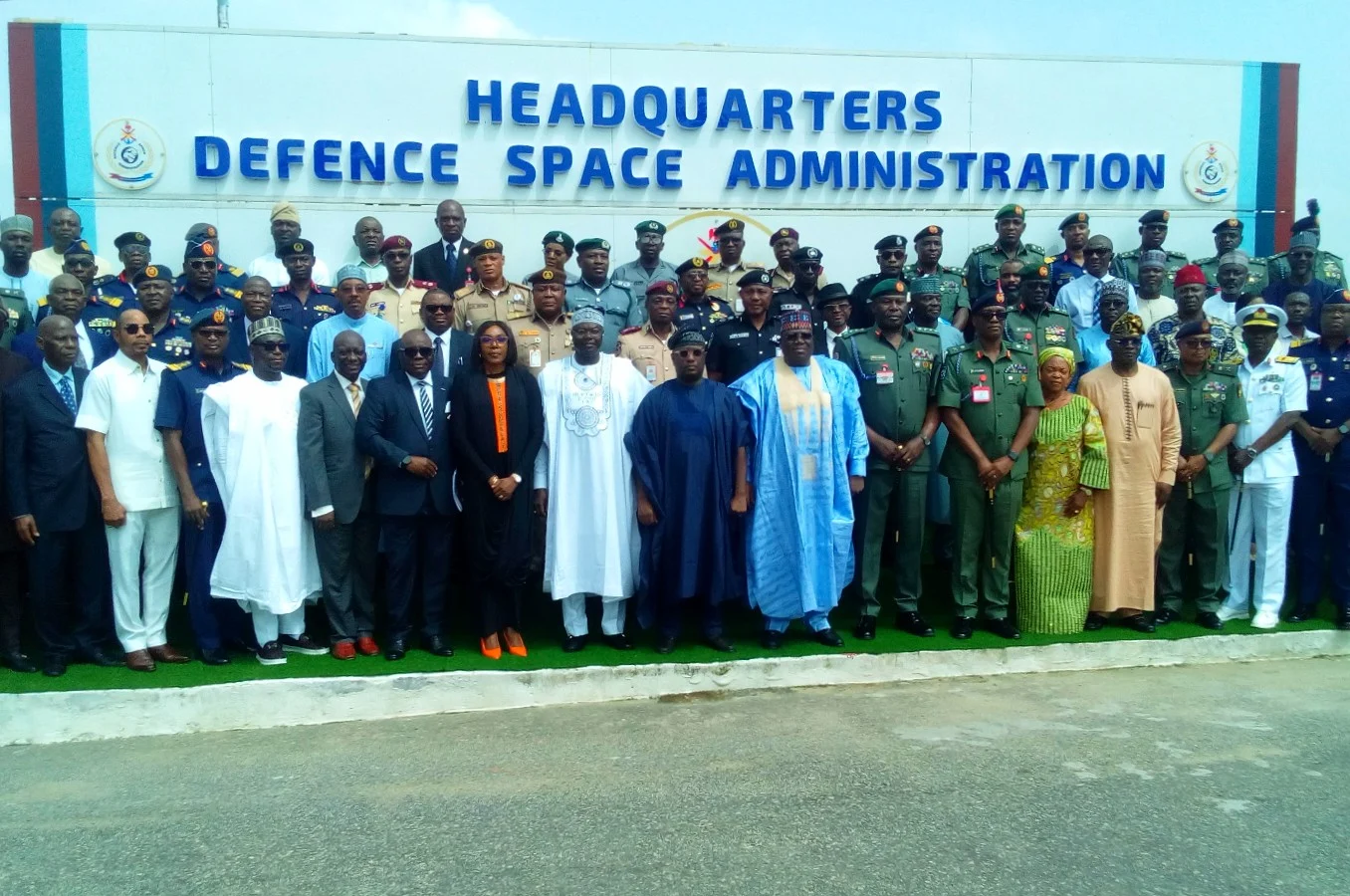
The Chief of Defence Staff (CDS), Gen. Olufemi Oluyede, gave the charge at the inaugural Defence Space Administration Day celebration on Friday in Abuja.
Oluyede said space-based technologies had become critical to modern warfare, requiring sustained investment in indigenous research, innovation and human capital.
He urged the DSA to improve the timeliness, reliability and security of its products while deepening their integration into joint military operations and inter-agency security efforts.
“The key is continuous research and development where systems are developed, tested in the field and modified to suit our operational needs while ensuring interoperability with existing structures and equipment,” he said.
The CDS commended the administration for its achievements, including the launch of DelSat-1 and the establishment of geospatial intelligence infrastructure to support the Armed Forces and other security agencies.
He also highlighted the establishment of a Modular Earth Observation Outpost at the headquarters of the Joint Task Force, North East, Operation HADIN KAI, to bring geospatial intelligence closer to operational commanders.
According to him, the commencement of academic activities at the Defence Space School, Orogun, is another significant milestone in developing Nigeria’s space capabilities.
Earlier, the Chief of Defence Space Administration, Maj.-Gen. Philip Ilodibia, said space technology had become indispensable to military effectiveness as warfare increasingly depended on intelligence, secure communications and real-time situational awareness.
Ilodibia said military superiority was no longer determined solely by conventional platforms but also by the ability to acquire timely intelligence and coordinate operations across multiple domains.
He said the DSA, established on Oct. 9, 2014, had progressively developed capabilities to support the operational requirements of the Armed Forces and other security agencies.
“Space has consequently become an indispensable enabler of national defence, influencing how effectively the Armed Forces of Nigeria are equipped to make decisions and respond to emerging security challenges,” he said.
The DSA chief called for stronger collaboration among the Army, Navy and Air Force to maximise the benefits of space-enabled intelligence, surveillance, communications and geospatial services.
He also stressed the need for deeper cooperation with national space institutions, particularly the National Space Research and Development Agency (NASRDA) and the Nigerian Communications Satellite Ltd. (NIGCOMSAT).
In his goodwill message, the Director-General of NASRDA, Prof. Matthew Adepoju, reaffirmed the agency’s commitment to strengthening its strategic partnership with the DSA to advance Nigeria’s space capabilities.
Adepoju said the collaboration had covered research, technical expertise, knowledge sharing, training, space transportation and propulsion research.
“Our collaboration reflects the understanding that our institutions are stronger when we work together,” he said.
He disclosed that the National Space Council had approved the development of spaceport facilities in Ekwe to support space transportation, propulsion and related activities.
Adepoju said the joint research facility shared by NASRDA and the DSA further demonstrated the institutions’ commitment to developing indigenous space capabilities.
He added that closer collaboration among NASRDA, the DSA and NIGCOMSAT would strengthen interoperability between scientific research, military requirements and satellite communications infrastructure.
Also speaking, the Chairman, Senate Committee on Defence, Sen. Ahmed Lawan, described space capabilities as strategic force multipliers for the military and important drivers of economic development.
Lawan called for accountability, prudent use of public resources and measurable operational outcomes in the development of defence space capabilities.
“Defence capability development must be matched by accountability and the prudent use of public resources,” he said.
He assured the DSA of the Senate Committee’s commitment to providing legislative support and oversight to strengthen its capacity and effectiveness.
Similarly, the Chairman, House of Representatives Committee on Defence, Rep. Babajimi Benson, said space-based capabilities had become central to joint military operations and inter-agency collaboration.
Benson pledged the House committee’s support for the legislation, funding and oversight required to strengthen the administration’s operational capacity.
He urged the DSA to deepen partnerships with the military services, relevant government agencies, academia and industry to address Nigeria’s evolving security challenges.
The Managing Director of NIGCOMSAT, Jane Egerton-Idehen, reaffirmed the company’s commitment to strengthening its partnership with the DSA.
Egerton-Idehen said closer collaboration among Nigeria’s space institutions would improve satellite communications, connectivity and other services supporting national security.
She said the DSA’s 12th anniversary offered an opportunity to consolidate past achievements and accelerate innovation in the country’s space sector.
In his goodwill message, former Chief of Defence Staff, retired Gen. Gabriel Olonisakin, urged the administration to sustain its commitment to developing Nigeria’s space and cyber capabilities.
Olonisakin recalled that when he assumed office as CDS in July 2015, the DSA was operating from office space provided by NASRDA.
He said the need for a dedicated facility subsequently informed the construction of office facilities for the administration.
Olonisakin said developments in contemporary conflicts had demonstrated the growing strategic importance of space and cyber capabilities to military operations.
The celebration featured a seminar themed “Space Power and National Security,” focusing on the role of space technology in strengthening Nigeria’s defence capabilities and addressing emerging security threats. (NAN)
Edited by Yakubu Uba


Comments