










By Uchechi Afonne
The Lagos State Government has intensified enforcement against illegal waste dumping and other environmental violations to improve sanitation and reduce flooding.
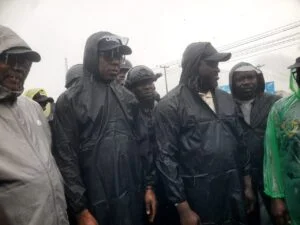
The News Agency of Nigeria (NAN) reports that the Commissioner for Environment and Water Resources, Mr Tokunbo Wahab, said this on Wednesday during an inspection of the government-cleared median on the Lagos-Badagry Expressway.
NAN reposts that the officials during the inspection assessed compliance with directives against illegal occupation and indiscriminate waste disposal.
Wahab said the government had invested substantial public funds to restore the area and would not allow illegal activities to resume.
“We have done the work on the ground. The operation is once and for all, and we will patrol the area forever,” he said.
The commissioner dismissed suggestions that the cleared space should be concessioned for landscaping, saying it had been reserved for a future rail corridor.
“It is for the rail line coming this way. We have to keep it clean for them,” he said.
Wahab blamed indiscriminate waste disposal by residents and traders for worsening flooding during heavy rainfall.
He urged residents to patronise Private Sector Participation (PSP) operators for waste collection or contact the Lagos Waste Management Authority (LAWMA) where such operators were unavailable.
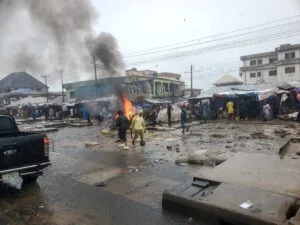
He described the dumping of household refuse on road medians as unacceptable, noting that approved waste collection channels were available.
“Waste on the median comes from people’s homes that choose not to patronise PSP operators,” he said.
Wahab assured residents that the government would continue improving waste evacuation through expanded disposal channels and support for PSP operators.
“For those paying, LAWMA and PSP operators owe them efficient service. There are no excuses,” he said.
The commissioner said the government had prosecuted more than 1,000 environmental offenders in the past year.
“Once there is a law, you must enforce it and attach consequences for bad behaviour,” he said.
Explaining flash flooding, Wahab said it occurred when heavy rainfall coincided with high lagoon or sea levels, delaying stormwater discharge.
“If the rain stops, within one or two hours nature allows the water to recede. That is why we call it flash flooding,” he said.
He added that the government was addressing persistent flooding in affected communities through drainage expansion and other engineering interventions. (NAN)
=============
Edited by Chinyere Joel-Nwokeoma