



By Anita Uzoagba/Chisom Miracle
Education stakeholders have called for a healthy balance between academic activities and recreation for children during the long vacation, saying such an approach is essential for their intellectual, social and personal development.
The stakeholders made the call in interviews with the News Agency of Nigeria (NAN) on Thursday in Abuja.
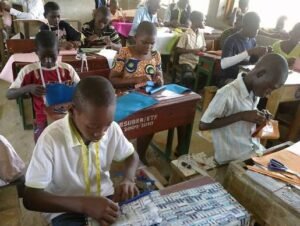
They said that although the long vacation provided children with a much-needed break after a demanding academic session, it should also be used for productive learning, skill acquisition and family bonding.

Mrs Faith Enyigwe, a petty trader and mother of six, said parents should engage their children in meaningful activities that would equip them with practical skills rather than allowing them to spend the entire holiday idle.
According to her, financial constraints should not discourage parents from exposing their children to vocational learning.
“Lack of money should not be an excuse. Parents should identify something worthwhile for their children to learn, whether it is barbing, plaiting of hair or any other vocational skill.
“Children hardly like to sleep during the long vacation, and it would be wrong for parents to resort to harmful measures just to keep them indoors,” she said.
Mrs Gladys Ohiwere, a headmistress, said the holiday period should not be seen as a time for children to remain idle but as an opportunity to improve their academic performance, acquire life skills and build responsibility.
According to her, introducing children to digital skills, including graphic design and artificial intelligence (AI) coding, would also equip them with relevant knowledge from an early age.
Ohiwere urged parents to cultivate a reading culture by encouraging their children to spend between 20 and 30 minutes daily reading storybooks.
“Reading storybooks every day improves children’s vocabulary, pronunciation and comprehension. By the time they return to school, you will notice greater confidence in the way they communicate with their peers,” she said.
She also stressed the importance of assigning age-appropriate household responsibilities to children.
“Teach them simple house chores such as sweeping, making their beds and keeping their surroundings tidy. These activities help to build responsibility and discipline,” she said.
Ohiwere noted that a balanced holiday is one that allows children to learn, play and explore, adding that such an approach would prepare them mentally and socially for the new academic session.
Mr Atomore John, a public servant, urged parents to prioritise adequate rest for children during holidays rather than overloading them with academic lessons and other activities.
According to him, holidays should provide children with an opportunity to recover physically, emotionally and socially from the demands of the school term.
John noted that children should spend about 70 per cent of their vacation resting, while the remaining 30 per cent could be dedicated to learning life skills and extracurricular activities.
He urged parents to use the holiday period to teach their children practical life skills such as cooking, cleaning, organisation, basic sewing and simple repairs, depending on their interests.
He stressed that the objective of a productive vacation should not be limited to academic improvement but should also include the overall development and wellbeing of the child.
Mrs Adaoma Kennedy, a teacher and mother of one, said parents should enrol their children in Vacation Bible School (VBS) programmes organised by churches during the holiday.
According to her, such programmes provide opportunities for children to learn, socialise and remain under proper supervision.
Kennedy also urged parents, especially those involved in farming, to expose their children to agricultural activities during the rainy season.
“Since this is the rainy season, parents who have farms should take their children along. The experience and knowledge they gain from farming can remain with them throughout their lives,” she said.(NAN)(www.nannews.ng)
Edited by Magdalene Ukuedojor



Comments