


By Jumoke Olaitan
A professor of Journalism and Emerging Media, Prof. Desmond Okocha, has urged Nigerian youths not to outsource their intellectual capacity to Artificial Intelligence (AI).
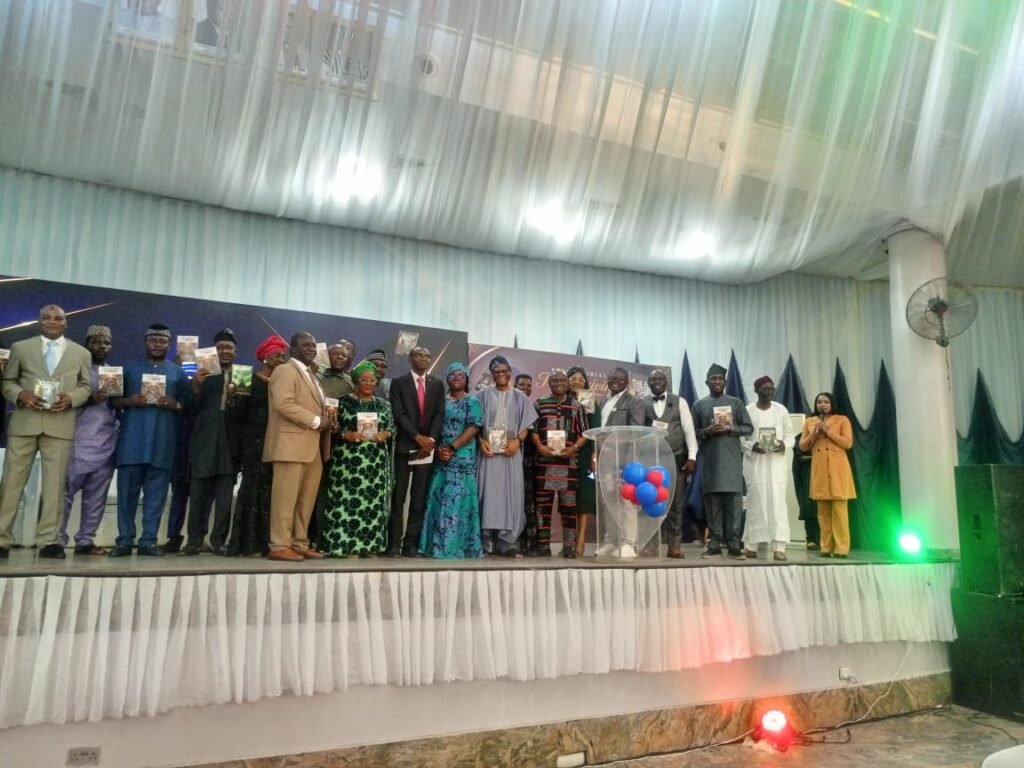
Okocha gave the advice on Saturday in Abuja at his professorial thanksgiving and book launch, where he unveiled three books: The Black Shield of India, Cogitation and Champions’ Compass.
He stressed that technology should only support human creativity and ingenuity.
He said although the world had entered an era of AI, humans remained the greatest resource and must retain control of their intellectual and creative abilities.
“We must never contract our human agency to machines. AI is a tool to enable us function, to aid us in our natural and endowed capacity,” Okocha said.
He also cautioned Nigerians, particularly young people, to observe ethical standards in their use of technology, saying actions taken without consideration for their consequences could eventually have negative repercussions.
“You might scale through, escape now, but posterity might come back to haunt you,” he said.
Explaining the significance of the books, Okocha said they were written to take his ideas beyond the classroom and communicate them across generations and geographical boundaries.
“Books are instruments of global communication, of transgenerational and trans-time communication,” he said.
He said Cogitation represented reflection, Champions’ Compass represented direction, while The Black Shield of India represented an inquiry into the experiences of Africans, particularly Nigerians, in India.
Okocha said in spite of the different themes of the three books, humanity remained the central message connecting them.
“The central theme is that humanity is key. Humanity can only evolve when there’s love, when there’s understanding, and when there’s team play across society,” he said.
He said placing humanity at the centre of leadership and citizenship would help Nigeria and the Black race achieve sustainable development.
The author also called on Nigeria to reclaim its leadership role in addressing continental and pan-African issues, saying the country had become too preoccupied with internal challenges.
“From our independence, Nigeria is supposed to lead the human race.
“But in the last four or five decades, we have been engrossed in dealing with our internal problems and have detached ourselves from addressing continental or the Black race problems,” he said.
He said his professorial thanksgiving was an opportunity to reflect on how providence and Nigerians had shaped his life and scholarship.
“It is an avenue for reflection on how society and providence have combined in my life journey.
“It is a reflective moment on the humans, particularly Nigerians who have helped in nurturing that journey,” he said.
Representing the Minister of Interior, Dr Olubunmi Ojo, Prof. Abdulkadir Mukhtar, Special Adviser to the Minister on Strategy and Information, described Okocha as a scholar whose career had been defined by discipline, excellence and integrity.
Ojo said in an era of misinformation, disinformation, Artificial Intelligence and rapidly changing digital platforms, communicators must defend truth through accuracy, fairness and responsible scrutiny.
“The media must remain society’s vigilant watchdog. It must also serve as a faithful custodian of facts, national memory and constructive public dialogue,” he said.
On the relationship between academia and national development, Ojo urged universities to become centres of evidence, innovation, policy evaluation and independent thought.
He also encouraged Okocha and the Faculty of Media and Communication Studies to strengthen research in strategic communication, digital citizenship, crisis communication, misinformation and public trust.
“Government, in turn, must remain open to scholarship, constructive criticism and evidence-based recommendations.
“The relationship between government and academia should not be episodic or ceremonial,” he said.
Ojo urged students and young people to cultivate discipline, independent thinking and continuous learning, saying academic excellence required patience and consistency.
“Intellectual distinction is possible, but it demands discipline, patience and consistency,” he said.
He appealed that copies of the books should be distributed to universities, secondary schools and public libraries across the country.
Also speaking, Dr Felix Osamoije, Regional Director, Christian Broadcasting Network (CBN) Africa and Chairman of the occasion, described the celebration as an acknowledgement of Okocha’s scholarship, service, mentorship and contribution to society.
Osamoije said the books carried a message of purposeful achievement, stressing that society needed successful people who understood the purpose of their success.
“The world does not merely need successful people. The world needs successful people who know what their success is for,” he said.
Osamoije said Okocha’s new professorial status should translate into more scholarship, mentorship and contributions to society.
He urged the professor to continue teaching, writing, researching and mentoring young people while helping to shape the future of journalism and communication in Africa.
He also called on African universities to move beyond consuming knowledge produced elsewhere and develop scholarship that addresses the continent’s realities.
He said the ultimate purpose of scholarship should be societal transformation, stressing that knowledge should be used to improve lives.
“The African university must become not merely a recipient of knowledge, but a producer and exporter of knowledge.
“The ultimate question is therefore not, how much do I know? It is, how much good can my knowledge accomplish?” he said.
Osamoije said the thanksgiving was also an opportunity to recognise God, family, mentors, colleagues and institutions that contributed to Okocha’s academic journey.
He congratulated Okocha on his achievement and urged him to embrace the new responsibility with greater commitment to scholarship and service.
NAN reports that Professor Okocha has authored and co-authored more than 200 scholarly publications, contributing significantly to media scholarship, digital communication and African-centred communication studies.
The professional thanksgiving and book launch featured musical presentations and the official unveiling of the three books fundraising session.(NAN)(www.nannews.ng)
Edited by Funmilayo Adeyemi
By Jumoke Olaitan
A professor of Journalism and Emerging Media, Prof. Desmond Okocha, has urged Nigerian youths not to outsource their intellectual capacity to Artificial Intelligence (AI).
Okocha gave the advice on Saturday in Abuja at his professorial thanksgiving and book launch, where he unveiled three books: The Black Shield of India, Cogitation and Champions’ Compass.
He stressed that technology should only support human creativity and ingenuity.
He said although the world had entered an era of AI, humans remained the greatest resource and must retain control of their intellectual and creative abilities.
“We must never contract our human agency to machines. AI is a tool to enable us function, to aid us in our natural and endowed capacity,” Okocha said.
He also cautioned Nigerians, particularly young people, to observe ethical standards in their use of technology, saying actions taken without consideration for their consequences could eventually have negative repercussions.
“You might scale through, escape now, but posterity might come back to haunt you,” he said.
Explaining the significance of the books, Okocha said they were written to take his ideas beyond the classroom and communicate them across generations and geographical boundaries.
“Books are instruments of global communication, of transgenerational and trans-time communication,” he said.
He said Cogitation represented reflection, Champions’ Compass represented direction, while The Black Shield of India represented an inquiry into the experiences of Africans, particularly Nigerians, in India.
Okocha said in spite of the different themes of the three books, humanity remained the central message connecting them.
“The central theme is that humanity is key. Humanity can only evolve when there’s love, when there’s understanding, and when there’s team play across society,” he said.
He said placing humanity at the centre of leadership and citizenship would help Nigeria and the Black race achieve sustainable development.
The author also called on Nigeria to reclaim its leadership role in addressing continental and pan-African issues, saying the country had become too preoccupied with internal challenges.
“From our independence, Nigeria is supposed to lead the human race.
“But in the last four or five decades, we have been engrossed in dealing with our internal problems and have detached ourselves from addressing continental or the Black race problems,” he said.
He said his professorial thanksgiving was an opportunity to reflect on how providence and Nigerians had shaped his life and scholarship.
“It is an avenue for reflection on how society and providence have combined in my life journey.
“It is a reflective moment on the humans, particularly Nigerians who have helped in nurturing that journey,” he said.
Representing the Minister of Interior, Dr Olubunmi Ojo, Prof. Abdulkadir Mukhtar, Special Adviser to the Minister on Strategy and Information, described Okocha as a scholar whose career had been defined by discipline, excellence and integrity.
Ojo said in an era of misinformation, disinformation, Artificial Intelligence and rapidly changing digital platforms, communicators must defend truth through accuracy, fairness and responsible scrutiny.
“The media must remain society’s vigilant watchdog. It must also serve as a faithful custodian of facts, national memory and constructive public dialogue,” he said.
On the relationship between academia and national development, Ojo urged universities to become centres of evidence, innovation, policy evaluation and independent thought.
He also encouraged Okocha and the Faculty of Media and Communication Studies to strengthen research in strategic communication, digital citizenship, crisis communication, misinformation and public trust.
“Government, in turn, must remain open to scholarship, constructive criticism and evidence-based recommendations.
“The relationship between government and academia should not be episodic or ceremonial,” he said.
Ojo urged students and young people to cultivate discipline, independent thinking and continuous learning, saying academic excellence required patience and consistency.
“Intellectual distinction is possible, but it demands discipline, patience and consistency,” he said.
He appealed that copies of the books should be distributed to universities, secondary schools and public libraries across the country.
Also speaking, Dr Felix Osamoije, Regional Director, Christian Broadcasting Network (CBN) Africa and Chairman of the occasion, described the celebration as an acknowledgement of Okocha’s scholarship, service, mentorship and contribution to society.
Osamoije said the books carried a message of purposeful achievement, stressing that society needed successful people who understood the purpose of their success.
“The world does not merely need successful people. The world needs successful people who know what their success is for,” he said.
Osamoije said Okocha’s new professorial status should translate into more scholarship, mentorship and contributions to society.
He urged the professor to continue teaching, writing, researching and mentoring young people while helping to shape the future of journalism and communication in Africa.
He also called on African universities to move beyond consuming knowledge produced elsewhere and develop scholarship that addresses the continent’s realities.
He said the ultimate purpose of scholarship should be societal transformation, stressing that knowledge should be used to improve lives.
“The African university must become not merely a recipient of knowledge, but a producer and exporter of knowledge.
“The ultimate question is therefore not, how much do I know? It is, how much good can my knowledge accomplish?” he said.
Osamoije said the thanksgiving was also an opportunity to recognise God, family, mentors, colleagues and institutions that contributed to Okocha’s academic journey.
He congratulated Okocha on his achievement and urged him to embrace the new responsibility with greater commitment to scholarship and service.
NAN reports that Professor Okocha has authored and co-authored more than 200 scholarly publications, contributing significantly to media scholarship, digital communication and African-centred communication studies.
The professional thanksgiving and book launch featured musical presentations and the official unveiling of the three books fundraising session.(NAN)(www.nannews.ng)
Edited by Funmilayo Adeyemi
Don cautions Nigerian youths against overdependence on AI
Comments