









By Henry Oladele
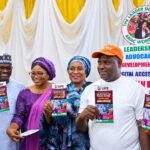
Lagos State University of Education (LASUED), in collaboration with Penn State University, USA, has commenced an international summit on advancing wellness and intersectional perspectives.
The Vice-Chancellor of LASUED, Prof. Bidemi Lafiaji-Okuneye, declared the summit open on Monday at the Senator Oluremi Tinubu Auditorium, Oto-Ijanikin, Lagos.
The three-day summit will focus on wellness, inclusive education, health, food technology, mentorship and community development.
Lafiaji-Okuneye described wellness as a multidimensional concept encompassing physical vitality, mental resilience, social equity and environmental sustainability.
She said the theme of the summit, “Advancing Wellness and Intersectional Perspectives”, was not merely an academic proposition but a strategic necessity for the 21st Century.
“As a Professor of Kinetics and Health Education, the subject of wellness resonates deeply with my personal, academic and administrative philosophy,” she said.
The vice-chancellor said that wellness was shaped by community realities, cultural knowledge systems, accessibility and the socio-economic conditions people navigated.
She said the university’s commitment to wellness dated back to her tenure as Provost of Adeniran Ogunsanya College of Education (AOCOED).
According to her, the commitment continued through the merger of AOCOED with Michael Otedola College of Primary Education, which birthed LASUED in 2022.
“Under our A.C.H.I.E.V.E. agenda, we have consistently championed the philosophy that a university which cares for knowledge must inherently care for those who produce and disseminate that knowledge,” she said.
Lafiaji-Okuneye said the institution organised wellness initiatives, including a workplace wellness engagement with the University of Chicago in May.
She added that LASUED also flagged off its Health Week in June to confront hidden illnesses and promote longevity.
She said the international summit would build on those initiatives through global dialogue on community-engaged scholarship, child development, food security and inclusive mentorship.
The vice-chancellor urged participants to ensure that discussions would translate into practical policies capable of advancing wellness in schools, communities and nations.
“It is my earnest expectation that the insights generated here will not only end in peer-reviewed publications but will also translate into actionable policies,” she said.
The keynote speaker, Prof. Mildred Boveda of the Erikson Institute, Chicago, Illinois, U.S., said wellness could not advance without addressing the conditions shaping people’s lives.
Boveda said intersectional analysis should move beyond describing problems to building conditions that would enable people and communities to live, learn and thrive.
“People do not live single-issue lives,” she said, stressing the interaction of race, ethnicity, language, gender, disability, social class, age, geography and education.
She said food must be affordable, safe and accessible, while housing and digital health information must respond to diverse community needs.
“An intersectional approach changes evidence and outcomes. Averages can conceal people at particular intersections,” Boveda said.
The professor urged researchers to disaggregate data and ensure that disability inclusion would remain central to research, institutional practices and conference design.
According to her, some persons living with disabilities are scholars, educators, organisers, students, parents, professionals and community leaders whose contributions strengthen knowledge production.
Boveda called for cross-institutional mentorship circles, writing groups and accessible student exchanges to improve research collaboration.
She urged participants to treat the summit as a working session for a partnership still being built.
“ We are just getting started,” she said.
Prof. Foluso Lesi, the lead speaker and Deputy Vice-Chancellor, Development Services, University of Lagos, said Nigeria’s knowledge systems could contribute to understanding health, food and child development.
Lesi, who presented a paper entitled “The Contributions of Nigeria’s Knowledge Systems in Understanding Health, Food and Child Connections”, said health involved much.
He said that income, education, environment, employment, social support networks, culture, genetics, lifestyle and gender were among the determinants of health.
..“Health is beyond what health workers can claim sole rights to. Health involves every one of us working across different disciplines,” he said.
The don said researchers must co-create knowledge and understand the complexity of problems encountered across different communities.
He identified misinformation and disinformation as challenges to health literacy, explaining that misinformation involved spreading wrong information, while disinformation was deliberate.
Lesi urged researchers to communicate findings clearly and use plain-language summaries to make research accessible to diverse audiences.
He said cultural beliefs should be engaged respectfully and harmful myths debunked through scientific evidence.
The professor warned that harmful myths could affect health-seeking behaviour, child nutrition, vaccine acceptance and social roles of women.
He called for respectful engagement with indigenous knowledge systems and validation of practices strengthening social cohesiveness.
“How can we use modern scientific methods to respectfully debunk harmful myths while validating practices that strengthen social cohesiveness?” he asked.
Lesi also advocated the use of new media and technology to enhance health literacy and health outcomes.
The News Agency of Nigeria (NAN) reports that the summit is expected to feature plenary and parallel sessions on African knowledge systems, food and nutrition, global education, research practices, and mentorship.
The conference will end on Sept. 16, with participants’ tour of historical sites in Badagry. (NAN)
Edited by Ijeoma Popoola