


By Gabriel Agbeja, News Agency of Nigeria (NAN)
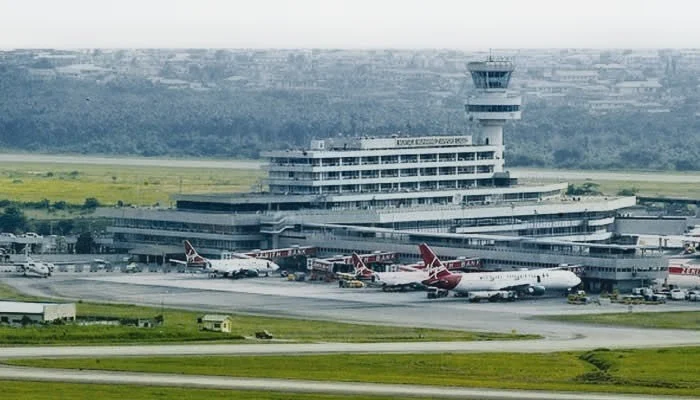
In spite of arriving on time, checking in, and waiting at the boarding gate, many air travelers in Nigeria are increasingly met with sudden announcements of flight delays or cancellations.
Consequently, flight disruptions have become one of the most persistent challenges plaguing Nigeria’s domestic aviation industry.
While delays and cancellations are not peculiar to Nigeria, their frequency has continued to generate concern among passengers, airlines, regulators and other stakeholders.
Capt. John Ojikutu, Chief Executive Officer of Centurion Security and Safety, said in an interview with the News Agency of Nigeria that domestic market encroachment was a primary cause of frequent flight delays and cancellations.
“If the commercial agreement was included in the Bilateral Air Services Agreement (BASA) during the era of Nigeria Airways, why did Nigeria Airways not fly to Gatwick, whereas British Airways (BA) was permitted to include Abuja and Lagos as part of its designated routes under the BASA?
“Why was Arik refused Heathrow but only Gatwick? I don’t know how you can convince me with language of the foreign airlines’ incursion rights into our domestic market with the help of our political office holders.
“Tell me why BA and VK from the UK operate to Lagos and Abuja, why Emirates, Qatar, and Etihad operate to Lagos, Abuja, and Kano, and especially why Ethiopian Airlines operates to all five Nigerian international airports.
“You consider these as a right in the Nigerian commercial agreement with the countries of these foreign airlines.
“How many of our 15 domestic airlines can fly daily to our five international airports if you still have not seen these ‘rights’ as incursions into the domestic airline market?” he queried.
Meanwhile, the Minister of Aviation and Aerospace Development, Mr Festus Keyamo, has placed considerable emphasis on engagement with industry stakeholders as part of efforts to address operational challenges.
In August 2026, Keyamo convened an emergency stakeholders’ meeting involving aviation unions, airline operators and government agencies following industrial tensions that disrupted flight operations.
Among the resolutions was a plan for the Nigeria Civil Aviation Authority (NCAA) and other aviation-agency heads to obtain payment schedules from airlines with outstanding statutory obligations, taking into consideration the airlines’ operating costs and prevailing economic realities.
Keyamo, who had said in many fora that airlines must meet their financial and regulatory obligations, affirmed that excessive financial pressure on operators can also threaten their ability to maintain sustainable operations.
“The Federal Government’s challenge is consequently to create an environment in which airlines can remain financially viable while passengers receive dependable services.
“At the centre of the effort is the NCAA, which is responsible for regulating the industry and protecting the interests of air travelers.
“Such measures are important because effective regulation goes beyond monitoring safety. It must also ensure that airlines provide reliable services and properly manage passengers when disruptions occur, ’’ he said.
Nevertheless, data released by the NCAA recently revealed that it recorded 4765 light delays and 36 cancellations in the month of August.
The regulator, in its summary of domestic airline flight disruption operations in the country for August revealed that 15 carriers operated 7,961 flights during the month, with roughly six in every 10 flights failing to operate on schedule.
“Air Peace recorded the highest number of delayed flights, with 1,330 of its 1,864 flights delayed, representing 71.4 per cent of its operations.
“United Nigeria Airlines recorded the highest delay rate among the carriers, with 943 of its 1,231 flights delayed, representing 76.6 per cent. The airline also recorded eight cancellations, the highest number during the month.
“Enugu Air followed with 582 delays out of 878 flights, representing 66.3 per cent, in addition to four cancellations.’’
It said Value Jet recorded 435 delays from 767 flights, representing 56.7 per cent, while Aero had 246 delays out of 469 flights, or 52.5 per cent.
Also, Green Africa recorded 114 delays from 226 flights, representing 50.4 per cent, while Overland had 139 delays out of 239 flights, or 58.2 per cent.
“Ibom Air recorded 254 delays from 560 flights, representing 45.4 per cent, while Max Air had 204 delays from 336 flights, or 60.7 per cent.
“Rano Air recorded 216 delays from 503 flights, representing 42.9 per cent, while Arik had 188 delays from 301 flights, or 62.5 per cent.
“Xe Jet recorded 40 delays from 127 flights, representing 31.5 per cent, while Binani had 22 delays from 57 flights, or 38.6 per cent.’’
NCAA stated that Umza Air recorded the best performance among the carriers, with 52 delays from 403 flights, representing 12.9 per cent, and no cancellations.
NCAA reported that 2,801 delayed flights were set back by 16 minutes to an hour, and 1,322 flights were delayed for one to two hours.
“Another 407 flights were delayed for between two and three hours, while 235 experienced delays of three hours or more.
“Air Peace accounted for 108 of the 235 longest delays, followed by Enugu Air with 46 and United Nigeria with 41; NG Eagle recorded no operations during the period,’’ it said.
More so, NCAA has issued stern warnings to airlines over spate of flight delays, crew shortages and other consumer-related infractions, urging them to align flight schedules with available aircraft and crew.
The Director General of Civil Aviation (DGCA), Capt. Chris Najomo, gave the admonition during separate interactive sessions with Air Peace and Max Air, held at the NCAA Corporate Headquarters in Abuja recently.
Najomo questioned the effectiveness of the buffer in view of recurring delays and cancellations being experienced, while acknowledging weather, diversions and airport restrictions as possible causes.
He underlined the need for contingency planning and effective passenger communication.
The NCAA Director, Public Affairs and Consumer Protection, Mr Michael Achimugu, said authority monitoring had revealed instances where passengers were left without adequate information or assistance.
He reminded Air Peace of its obligations to provide refreshments after two hours, meals after six hours, and accommodation, refunds and compensation where applicable.
He also raised concerns over flight merging and urged prompt responses to consumer complaints.
Responding, the Chief Operating Officer at Air Peace, Mrs Oluwatoyin Olajide, disclosed that the airline had 20 aircraft – five Aircraft on Ground (AOG) and 15 serviceable.
Olaide added that Air Peace deliberately operated 80 to 85 flights daily to maintain a buffer for disruptions.
She attributed disruptions to technical issues, including bird-strike damage, component shortages and a cracked windshield, as well as weather and airport restrictions.
Olaide said that Air Peace provided hotel accommodation and assistance to affected passengers.
At the Max Air session, the General Manager, Ground Operations/Business Development, Mr Raymond Omadiagbe, disclosed that three Boeing 737 aircraft were available for domestic operations.
He said that all serviceable, with only two being operated due to crew limitations, the international fleet comprised two Boeing 747s and one Boeing 777 undergoing checks.
Omadiagbe said Max Air had reduced its schedule to match available resources in addition to discontinuing late-night Kano operations following passenger feedback.
Observers say the recent interventions by the Federal Government, the NCAA, airlines and other stakeholders show that the problem is receiving attention.
Nonetheless, the August disruption figures demonstrate that much more remains to be done.
Experts say the true measure of progress for Nigeria’s aviation industry lies not in how swiftly stakeholders manage flight delays and cancellations, but in their ability to build systems that prevent these disruptions altogether.
For Nigerian travelers, success is defined by a simple, predictable experience: arriving at the airport, boarding on schedule, and reaching their destination safely.(NANFeatures)
Edited by Chijioke Okoronkwo
*** If used, please credit the writer and the News Agency of Nigeria.


Comments