


By Mark Longyen, News Agency of Nigeria (NAN)
West Africa’s climate crisis is becoming harder to separate from the region’s familiar struggles with poverty, displacement, food insecurity, resource competition and violent conflict.
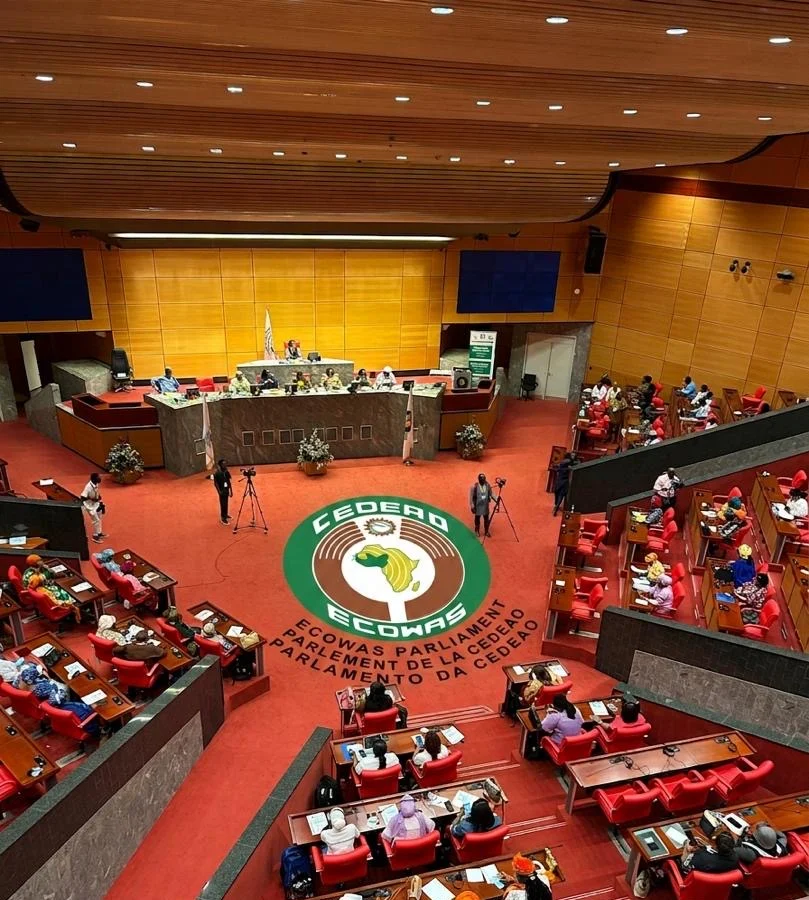
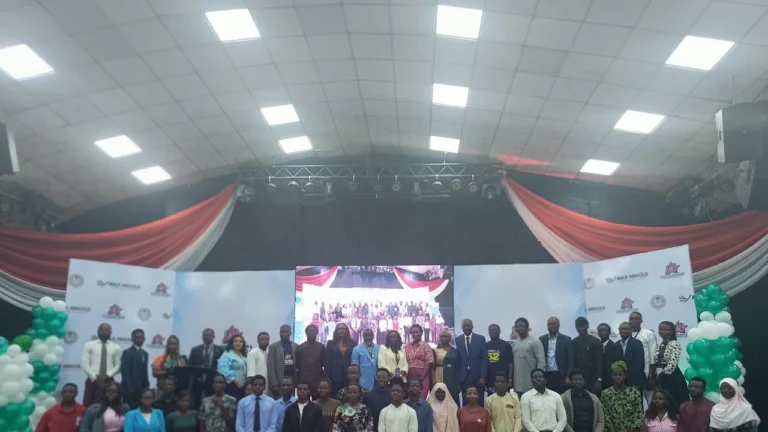
That convergence framed the ECOWAS Parliament’s Second 2026 Extraordinary Session and Second Parliamentary Seminar in Accra, Ghana.
It was themed “Climate Change as a Driver of Environmental Degradation, Population Displacement and Growing Insecurity in the ECOWAS Region.”
Beyond the speeches and warnings, the week-long meeting posed a harder question: can ECOWAS convert longstanding climate commitments into funded, coordinated and measurable action?
The Parliament’s adopted resolutions offered one answer, urging ECOWAS leaders to consider establishing a regional fund dedicated to climate resilience and human security.
The lawmakers also called for climate resilience to be integrated into national budgets, development plans, land-use policies, conflict-prevention mechanisms and disaster-risk reduction strategies.
They further called for the ECOWAS Commission to develop a five-year implementation roadmap for translating the recommendations into practical measures.
These proposals attempt to move the regional climate conversation from declarations towards institutional mechanisms capable of producing measurable results.
Yet, the Parliament’s own assessment exposed the obstacles.
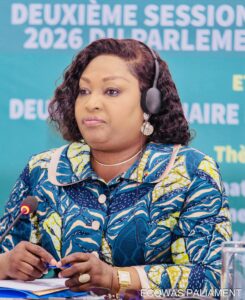
Speaker Hadja Mémounatou Ibrahima was blunt in her closing address.
“Our region doesn’t lack strategies nor instruments.
“What West Africa lacks are the financing and political will required to implement existing frameworks and transform them into visible and tangible assets for citizens,” she said.
That diagnosis goes to the heart of the region’s climate dilemma, where policies exist, but implementation frequently falls behind ambition.
Earlier, in her opening address, Ibrahima urged lawmakers to view climate disruption through its consequences for ordinary people rather than through statistics alone.
“Climate disruption can no longer be measured only in degrees, statistics or projections,” she said, citing declining land productivity, retreating coastlines, flooded neighbourhoods and displaced families.
For her, the fundamental question was how governments could protect citizens when environmental change was occurring faster than their capacity to adapt.
Ghana’s Vice-President, Prof. Jane Opoku-Agyemang, reinforced that perspective, saying climate change and environmental degradation were compounding pressures on livelihoods and food security.
“Climate change is both a development and a security challenge,” she said, urging ECOWAS states to move from reactive crisis management towards proactive resilience-building.
Her prescription included stronger early-warning systems, resilient agriculture, water management, coastal protection and clean-energy investment.
She also linked climate resilience to youth opportunities, arguing that education, skills and economic empowerment could help prevent environmental pressures from becoming drivers of insecurity.
The financial dimension emerged starkly in a presentation by Dr Derek Sarfo-Yiadom of Ghana’s Environmental Protection Authority.
He disclosed that Ghana would require an estimated 22.6 billion dollars by 2030 to implement its climate actions and strengthen resilience.
“When we put our climate reports together, we came out that we needed 22.6 billion dollars to accomplish our climate actions by the year 2030,” he said.
Sarfo-Yiadom argued that vulnerability assessments must identify not merely climate hazards, but the people exposed, barriers to recovery, responsible institutions, available budgets and measurable outcomes.
He called for stronger early-warning systems, improved drainage, resilient infrastructure and measures supporting rural livelihoods through climate services, crop diversity and better soil-water management.
At the regional level, ECOWAS climate expert Raoul Kouamé highlighted the challenge of translating commitments into implementation, especially where institutional capacities and financing remain uneven.
His argument reinforced a central lesson from the Accra conference; climate governance cannot succeed through isolated national interventions when rivers, ecosystems, migration routes and environmental risks cross borders.
Guinean parliamentarian Bademba Baldé said lawmakers identified effective implementation, financing and national ownership among the principal obstacles confronting regional climate action.
The Parliament consequently connected climate vulnerability with displacement, competition over land and water, pastoral mobility and resource-related conflicts.
That connection is especially important for West Africa, where environmental stress can amplify existing economic, social and security vulnerabilities.
The recommendations therefore went beyond environmental protection, seeking to embed climate resilience within development planning, conflict prevention and disaster-risk management.
For Nigeria and other vulnerable member states, the implications are substantial, given recurring floods, droughts, land degradation, food insecurity and competition over natural resources.
The Accra resolutions also raise an institutional question; how effectively can the ECOWAS Parliament drive implementation when its role remains principally consultative?
Nigerian lawmakers, including Sen. Ali Ndume and Awaji Abiante, argued that strengthening the Parliament’s legislative powers would enhance its ability to scrutinise regional and national responses.
That debate gives the climate question a governance dimension: ambitious recommendations require institutions with sufficient authority to monitor compliance, demand accountability and sustain political attention.
The Parliament itself recognised this when it stressed that its credibility would depend on decisions producing concrete and measurable improvements in citizens’ lives.
Its closing position was both ambitious and cautionary, noting that resolutions must not become another archive of unimplemented regional commitments.
The adoption of the seminar’s outcome document gave the climate agenda an institutional pathway.
The proposed regional resilience fund offers a potential financing mechanism, and the five-year roadmap, if effectively developed and monitored, could provide the continuity often missing from regional climate initiatives.
Stakeholders insist, however, that money alone will not resolve the crisis.
They say political ownership, institutional coordination, national legislation, community participation and credible monitoring will be equally decisive in translating commitments into action.
The Accra deliberations therefore shifted the focus from whether West Africa understands its climate crisis to whether governments and regional institutions are prepared to govern against it.
The real test now lies in whether governments, ECOWAS institutions and national parliaments will finance, implement and monitor the commitments reached.
For West Africa, the climate crisis is no longer waiting for another declaration. It is demanding decisions, resources and action.
Accra has provided the diagnosis and a framework.
The credibility of the ECOWAS Parliament’s climate push will ultimately be measured by what follows after the conference. (NAN)
Edited by Tosin Kolade
Comments