


By Maureen Okon
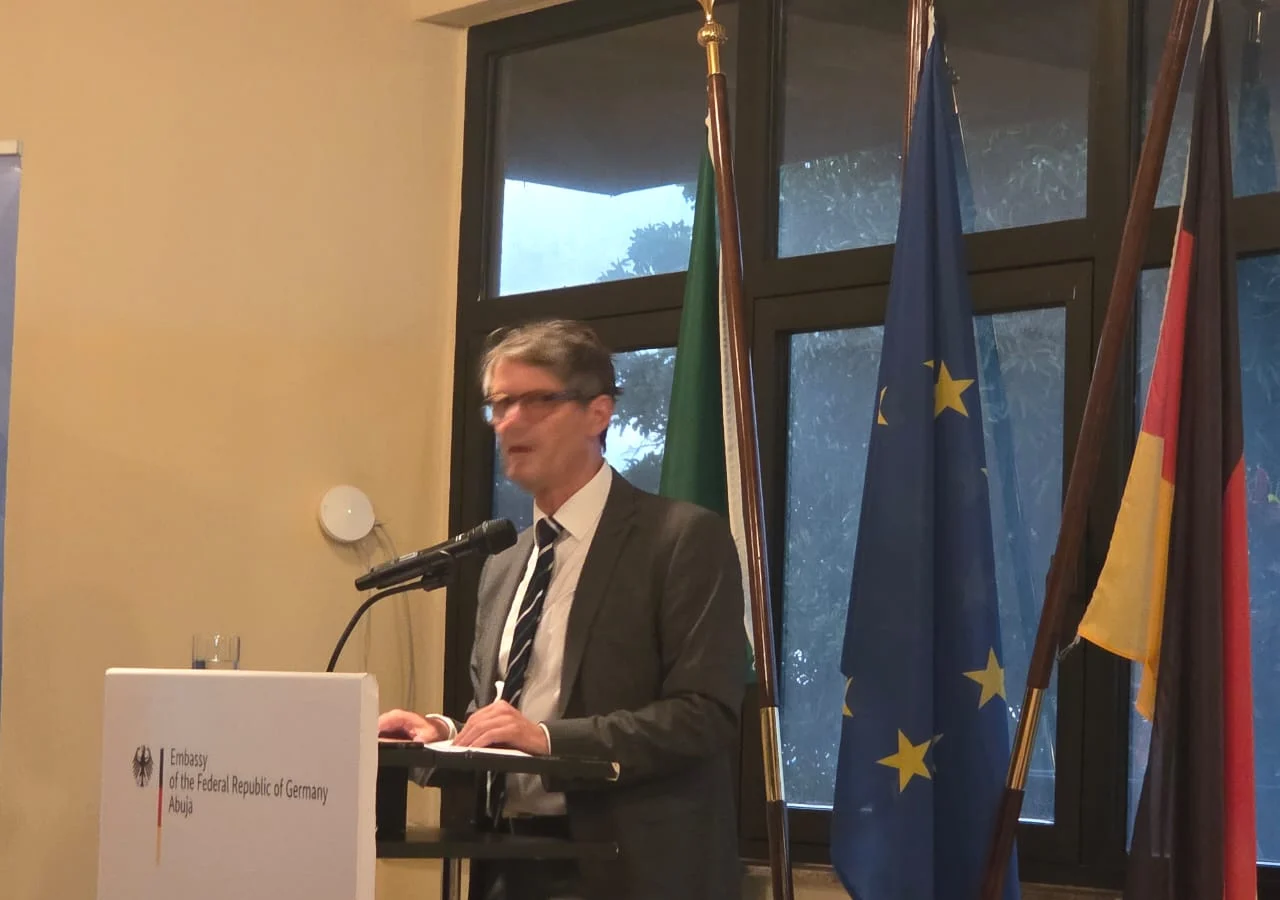
The German Embassy in Nigeria has commemorated World Day Against the Death Penalty with a call for open reflection on justice, human dignity and the right to life.
The News Agency of Nigeria (NAN) reports that the event organised by the German Embassy was held ahead of the World Day Against the Death Penalty marked every 10th of October.
The event was organised in partnership with Avocats Sans Frontières France, the Australian High Commission and the Embassy of Spain, as Nigeria approaches 10 years without an execution.
Mr Stefan Rössel, the German Ambassador to Nigeria, said the day unifies the global movement and called for the abolition of capital punishment while raising awareness about its implications.
According to Rössel, this year’s celebration is very special for us here in Nigeria because Nigeria is approaching the 10-year mark since its last execution in December 2016.
“This will make the country a so-called de facto abolitionist state.”
He noted that the death penalty remained in Nigerian law and described the milestone as important and said he welcomed it wholeheartedly on behalf of his government.
”Germany opposes the death penalty unconditionally and working toward its permanent abolition is a pillar of our human rights policy.
”We believe that the right to life as laid out in the Universal Declaration of Human Rights must not be denied by law,” he said.
Rössel linked Germany’s position to lessons from its own history.
He noted that the Nazi dictatorship applied the death penalty regularly to terrorise the population, with more than 33,000 people sentenced to death and executed by civil and military courts.
He added that the communist regime in East Germany upheld capital punishment until its abolition in 1987, with the last execution on German soil taken in 1981.
“Today, Article 102 of the German Constitution states simply: Capital punishment is abolished,” he said.
He added that while the suffering of victims and their families must be acknowledged, justice systems must protect human rights and guard against error, stressing that a death sentence was irreversible.
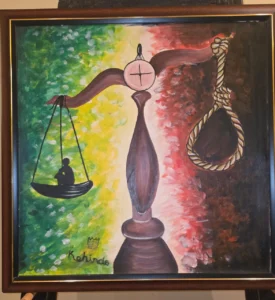
He quoted French author Victor Hugo as saying, “What is a crime when individuals do it is no less an offence when society commits the deed.”
He said the forum was convened with utmost respect for Nigeria’s institutions and history and aimed to contribute to an open and constructive exchange of views.
Also speaking at the event, Angela Uzoma-Iwuchukwu, the representative of Avocats Sans Frontières France, said the organisation has worked on the death penalty in Nigeria since 2007 and launched its full project, “Saving Lives” in 2011.
Avocats Sans Frontières France means Lawyers Without Borders France.
She disclosed that Nigeria has about 3,800 persons on death rows, the highest number in sub-Saharan Africa, noting that each number represents a human being with families.
“The issue of the death penalty is deeply connected to the right to life. We oppose the death penalty in all circumstances,” she said.
She argued that death penalty does not serve as a greater deterrent than imprisonment and described it as reactive rather than proactive, adding that it disproportionately affects the poor who cannot afford quality legal defence.
She raised concerns about Nigeria’s mandatory death penalty, adding, it compels judges to impose a death sentence once guilt is established, regardless of mitigating circumstances.
She cited cases of Maimuna Abdulmumini, who was forced into early marriage at age 13 and sentenced to death and Sunday Jackson, a farmer sentenced to death in a case involving self-defence which was upheld by the Supreme Court as instances why the organisation is kicking against such action.
“What would have happened if the government had signed his execution warrant? He would have been executed not because a life was not taken, but because the court refused to recognise the circumstance,” she said.
She called for judicial discretion to be restored and urged Nigeria to move from a moratorium on executions to a formal step toward abolition.
NAN reports that the event also featured a dialogue on the human impacts of the death penalty on families, with Amanda Angel, who travelled from Lagos, sharing her family’s experience.(NAN)(www.nannews.ng)
Edited by Francis Onyeukwu


Comments