


By Ismail Abdulaziz, News Agency of Nigeria (NAN)
For millions of Nigerian bank customers, the memory of waking up to locked banking halls and frozen life savings remains one of the sharpest anxieties in personal finance.
Yet, across the country’s evolving financial landscape in 2026, that anxiety is increasingly tempered by an institutional shield designed to catch savers when lenders stumble: the Nigeria Deposit Insurance Corporation (NDIC).
Established under Decree No. 22 of 1988—and now operating under the strengthened legal framework of the NDIC Act 2023—the corporation was created as an independent financial safety-net agency to protect depositors and reinforce stability in the banking sector.
Over the past year, a combination of expanded insurance coverage, digital payout mechanisms, regulatory recapitalisation and high-profile bank closures has put the NDIC’s mandate to its most visible test in recent memory.
While regulators maintain that the agency’s interventions have prevented systemic panic and delivered rapid relief to small savers, lingering bottlenecks in asset recovery, protracted court battles and unresolved claims from defunct institutions continue to test public patience.To understand the NDIC’s footprint in Nigeria’s financial market, financial analysts point to its four core statutory mandates:
“Deposit Guarantee: Insures deposits across licensed banks (DMBs, MFBs, PMBs, PSBs, and non-interest banks) and reimburses savers up to the statutory limit if a bank fails.
“Banking Supervision: Partners with the CBN to conduct on-site and off-site monitoring, enforcing rules and detecting financial distress early.
“Failure Resolution: Stabilises distressed banks through financial assistance, mergers, or bridge banks to prevent sudden collapse.
“Bank Liquidation: Acts as official liquidator when the CBN revokes a bank’s licence—paying insured depositors, selling assets, and recovering debts to settle creditors.”
These four functions sustain public confidence and prevent panic-driven bank runs. In 2026, their impact is clearest in stronger depositor protection and faster payouts.
Per June 2026 NDIC updates, maximum insurance coverage now reaches N5 million per depositor at Deposit Money Banks and Mobile Money Operators, and N2 million at Microfinance, Primary Mortgage, and Payment Service Banks.
These limits fully protect over 98 per cent of DMB accounts and 99 per cent of MFB and PMB accounts nationwide, curbing the fear of losses that triggers mass withdrawals.
Equally transformative has been the shift away from cumbersome physical verification toward automated, Bank Verification Number (BVN)-linked payouts.
By leveraging BVNs and customers’ alternative accounts at other commercial banks, the NDIC has compressed payout timelines dramatically.
In May 2026, the corporation reported that reimbursement to eligible depositors of two savings and loans institutions whose licences were revoked in December 2025 commenced within 72 hours of closure, allowing customers to regain access to their funds with minimal disruption.
A similar playbook was deployed in July 2026 after the CBN revoked the licences of 46 microfinance banks. The NDIC immediately initiated depositor verification alongside online claims portals and BVN-based payment routes.
NDIC Chief Executive, Mr Thompson Sunday, provided further insights.
Explaining the seamless reimbursement architecture during updates on the 46 defunct MFBs, Sunday noted that technology had eliminated the need for routine physical queues.
“All we need to do is to make sure that the accounts have BVNs identified, and in collaboration with the Nigeria Inter-Bank Settlement System (NIBSS), we identify their alternative accounts in other banks and pay them seamlessly without having to come to us,” he said.
Beyond individual bank closures, the NDIC’s market influence in 2026 has been closely tied to broader structural reforms led by the apex bank.
When the CBN-led banking sector recapitalisation exercise concluded in March 2026, 33 out of 37 banks successfully raised a combined N4.65 trillion to meet new minimum capital requirements, according to a Federal Ministry of Finance statement hosted by the NDIC.
While the CBN spearheaded the capital-raising policy, the NDIC played an integral supporting role within the financial safety net—coordinating supervisory oversight and deploying risk-based supervision, risk-sensitive insurance premiums and early-warning bank resolution systems.
As highlighted in NDIC briefings in September 2026, the corporation has also prioritised building up its Deposit Insurance Fund (DIF) so it can respond to financial shocks independently without relying on government bailouts.
Reaffirming the agency’s commitment to maintaining systemic resilience during legislative engagements in 2026, the corporation stressed that its risk-based premium system remains a vital buffer for the Nigerian financial ecosystem, ensuring that stronger capital bases and proactive surveillance work together to protect public trust.
In spite of these gains, the NDIC faced significant operational hurdles in 2026 when recovering debts and liquidating failed banks’ assets to pay uninsured depositors. Key obstacles include:
“Inflated Valuations: Overvalued foreclosed properties deter auction buyers, causing assets to sit idle and depreciate while delaying liquidation dividends.
“Deliberate Defaults: Borrowers often mistakenly believe a bank’s closure erases their debt, leading them to hide assets and evade recovery efforts.
“High Recovery Costs: For smaller microfinance banks, the legal and administrative costs of tracing bad loans frequently outweigh the debt’s actual value.”
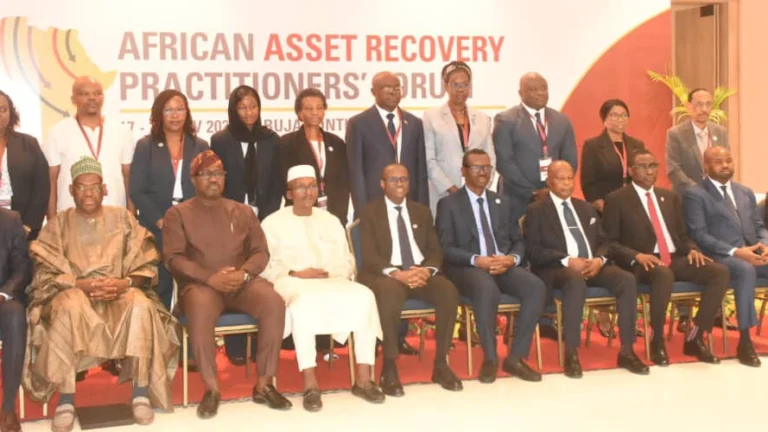
Addressing asset recovery professionals at an NDIC forum in November 2026, the corporation’s Asset Management Department underscored the financial toll of protracted recoveries on ordinary savers.
“If it costs us N10 million to recover N8 million, the depositor has lost. We must be disciplined about costs, timelines and reporting,” an NDIC director warned.
The director stressed that the agency maintained zero tolerance for insider dealing, asset undervaluation or collusion with buyers.
The judiciary remains another critical pressure point.
Former bank owners, shareholders and delinquent debtors routinely file injunctions and protracted lawsuits challenging licence revocations or liquidation orders, tying up assets in court for years.
Recognising this bottleneck, the NDIC and the Federal High Court held high-level engagements in June 2026 aimed at accelerating failed-bank litigation and streamlining debt recovery processes.
At separate judicial forums in 2026, judicial leaders echoed the urgency of timely adjudication, with the President of the National Industrial Court emphasising that the NDIC must prioritise depositors of failed banks under the NDIC Act 2023, while legal stakeholders warned that inconsistent or delayed rulings in banking disputes risk eroding public confidence.
The NDIC’s 2025 Annual Report highlighted rising banking sector risks, with non-performing loans (NPLs) exceeding the five per cent regulatory threshold to reach over seven per cent alongside growing cyber threats and concentrated lending.
Regulatory delays, stemming from the NDIC’s inability to unilaterally revoke banking licences, allow distressed lenders to deteriorate further before intervention.
Additionally, poor governance and insider abuse hinder debt recovery, as loans to directors and major shareholders often lack valid collateral.
Speaking on the ongoing reconciliation efforts, NDIC officials attributed many of the pending payouts to incomplete customer records, noting:
“There are depositors that we have not been able to trace, and this is an opportunity for them to come forward. Once they do, we will pay them.”
For aggrieved depositors whose balances exceeded the N5 million statutory insurance cap—or whose payouts have been stalled by documentation discrepancies—the wait has taken a heavy personal toll.
“Behind every trapped account is a Nigerian family facing real hardship. Justice delayed is hardship prolonged. Nigerians had saved responsibly, and institutions must equally act responsibly in resolving the matter,” NDIC clarified.
The National Assembly has also weighed in on the plight of large depositors.
Earlier in 2026, the House of Representatives queried the NDIC over the fate of customers whose deposits exceeded the N5 million statutory limit, urging the corporation to intensify debt recoveries so uninsured balances are settled without undue hardship.
According to NDIC updates and claims guidance issued during the year, two primary issues account for most delays.
First, missing, incomplete or inconsistent account records—particularly accounts lacking valid BVN linkages—require manual tracing and verification before funds can be released.
The July 2026 closure of 46 microfinance banks similarly created a heavy verification workload for customers with incomplete documentation.
Second, public misunderstanding of how deposit insurance works continues to fuel frustration.
Many depositors with balances exceeding the N5 million statutory cap expect immediate full reimbursement, unaware that excess balances are not covered by insurance and can only be paid as liquidation dividends once the NDIC sells the defunct bank’s assets and recovers unpaid loans.
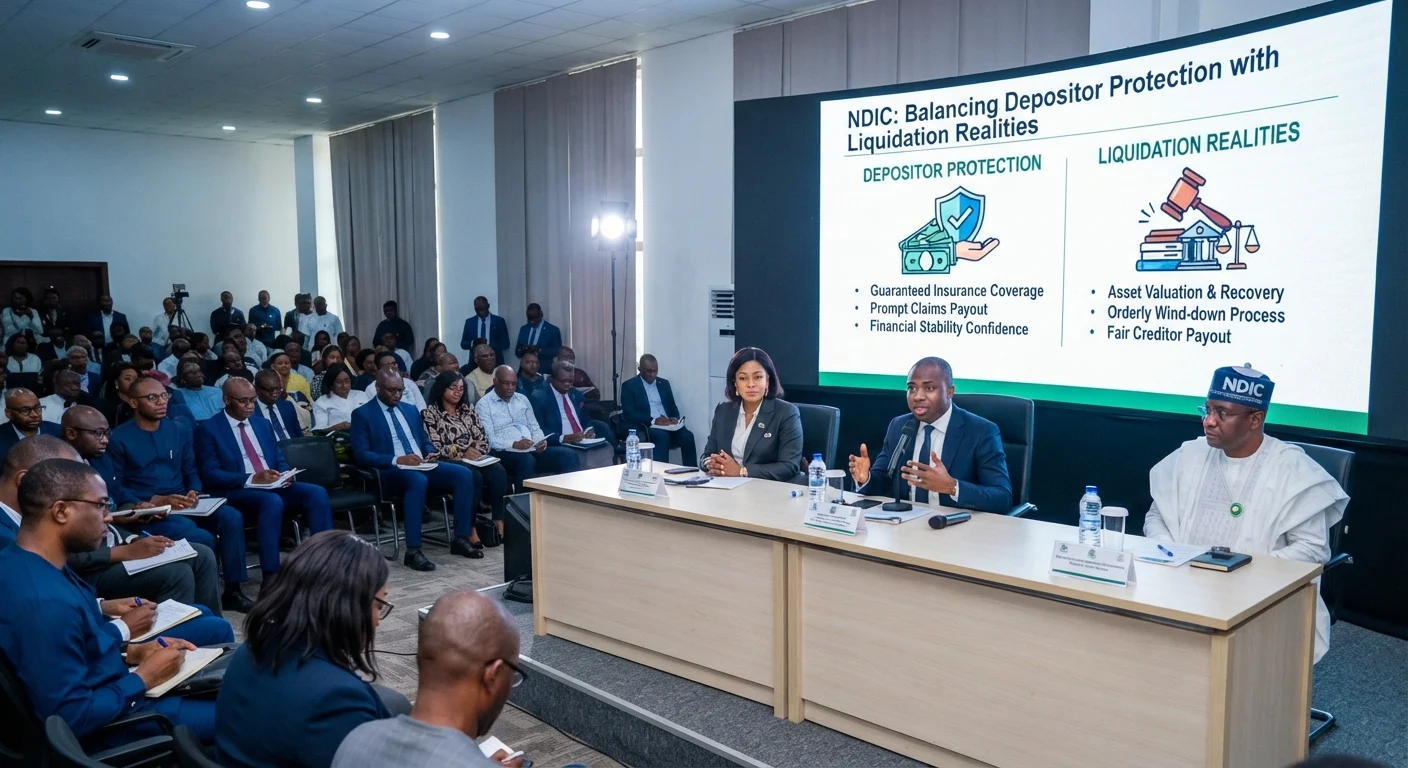
Ultimately, the NDIC’s performance in 2026 reflects both the strength of Nigeria’s modernised financial safety net and the structural realities of debt recovery in a challenging economy.
By insulating more than 98 per cent of bank accounts, executing 72-hour digital payouts and supporting a newly recapitalised banking industry, the corporation has proven its capacity to contain panic and protect small savers.
Yet, bridging the gap between rapid insured payouts and the slow grind of asset liquidation remains its defining test.
Policy analysts hold that accelerating judicial reforms, enforcing stricter asset valuation standards, curbing insider lending and deepening public financial literacy will determine how swiftly the NDIC can turn statutory protection into complete confidence for every Nigerian depositor. (NANFeatures)
***If used, please credit the writer and the News Agency of Nigeria.



Comments