


By Justina Auta
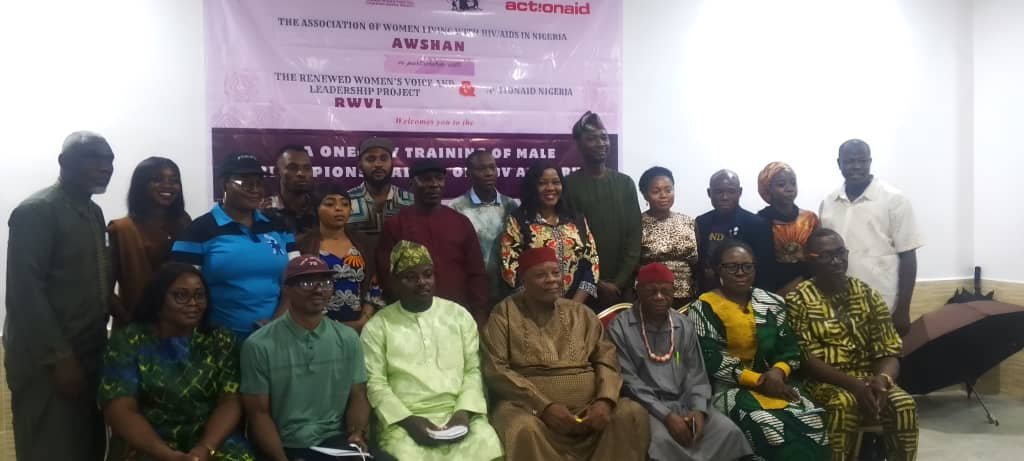
The Association of Women Living with HIV/AIDS in Nigeria (ASWHAN) has mobilised male community leaders as champions in the fight against Gender-Based Violence (GBV) and promotion of Sexual and Reproductive Health and Rights (SRHR).
The initiative was organised in partnership with the Renewed Women’s Voice and Leadership (RWVL) Project, funded by Global Affairs Canada and ActionAid Nigeria.
It brought together traditional rulers, religious leaders, media practitioners and other stakeholders in Abuja on Thursday.
Mrs Patience Iyakwo, ASWHAN representative, said the organisation had shifted its strategy to focus on men because they remained the majority of perpetrators of GBV.
She said previous interventions largely targeted women, leaving out men who needed to be part of efforts to address the problem.
“Most times we’ve done a lot of training on GBV for women, but the truth is that most of the perpetrators of GBV are male.
“Women return home after these trainings to meet men who are not informed, and that is not taking us anywhere.
“This training is long overdue because the men gathered here are gatekeepers in their communities. They are influential and will take these messages back to other men,” she said.
Iyakwo identified poor reporting of GBV cases as a major obstacle to justice, noting that many survivors reported incidents to community leaders instead of appropriate authorities.
According to her, delayed reporting often resulted in the loss of vital evidence needed for prosecution, in spite of the existence of agencies and policies established to address GBV.
Also speaking, Development Consultant, Mr Martin-Mary Falana, attributed the persistent prevalence of rape, incest and other forms of GBV to weak implementation of existing laws and harmful social norms.
Falana said many survivors and their families remained reluctant to pursue justice because of stigma, while political interference often frustrated law enforcement efforts.
He said that women living with HIV faced multiple forms of discrimination, including eviction from their homes, domestic violence and abandonment due to misconceptions surrounding the disease.
According to him, the consequences of GBV extended beyond physical injuries to depression, trauma, suicide risks and lifelong infections, including HIV and hepatitis.
He called on traditional rulers, religious leaders and other community influencers to challenge harmful cultural norms and publicly condemn violence against women and girls.
“If communities begin to sanction perpetrators and leaders consistently speak against GBV, society will gradually change,” he said.
The Chief Imam of Karmajiji Community Mosque, Abdullahi Dauda, described the initiative as timely and consistent with the values of faith, compassion and justice.
Dauda attributed GBV partly to poor parental upbringing, inadequate moral discipline and lack of quality secular and religious education.
He urged men to reject all forms of violence and create safe environments where women and girls could realise their full potential and contribute meaningfully to national development.
Similarly, the Ezeigbo of Nyanya Community, Dr Ogbuke Charles, urged men to become role models for non-violent behaviour and supportive partners in advancing women’s rights.
He said traditional institutions had a responsibility to discourage harmful cultural practices and gender stereotypes that fuel violence and discrimination against women and girls.
Charles pledged the support of traditional rulers in promoting respect, dialogue and shared responsibility within communities to address GBV.
A media participant, Ms Stella Onah, commended ASWHAN for adopting an inclusive approach by engaging men in conversations traditionally dominated by women.
According to her, involving traditional rulers, religious leaders, journalists and other influential men was critical to changing attitudes and addressing the root causes of GBV.
She urged the media to sustain public conversations on raising boys to reject violence and respect women, noting that such efforts would complement campaigns to reduce GBV and HIV infections among women and girls.
The News Agency of Nigeria (NAN) reports that the Renewed Women’s Voice and Leadership Project is a five-year initiative funded by Global Affairs Canada.
It seeks to strengthen women’s rights organisations and promote gender equality, particularly among marginalised groups across Nigeria.(NAN)(www.nannews.ng)



Comments