


By Oluwafunke Ishola, News Agency of Nigeria (NAN)
Shortly after midnight, when labour pains intensified and panic began to set in, Mrs Tolu Badmus knew exactly where to go.
She made her way to Adifase Primary Health Care Centre (PHC) in Oyo State, knocked on the gate and waited.
“The security man opened the gate and the nurses attended to me immediately,” she recalls.
It was neither the first time, nor would it be the last.
Today, Badmus is a mother of four children, all of whom were delivered at the facility.
Her first child is now 17 years old, a testament to nearly two decades of trust in a health centre that had become a lifeline for families in the community.
“If the service was not satisfactory, I wouldn’t keep coming back,” she says with a smile.
As a trader who sells children’s items, she interacts daily with pregnant women and young mothers. Many of them, she says, speak positively about their experiences at the facility.
According to her, their stories reflect the quiet transformation taking place at Adifase PHC, where the revitalisation of primary healthcare is bringing essential services closer to families and helping improve maternal and child health outcomes in a country that still carries one of the world’s heaviest burdens of preventable maternal and child deaths.
Adifase PHC, located in the Apata/Odo Ona area of the Ibadan South-West Local Government, provides essential primary health services, including maternal and child health care, immunisations, and local disease control.
The centre was rehabilitated in 2021, and the upgrade was co-funded by the Oyo State Government, the Basic Health Care Provision Fund, and various international partners.
A Trusted Place for Mothers
For Mrs Bukola Moses, the PHC came highly recommended. Having recently relocated to Ibadan and expecting her second child, she decided to try the facility for the first time.
“The nurses are empathetic and the environment is decent,” she says.
One factor that stands out is affordability.
“Antenatal care is free. I only paid about N5,000 for some tests.”
For many pregnant women facing rising living costs, access to affordable antenatal care can mean the difference between seeking professional healthcare and delaying treatment.
Nurse Gloria Ovhan, stood before the community during a health talk at the PHC, stressing that regular antenatal visits helped identify complications early, reducing risks for both mothers and babies.
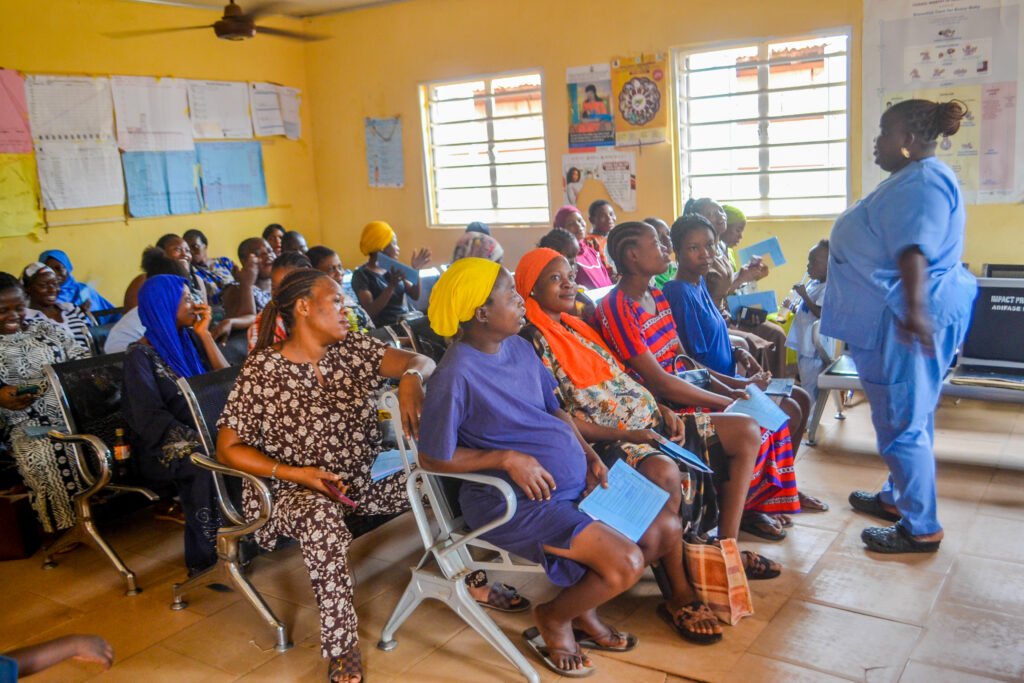
Ovhan advised them against self-medication, and visiting unlicensed or traditional homes, adding that the health centre is open 24/7, making help available whenever it is needed.
However, Nigeria continues to face significant maternal health challenges.
According to the United Nations, the country accounted for about 75,000 maternal deaths in 2023, nearly one-third of the global total.
Notably, the 2025 State of the Health of the Nation Report released by the Federal Ministry of Health and Social Welfare, shows progress, with maternal deaths recorded in health facilities dropping significantly due to improved access to skilled maternity care and emergency obstetric services.
Facilities such as Adifase PHC represent the frontline of that progress.
Giving Children a Better Start
Every week, dozens of mothers arrive at the facility carrying babies strapped to their backs or nestled in their arms.
On Infant Welfare Clinic days, the turnout can be overwhelming.
“Most times, we have nothing less than 85 mothers who bring their babies,” said Matron Oladehinde Adeyemo, the Officer-in-Charge of the facility.
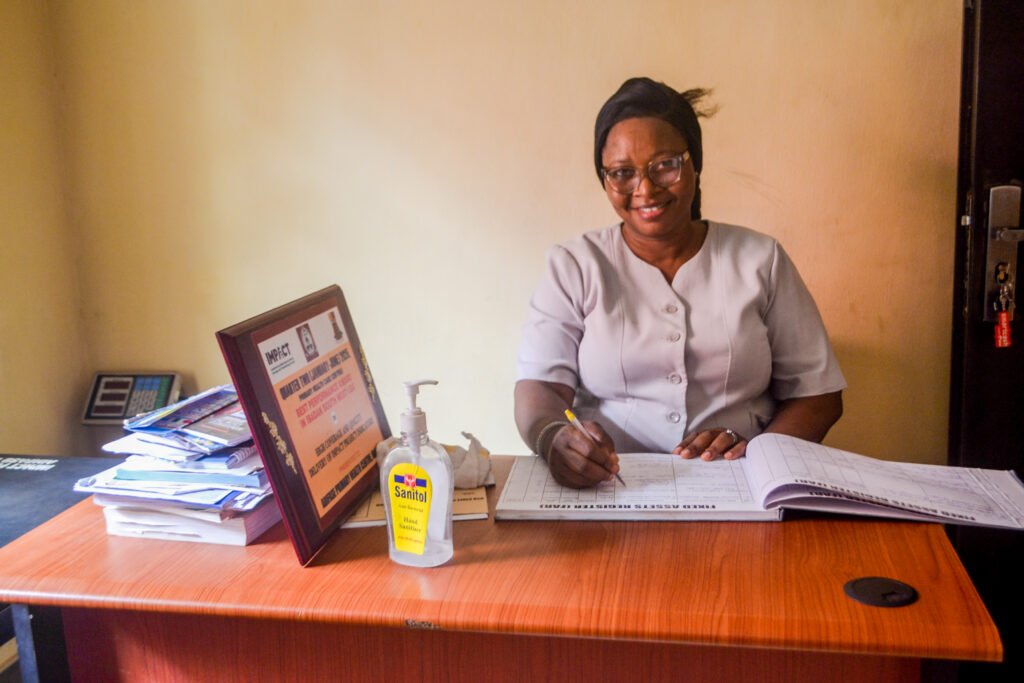
The clinic provides routine immunisation, growth monitoring, nutrition counselling and health education.
Health workers carefully track children’s growth, identify signs of malnutrition and educate mothers on infant feeding practices.
“We talk about exclusive breastfeeding, nutrition and how to care for babies above six months,” Adeyemo explained.
The interventions are critical in a country where child survival remains a major challenge.
UNICEF estimates that Nigeria’s under-five mortality rate remains among the highest globally, with approximately 116 deaths per 1,000 live births.
Many of these deaths are linked to preventable causes that can be addressed through immunisation, nutrition support and timely healthcare.
For mothers who attend the infant welfare clinics, the health centre serves as more than a vaccination point, it is also a classroom, support network and safety net.
Family Planning Conversations That Are Saving Lives
Beyond caring for newborns, Adifase PHC is helping families make informed decisions about their futures as discussions often extend to family planning during sessions.
“We explain the different methods, their benefits, eligibility and possible side effects,” Adeyemo said.
Years of community outreach, she said, have increased awareness and reduced misconceptions.
“Their knowledge is high now. They understand the methods and don’t entertain unnecessary fears.
“The impact is visible because yesterday alone, about 10 women accepted family planning services,” she disclosed.
For many women, family planning is not simply about preventing pregnancy; it is about spacing births, protecting maternal health and ensuring families can provide adequately for their children.
While some contraceptive commodities are provided free when supplied by government programmes, clients sometimes pay modest fees when supplies run short, Adeyemo explained.
She disclosed that implants remained the most popular option, while longer-lasting methods such as intrauterine devices (IUDs) have lower uptake.
According to Adeyemo, family planning s one of the most cost-effective interventions for reducing maternal and infant deaths as it helps women avoid high-risk and closely spaced pregnancies.
More Than Deliveries: Circumcision and Care Across Generations
The services offered at Adifase PHC extend far beyond pregnancy and childbirth.
The facility provides routine child healthcare services, including circumcision for newborn boys, helping families access safe procedures within their communities rather than seeking unregulated alternatives.
In Yoruba towns, naming and circumcision on the 8th day is a tradition.
Before, families called the local barber who used one blade for every boy. Mothers would whisper prayers and hold their breath.
When Deji’s mother had her boy, the nurses offered the PHC’s aseptic circumcision service, sterile kit, local anesthesia, tetanus shot, and a follow-up check on day three and day seven with no extra cost under the basic healthcare programme.
Deji’s grandmother protested at first, “The hospital will make him soft.”
But she watched the procedure; clean tray, gloves, and Nurse Titi explaining each step to the mother so she wouldn’t feel scared.
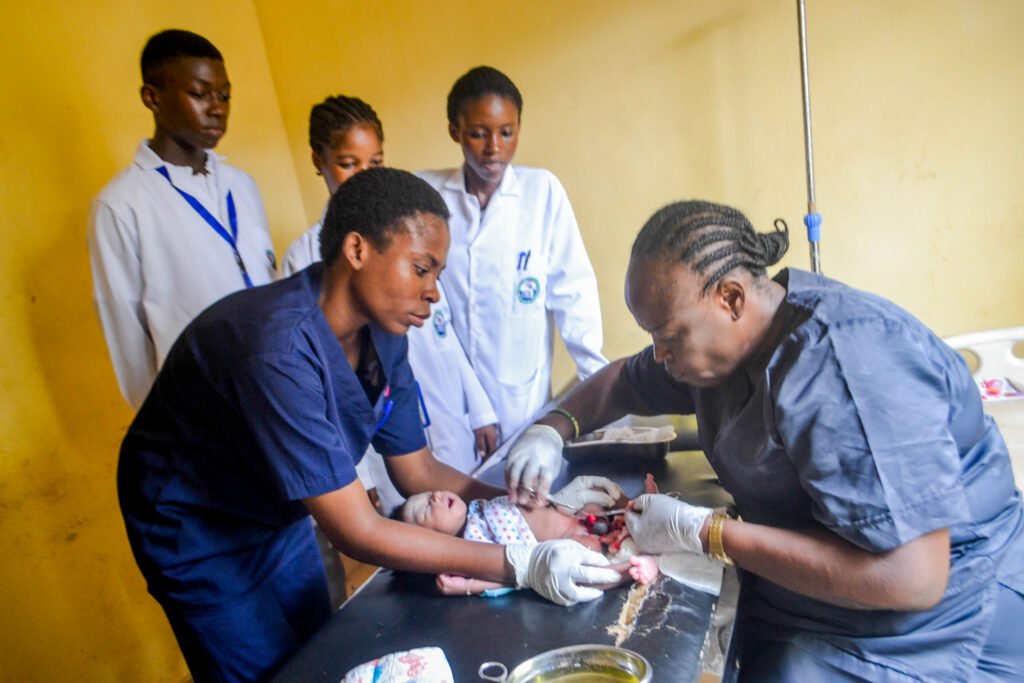
Deji cried for 30 seconds, then slept on his mother’s chest.
On day seven, grandma herself brought Deji back for dressing. She touched the healing wound and muttered, “This one is cleaner than what we used to do.”
For many elderly people who struggled to travel long distances to secondary hospitals, the PHC served as an accessible point of care for monitoring chronic illnesses and receiving routine medical attention.
This broad spectrum of services reflects the growing role of revitalised primary healthcare facilities as the first point of contact for people of all ages.
Progress Amid Persistent Challenges
Yet behind the success stories lies a reality that many frontline health workers know too well.
Adifase PHC continues to operate under difficult conditions. Unlike some newly upgraded facilities, it has no solar power system.
“We depend on a generator. And it’s not every time we have money for fuel,” Adeyemo said.
She explained that the situation affected patient care as laboratory tests are sometimes delayed while staff scramble to obtain fuel to power equipment.
Adeyemo disclosed that the facility also faced a chronic water shortage as a borehole installed years ago has repeatedly broken down in spite of multiple repairs.
“We have spent nothing less than N200,000 trying to fix it,” Adeyemo said.
Today, the centre relied largely on water purchased from cart pushers, while on some days, staff would buy sachet water for basic cleaning and sanitation needs.
The consequences are far-reaching.
“We used to do scrubbing, mopping and cleaning every day. Because we don’t have water, we reduce it to once or twice a week.”
Adeyemo acknowledged that recent government recruitment brought in additional personnel, however, she said the centre still struggles to maintain round-the-clock coverage due to staff shortages.
She disclosed that the lack of adequate cleaners forces health workers to improvise and stretch limited resources.
With no fewer than 80 mothers attending some clinic sessions, benches are borrowed from nearby locations to accommodate patients, urging the government to provide more chairs.
On government’s efforts, Dr Muideen Olatunji, Executive Secretary of the Oyo State Primary Health Care Board, outlineed major reforms under Gov. Seyi Makinde’s administration aimed at strengthening primary healthcare delivery across the state.
According to him, a central strategy of the state is the implementation of the ward health system, designed to bring healthcare closer to communities.
“Oyo State’s 351 political wards are being targeted so that each ward has at least one fully functional, upgraded, or newly constructed PHC facility.
“Over 750 PHC facilities exist in the state, with ongoing efforts to renovate and standardise them into flagship centres.”
He explained that the state had also prioritised human resource expansion, recruiting about 4,000 health workers, describing it as one of the largest single recruitment drives in Nigeria’s health sector.
Additionally, the government ensured a minimum of two doctors per local government area to improve access to clinical services.
To strengthen service delivery, he said, the administration improved drug availability and sustainability systems, including procurement of essential medicines and the introduction of a Drug Revolving Scheme.
“This allows facilities to reinvest internally generated funds into minor repairs and operations, reducing dependence on bureaucratic delays.”
In spite of challenges, Adifase PHC continues to earn the trust of the community it serves.
Every immunisation administered, every safe delivery conducted, every family planning consultation provided and every newborn circumcision performed represents a small but significant investment in healthier families.
For mothers like Badmus, the value of the facility is measured not in statistics but in lived experience.
In communities where access to quality healthcare can mean the difference between life and death, Adifase PHC stands as proof that revitalising primary healthcare is not just about renovating buildings.
It is about creating a place where mothers feel safe, children get a healthier start in life, families receive trusted guidance and entire communities find care close to home.
Also, for the residents who depend on it every day, that impact is immeasurable. (NANFeaures)
Edited by Vivian Ihechu
***If used, please credit the writer and the News Agency of Nigeria.

Comments