


By Emmanuella Anokam
Mr Ismaeel Ahmed, Chairman and Chief Executive Officer of the Presidential Initiative on Compressed Natural Gas and Electric Vehicles (Pi-CNG/EV), says availability of CNG is critical to making clean mobility affordable to Nigerians.
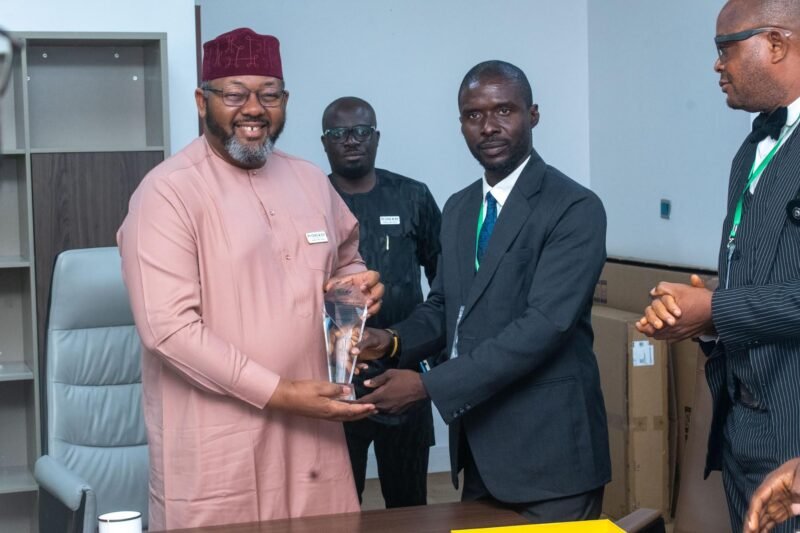
Ahmed said this in Abuja on Tuesday when members of the CNG/EV Users Forum paid a courtesy visit to his office in Abuja.
He said the development of CNG infrastructure was a complex process involving several stages, from gas production and processing to transportation, compression and distribution.
According to him, the government is building a new industry from the ground up, rather than merely implementing an intervention in one segment of the value chain.
He said transportation accounted for a significant portion of household expenditure, with Nigerians spending between 15 per cent and 25 per cent of their income on transportation, depending on their location and mode of transport.
Ahmed said reducing transportation costs had therefore become important, particularly amid the impact of rising global oil prices on the domestic economy.
He said the administration of President Bola Tinubu had given CNG the necessary political backing to become a national conversation, building on earlier efforts to promote the alternative fuel.
“CNG has been in existence for more than two decades around the world and probably in Nigeria for more than 10 years, but it was largely private sector-led and limited in scope.
“It was this administration that gave it the necessary political backing and put its weight behind CNG as a national project.
“Nigeria has the resources and technology required to develop the CNG industry but the major challenge is to simultaneously create demand and ensure adequate supply,” Ahmed said.
He said the misconceptions about CNG, including fears that its cylinders were similar to LPG cylinders and could easily explode, remained a major challenge to adoption.
The Pi-CNG boss said changing people’s perception and energy habits would take time and require sustained public awareness.
He noted that investors also needed to be encouraged to commit funds to CNG infrastructure to ensure that consumers could access the product after converting their vehicles.
According to him, government alone cannot finance the entire CNG value chain because the industry requires huge investments and competes with other national priorities for limited public resources.
“Government catalyses. It catalyses on both ends — the demand side and the supply side,” he said.
Ahmed said the cost of gas production, pipelines, compression stations, transportation, daughter stations, land acquisition, licensing and establishment of filling stations all formed part of the investment required to deliver CNG to consumers.
He stressed that affordability could not be separated from availability, noting that a cheaper product that was difficult to access would ultimately lose its economic advantage.
“Anything that is not available is not affordable. For it to be affordable, it has to be available.
“The ultimate beneficiary of the clean-mobility initiative should be the ordinary Nigerian, particularly commuters and passengers who depend on commercial and ride-hailing vehicles.
“The success of the initiative should therefore be measured by its impact on people’s daily lives rather than only by conventional economic indicators.
“Your GDP going up or down means nothing to me if the person in the village, town or suburb has not told me that he has seen some movement in his life.
“That is my economic index,” he said.
Ahmed cited the experience of a vehicle owner who previously spent about N300,000 weekly on petrol while travelling between Kano and Karai.
He said after converting the vehicle to CNG, the owner spent about N22,000 to cover a similar trip, saving about N80,000 per journey in spite of the initial conversion cost of about N1.5 million.
He said such savings demonstrated the economic potential of CNG and the need for users to understand the long-term benefits of conversion.
Ahmed, however, said the savings should ultimately translate into benefits for passengers and other users of commercial transportation.
He said the initiative was not aimed at replacing petrol and diesel immediately, stressing that Nigeria would continue to operate a mix of energy sources, including CNG, electric vehicles, petrol and diesel.
Ahmed also welcomed the establishment of the CNG/EV Users Forum, saying feedback from users was important in improving the clean-mobility programme.
He described government and users as partners, with government and industry contributing from the supply side while users provided practical feedback from the point of consumption.
He assured the forum that the stakeholder engagement mechanism of the Pi-CNG would continue to provide opportunities for dialogue and learning between users and service providers.
Earlier, the Coordinator of the CNG/EV Users Forum, Mr Felix Uzogara, said the delegation visited the Pi-CNG/EV to establish a relationship and present the forum as an organised, constructive and solution-oriented stakeholder platform.
Uzogara said the forum represented CNG and EV users, private vehicle owners, commercial and e-hailing drivers, technicians, conversion-centre owners, station personnel and other participants in the clean-mobility ecosystem.
He said the forum was established to promote responsible adoption, safety education, capacity development and continuous stakeholder engagement.
The forum coordinator said users should not only be beneficiaries of the clean-mobility initiative but constructive partners in its development.
He said the forum sought recognition as an organised end-user stakeholder platform, structured communication with Pi-CNG/EV, periodic consultations and collaboration on public sensitisation and capacity development.
“Our message is simple: We are not only users; we are stakeholders. We are not only identifying challenges; we are willing to contribute solutions,” Uzogara said.
He said the forum would continue to document the experiences of its members and develop recommendations aimed at strengthening Nigeria’s CNG and EV Ecosystem.(NAN)(www.nannews.ng)
=========
Edited by Emmanuel Afonne


Comments