


By Fatima Mohammed-Lawal
A Consultant Neurologist at the University of Ilorin Teaching Hospital (UITH), Prof. Kolawole Wahab, says the increasing migration of doctors abroad is threatening effective healthcare delivery in Nigeria.
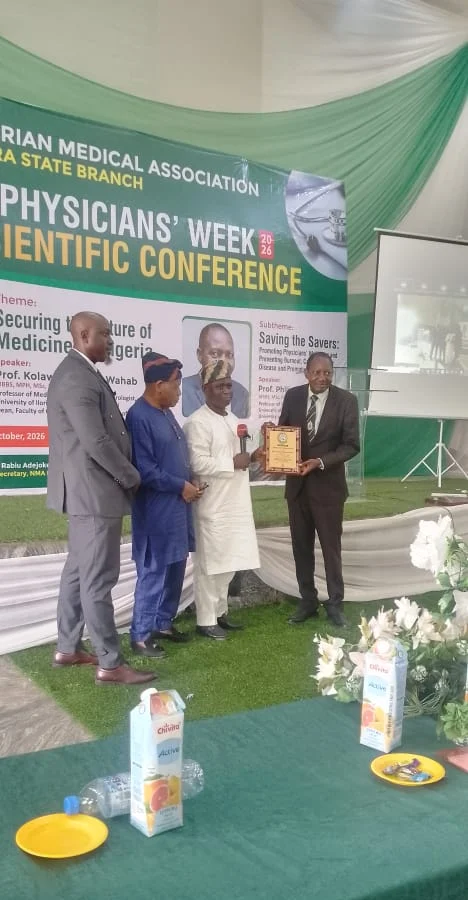
Wahab stated this on Wednesday in Ilorin, while delivering a paper presentation at the Scientific Conference of the Nigerian Medical Association (NMA), Kwara Chapter.
The News Agency of Nigeria (NAN) reports that the conference is part of activities organised to mark the chapter’s 2026 Physician’s Week, with the theme, “Securing the Future of Medicine in Nigeria”.
Wahab, who is the Dean, Faculty of Clinical Sciences, University of Ilorin, said the current wave of migration, popularly called “Japa syndrome”, was different from the past.
According to him, in the past, professionals travelled mainly for training and returned to contribute to national development.
He identified poor remuneration, unfavourable working conditions, inadequate infrastructure and insecurity as major drivers of the exodus.
According to him, the consequences are already being felt in hospitals through long waiting times and delayed emergency response.
Wahab said Nigeria currently has about four doctors per 10,000 population, compared to the World Health Organisation (WHO) recommended ratio of 30 doctors per 10,000 population.
“There is need for urgent government intervention through improved remuneration, better welfare packages, upgraded infrastructure and enhanced security for doctors,” he said.
The neurologist expressed concern on the mental health implications for doctors as a result of burnout.
According to him, excessive workload and prolonged duty hours were exposing doctors to anxiety, depression and other psychological challenges.
“Doctors working 24-hour call without adequate rest could easily be overwhelmed, and patients sometimes mistook exhaustion for negligence,” he said.
He called for regular mental health assessments and support for medical professionals.
Also speaking, a Consultant Cardiologist at UITH, Prof. Philip Kolo, called for adequate manpower to implement the ministry of health’s recommendations on working hours.
He spoke on the sub-theme, “Saving the Savers: Promoting Physicians’ Well-being and Preventing Burnout and Cardiovascular Diseases”.
He said doctors attending to more than 40 patients were still pressured to see more due to manpower shortage, a situation that could lead to excessive stress and burnout.
On cardiovascular health, Kolo listed smoking, hypertension, diabetes and obesity as major risk factors and urged medical practitioners and the public to prioritise regular health checks and early detection.
“Hypertension and diabetes can remain undiagnosed for years before resulting in serious complications, including stroke,” he warned
Earlier in his welcome address, the Chairman of NMA-Kwara, Dr Suleiman Rotimi, called for urgent policy reforms.
Rotimi also called for improved working conditions to address the migration of doctors and secure the future of medical practice.
He identified manpower shortage, assault on physicians, insecurity, poor remuneration, burnout and challenges of modernisation and digitalisation as major concerns confronting the profession.
He said the safety, dignity and welfare of doctors must be prioritised, noting that physicians working in unsafe and unconducive environments could not provide optimal healthcare services.
The NMA chairman also called for increased training capacity and reforms in medical education to meet the growing demand arising from population growth.
Rotimi urged medical schools to update their curricula in line with modern realities. (NAN)(www.nannews.ng)
Edited by Franca Ofili/Esenvosa Izah



Comments