


By Emmanuel Antswen
The International Institute for Democracy and Electoral Assistance (International IDEA) has strengthened the investigation, prosecution and delivery of justice for survivors of Sexual and Gender-Based Violence (SGBV).
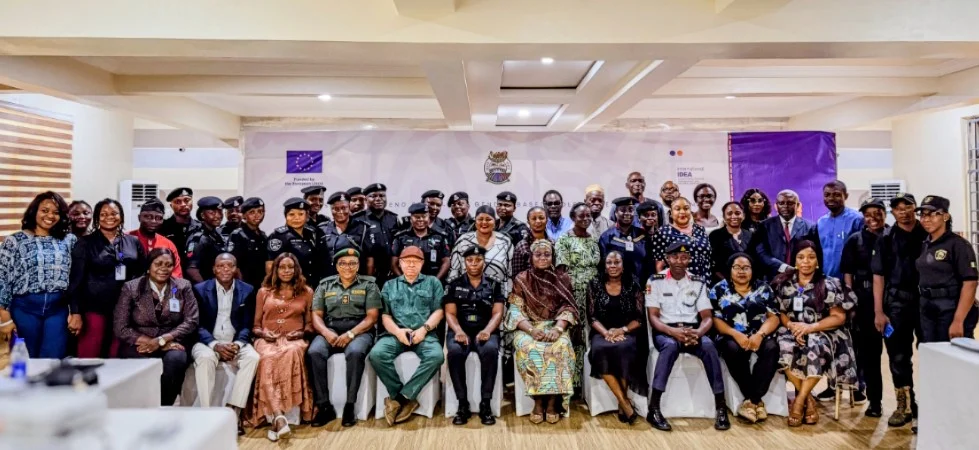
The institute organised a multi-agency Training of Trainers (TOT) in Makurdi.
Speaking, during the training, Dr Mufuliat Fijabi, Senior Programme Manager, End SGBV (ESGBV), International IDEA, said that the programme was to cover the existing gaps in the handling of SGBV cases.
The News Agency of Nigeria reports that the European Union is funding the ESGBV programme implemented by International IDEA.
Fijabi identified delayed investigations, inadequate evidence collection, weak coordination among service providers, secondary victimisation and limited survivor-centred approaches as some of the challenges confronting survivors.
According to her, addressing the challenges requires coordinated, professional and survivor-sensitive responses from all institutions involved in the justice process.
She described the training as an investment in local capacity and institutional sustainability, urging participants to replicate the knowledge acquired in their respective institutions.
She reaffirmed International IDEA’s commitment to supporting government institutions and stakeholders to build responsive systems that protect survivors’ rights and promote access to justice.
Also speaking, Prof. Timothy Ornguga, Benue Attorney-General and Commissioner for Justice and Public Order, said the state government was committed to strengthening the prosecution of SGBV cases and ensuring justice for survivors.
Ornguga was Represented by Director of Public Prosecution, Mrs Dooshima Orteserga,
He described SGBV as not only a legal and human rights concern, but also a public health, security and moral issue requiring collective action.
He said that survivors often encountered stigma, delays, victim-blaming and secondary victimisation when reporting cases at police stations, hospitals and courts.
‘’The training represents a deliberate shift from a system-centred approach to one that prioritises the safety, dignity, privacy and voices of survivors, ‘’ he said.
Ornguga said Benue had domesticated the Violence Against Persons Law and enacted other relevant legislations, including the Administration of Criminal Justice Law and the Child Rights Law.
Also, the Commissioner of Police in Benue, Mr Cletus Nwadiogbu, said that the training was timely, given the need for professional, compassionate and coordinated responses to SGBV cases.
Represented by DSP Helen Jande, Nwadiogbu said that the police had a responsibility, not only to investigate cases effectively, but also to protect the dignity, rights, safety and privacy of survivors.
The commissioner reaffirmed the commitment of the Nigeria Police Force to improving its response to SGBV and ensuring access to justice for survivors.
In her remarks, Mrs Selumum Jagudu, Gender-Based Violence Desk Officer, Ministry of Women Affairs and Social Welfare, said that displacement arising from insecurity increased the vulnerability of women and children to gender-based violence.
Jagudu said that the ministry provided psychosocial support to survivors and referred them to relevant agencies, including the Ministry of Justice, police and medical facilities, depending on their needs.
She, however, identified under-reporting, stigma and fear of retaliation as major challenges affecting efforts to address SGBV in communities.
The officer called for increased public sensitisation to encourage survivors to report cases and access available support services, stressing that the services were free.
Also, the Executive Director, House of Heikiah Foundation, an NGO, Mrs Dorothy Akende, said that civil society organisations played important roles in providing referrals, shelter and medical assistance to survivors.
Akende called for sustained partnerships among government institutions and civil society organisations to strengthen protection mechanisms for survivors of gender-based violence. (NAN)
Edited by Esenvosa Izah

Comments