


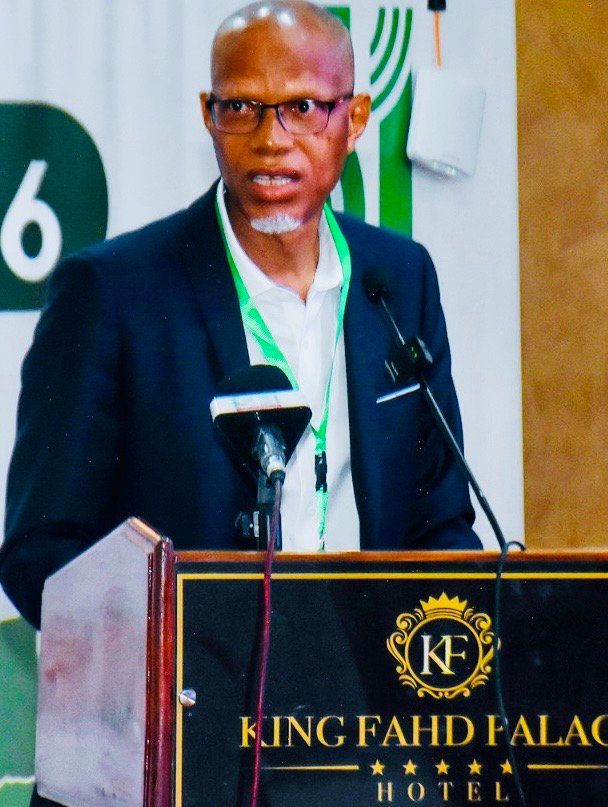
By Mark Longyen
Dakar, Senegal (NAN)The ECOWAS Court of Justice must transform its largely untapped arbitration mandate into a powerful mechanism for resolving trade and investment disputes, Guinean lawyer, Amadou Diallo, has said.
Diallo made this known while speaking at the ongoing ECOWAS Court International Conference on Thursday, in Dakar, Senegal.
The News Agency of Nigeria (NAN) reports that the conference is themed: “The Community Court of Justice — ECOWAS at the Crossroads: Justice, Innovation, Protection of Human Rights and the Future of Regional Integration in West Africa.”
He urged the Court to align with the AfCFTA Dispute Settlement Protocol to become a premier forum for intra-African commercial and investment disputes, contributing to an emerging African “law merchant.”
“The ECOWAS Court of Justice has established itself as an essential guardian of human rights in West Africa, its mandate in arbitration matters remains a largely untapped legal potential.
“By unleashing its dormant arbitration potential and adopting business law best practices, the Abuja Court will fulfill its full mission as a key guarantor of economic prosperity and attractiveness in West Africa,” he said.
Diallo highlighted a striking contrast between the Court’s human-rights record and limited arbitration activity.
According to him, the Court possesses substantial legal foundations for arbitration under the 1993 Revised ECOWAS Treaty, the 2005 Supplementary Protocol and the Arbitration Rule adopted in December 2025.
“There is a striking contrast between the Court’s hyperactivity in the field of human rights and its relative reticence/inaction in the field of arbitration.
“How can the ECOWAS legal and institutional framework for arbitration be transformed into operational and attractive tools for international trade stakeholders with respect to the AfCFTA?” He asked.
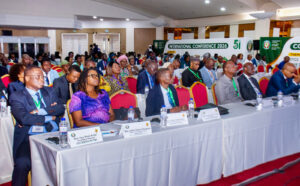 Participants at the conference.
Diallo noted that the framework potentially covers interstate trade disputes, investor-State conflicts and private commercial disputes where parties have agreed to arbitration before the regional court.
He identified delayed implementation mechanisms, limited awareness and competition from established institutions as major reasons the Court’s arbitration potential remained largely dormant.
Diallo noted that institutions including the Common Court of Justice and Arbitration, CCJA, Abidjan, and ICC, among others, already commanded strong confidence among businesses and international investors seeking commercial dispute resolution.
He urged the Community Court to modernise its arbitration framework around speed, confidentiality, procedural flexibility and specialised expertise to make it attractive to regional and international investors.
The lawyer proposed establishing an open panel of specialised arbitrators, including commercial lawyers, academics, financial experts and professionals with expertise in mining, hydrocarbons, infrastructure and fintech.
He also advocated stronger partnerships with bar associations, chambers of commerce and business organisations, alongside model arbitration clauses and greater awareness of the Court’s new rules.
Diallo further urged closer alignment with the African Continental Free Trade Area’s dispute-settlement architecture, positioning the Court as a bridge between Anglophone and Francophone legal systems.
He added that human-rights protection and investment protection were complementary expressions of the rule of law, urging ECOWAS to unlock arbitration as a tool for regional economic prosperity.
“The ECOWAS Court of Justice does not have to choose between human rights protection and investment protection.
“These are two sides of the same coin: the Rule of Law, which guarantees legal certainty for both persons and property,” he added.(NAN)
Edited by Isaac Aregbesola



Comments