


By Folashade Akpan
The European Union (EU) and the German Agency for International Cooperation (GIZ) have urged social protection institutions to strengthen knowledge management to preserve implementation experiences and prevent the recurrence of avoidable mistakes.
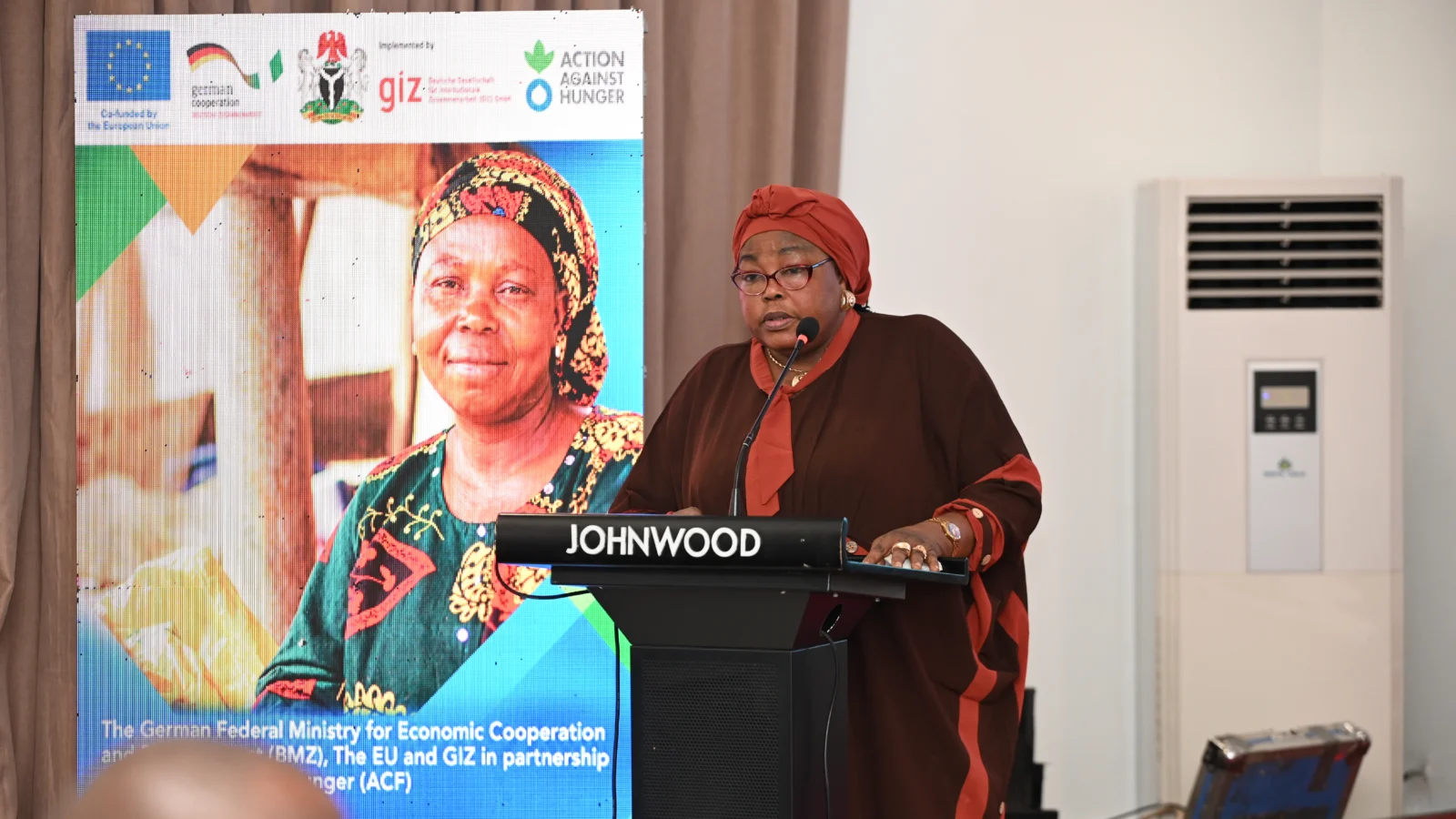
Ana Vinambres, Head of Programme, Supporting Sustainable Social Protection, Participation and Economic Resilience in Northeast Nigeria (SEPIN SUSI), made the call at the National Social Protection Knowledge and Learning Forum in Abuja on Monday.
The forum is themed: “From Strategy to Systems: Institutionalising Knowledge Management and Learning for Stronger Social Protection in Nigeria”.
Vinambres, represented by Ruth Adzege, Adviser, Social Protection Policy and Stakeholders Engagement, GIZ, said valuable operational lessons, targeting innovations and implementation evidence remained fragmented across agencies and donor-funded projects.
She said institutions risked losing valuable knowledge when experienced personnel left or projects ended without proper documentation.
“When institutions lose experienced personnel, they often lose valuable institutional knowledge.
“When projects conclude without documenting lessons, subsequent interventions risk repeating avoidable mistakes,” she said.
Vinambres said effective knowledge management would help institutions preserve experiences, strengthen institutional memory and translate evidence into decisions that improved programme implementation.
She cited initiatives in Borno and Adamawa, where knowledge management had been integrated through governance frameworks, trained knowledge management champions, digital repositories and standardised learning tools.
She said the initiative, supported by the EU and Germany through GIZ and implemented by Action Against Hunger, with technical assistance from Internationale Development Stories, had helped the states establish systems for documenting and applying evidence.
Mr Mohammed Bala, Head of National Social Register Unit, National Social Safety Net Coordinating Office (NASSCO), said the sector generated substantial knowledge through systems development, standard operating procedures and programme implementation.
He, however, said much of the information remained inaccessible because it was not adequately shared.
“Most of this work sometimes ends up in our laptops,” he said, calling for improved sharing of institutional findings, activities and operational procedures.
Bala said a knowledge-sharing system would help preserve and disseminate experiences, including information on the National Social Register and its utilisation.
He said participants were also introduced to a digital knowledge management tool based on Microsoft 365 to support the storage, retrieval and use of institutional knowledge.
The Communications Manager, National Cash Transfer Office, Mr Shikfu Shimang, said social protection programmes were being implemented nationwide without a central platform for documenting progress and experiences.
He said a structured knowledge-sharing system would improve public understanding of interventions and facilitate the exchange of implementation experiences among institutions.
Similarly, the Executive Secretary, Adamawa State Health Insurance Agency, Dr Ujulu Amos, said the development of the state’s social protection policy and law had helped coordinate interventions previously implemented in isolation.
He said support from the EU and Germany had enabled the state to harmonise interventions involving social health insurance, conditional cash transfers and other stakeholders.
Amos said the coordinated approach would help ensure that poor and vulnerable residents benefited from social protection programmes, including internally displaced persons and returnees affected by insurgency.
In a goodwill message, Mr Valentine Ezulu, Director, Social Development, Federal Ministry of Humanitarian Affairs and Poverty Reduction, said effective social protection depended not only on interventions but also on the capacity of institutions responsible for their delivery.
Ezulu, represented by Mr Akwa Bassey, said reliable data, effective inter-agency coordination, adequate financing, accountability and institutional learning were essential to successful social protection delivery.
He said knowledge management should be integrated into programme implementation rather than treated merely as documentation of reports and workshop proceedings.
Ezulu said the ministry was advancing a coordinated humanitarian and poverty reduction approach through the One Humanitarian-One Poverty Response System (OHOPRS), recently approved by the Federal Executive Council.
He said the approach sought to strengthen coordination, improve targeting, reduce duplication and link humanitarian assistance with recovery, resilience and sustainable economic opportunities.
The three-day forum, which ends on Wednesday, brings together government institutions, development partners, humanitarian organisations, civil society groups, researchers and practitioners to share implementation experiences and strengthen evidence-informed social protection.
The forum will also inaugurate Social Protection Communities of Practice in Borno and Adamawa States and discuss the reactivation of the National Social Protection Community of Practice, inaugurated in September 2023. (NAN)
Edited by Tosin Kolade




Comments