


By Usman Aliyu
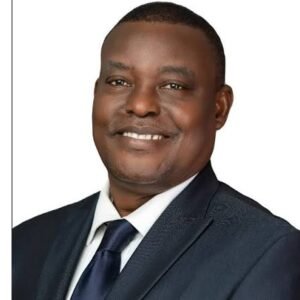
Prof. Eghosa Osaghae, Director-General of the Nigerian Institute of International Affairs (NIIA), on Wednesday advocated a rebalance of powers between the Federal Government and federating units to strengthen Nigeria’s federal system.
Osaghae made the call while delivering the maiden Annual Federalism Lecture of the Centre for Federalism and Democratic Studies at the University of Benin (UNIBEN).
The News Agency of Nigeria (NAN) reports that the lecture was titled, “Federalism: The Paradigm of a Turning Centre.”
The NIIA boss noted that federal systems remained dynamic and must continually adjust the distribution of powers between the centre and sub-national governments in response to changing political realities.
According to him, Nigeria’s federalism has evolved from a region-centred structure to a highly centralised system, making the practice of federalism increasingly contested.
“The powers of the central government in every federation are dependent on the balance of forces.
“When those forces change, the powers also shift. If they do not shift, the federal system is threatened and it can collapse,” he said.
The former Vice-Chancellor of Igbinedion University, Okada, explained that federal systems generally emerged through either an “aggregative” process, in which independent states voluntarily united to form a federation, or a “disaggregative” process, where an already centralised state devolved powers to constituent units.
Nigeria, he said, fell into the latter category, making negotiations over the distribution of powers inevitable.
“It is this disaggregative process that makes the terrain of federalism more contested than settled.
“The central government continues to hold sway, making federalism a continuous process of negotiation,” he said.
Osaghae recalled that before the 1966 military intervention, Nigeria operated a region-centred federal system in which the regions exercised considerable autonomy.
He noted that each of the former regions maintained overseas offices, including diplomatic representations in London, demonstrating the level of authority they possessed.
“We had a region-centred federal system in which the regions were so powerful.
“If you went to London before 1966, you would find the consulate of the Federal Republic of Nigeria as well as the consulates of the Northern, Western, Eastern and Midwest regional governments,” he said.
The don said the military government subsequently transformed the structure into a nation-centred federation by concentrating more powers at the centre.
According to him, the current debate on “true federalism” should focus less on obtaining larger allocations from the Federal Government and more on strengthening the productive capacities and fiscal independence of the states.
“Those calling for true federalism are also asking for more resources from the Federal Government.
“Why are they not asking for productive capacities and internally generated revenues that will make them less dependent on the centre?” he queried.
Osaghae maintained that a sustainable federation required an appropriate balance of powers and responsibilities among the various levels of government.
Earlier, the Vice-Chancellor of UNIBEN, Prof. Edoba Omoregie, SAN, said the establishment of the Centre for Federalism and Democratic Studies pointed to the university’s commitment to advancing research and policy solutions to governance challenges.
Omoregie said universities should serve as laboratories of ideas where pressing societal issues were interrogated with intellectual rigour and practical solutions developed.
He said the annual lecture series would stimulate informed debates on federalism, constitutionalism, democracy and good governance in Nigeria and beyond.
He said the centre would promote research, policy dialogue and public engagement on federalism, constitutionalism, democracy, good governance and peacebuilding.
The vice-chancellor expressed optimism that the centre would evolve into one of Africa’s foremost think tanks on federalism and democratic studies.
NAN also reports that the lecture attracted academics, policymakers, students and other stakeholders from across the country.(NAN)(www.nannews.ng)
Edited by Chioma Ugboma

Comments