


By Daniel Obaje
The Federal Government says it is strengthening locally-driven humanitarian coordination and sustainable financing to reduce the country’s dependence on external humanitarian assistance.
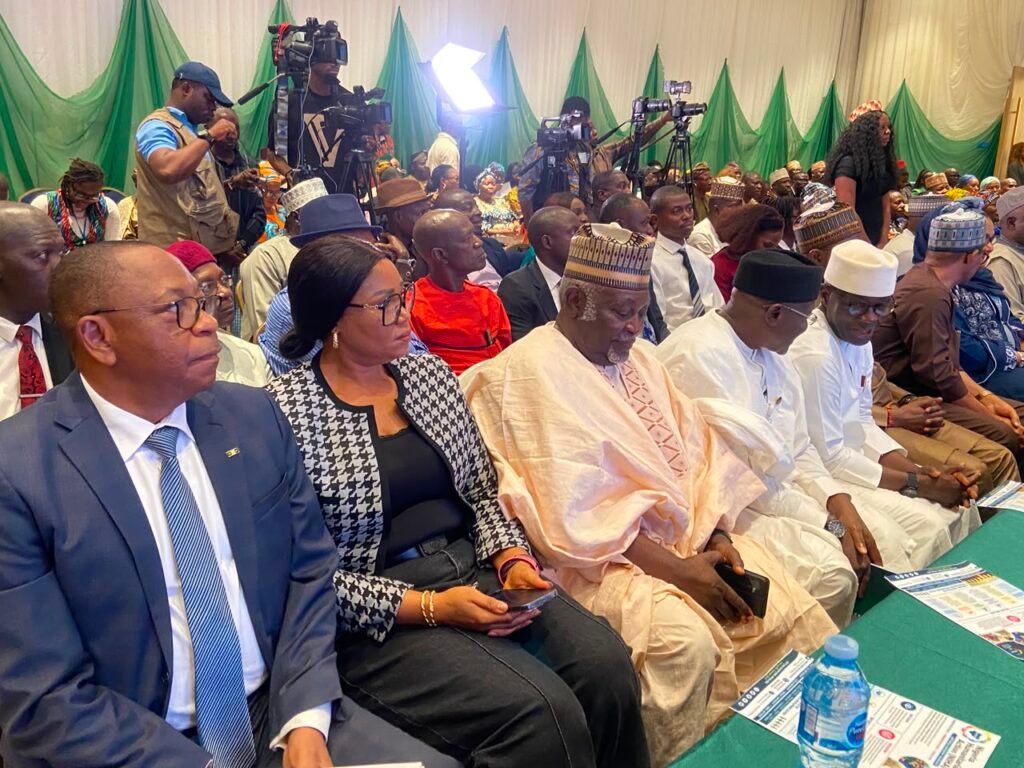
Dr Bernard Doro, The Minister of Humanitarian Affairs and Poverty Reduction, said this on Wednesday in Abuja at the 2026 World Humanitarian Day commemoration and the third Humanitarian and Development Roundtable.

Doro said the government is committed to developing a nationally driven, locally responsive and financially sustainable humanitarian coordination system, in line with the theme, “Strengthening Global Solidarity and Empowering Local Communities.”
He said the transition from a predominantly UN-coordinated humanitarian architecture to a government-led system is a strategic investment in Nigeria’s resilience and long-term sustainability.
“The future of humanitarian coordination in Nigeria must increasingly be government-led, nationally owned and institutionally sustained.
“The Federal Ministry of Humanitarian Affairs and Poverty Reduction stands ready to lead the transition, our vision is a humanitarian coordination system that is nationally driven, professionally managed, locally responsive and financially sustainable.
“A system where federal, state and local governments work seamlessly alongside empowering civil society, academic, faith-based organisations and the private sector.
“A system that integrates humanitarian response with recovery, resilience and poverty reduction.”
The minister said the ministry is advancing the One Humanitarian, One Policy Response System (HOPRS) as a national coordination framework to eliminate duplication, strengthen institutional collaboration and promote data-driven decision-making.
Doro said the framework would also align humanitarian interventions with social protection programmes and the National Social Registry to ensure that vulnerable families received sustained support beyond emergency situations.
He said Nigeria must also accelerate implementation of the National Humanitarian and Poverty Reduction Trust Fund to secure sustainable domestic financing for humanitarian assistance.
“One of the clearest lessons from recent global humanitarian crisis is this. No nation can sustainably protect its own population if it depends almost exclusively on external humanitarian financing.
“Nigeria must accelerate the implementation of the National Humanitarian and Poverty Reduction Trust Fund to secure sustainable domestic financing for humanitarian aid,” he said.
Doro called for improved welfare packages, professional development opportunities and incentives for humanitarian workers serving in difficult and dangerous environments.
“I, therefore, renew my call to improve welfare packages, enhance professional development opportunities, and a comprehensive review of the remuneration and incentives for humanitarian assignments across our NGOs,” he said.
Earlier, the Permanent Secretary, Federal Ministry of Humanitarian Affairs and Poverty Reduction, Mr Olubunmi Olusanya, said humanitarian challenges required collective action, strategic partnerships and meaningful participation of affected communities.
Olusanya said communities should no longer be regarded merely as recipients of assistance but as partners and agents of their own wellbeing.
“We must, therefore, move beyond communities simply as recipients of assistance and recognise them as partners and agents of their own well-being.
“Their knowledge and capacities are priorities on informing solutions to development.”
Also speaking, Dr Aliyu Tijani, The Federal Commissioner, National Commission for Refugee, Migrant and Internally Displaced Persons, said displacement should be viewed through the human experiences of mothers, children and families affected by crises.
Tijani said sustainable humanitarian intervention required more than accommodation and funding, stressing the need for livelihood support, integration and stronger partnerships.
He said the commission will continue to promote sustainable initiatives, resettlement programmes and solutions that strengthened local communities.
Mr Morgan Okwoche, The Chairman Advisory Board, Nigeria Humanitarian Action, said no government or institution can effectively respond to humanitarian crises alone.
Okwoche said humanitarian action requires partnership, coordination, compassion and shared responsibility, with local communities placed at the centre of interventions.
“Solidarity must mean more than sympathy or goodwill. It must translate into the movement of resources, knowledge, technology, expertise and partnerships the way they are most needed.
“And if this brings us to the heart of our theme, local communities must remain at the centre of humanitarian action,” he said.
He described communities as first responders and custodians of local knowledge.
Okwoche urged stakeholders to ensure that commitments made at the event translated into partnerships and interventions capable of improving lives beyond the commemoration.(NAN)(www.nannews.ng)
Edited by Rotimi Ijikanmi


Comments