


By Rukayat Moisemhe
Management professionals have identified sound management principles as critical to transforming Nigeria’s human and institutional potential into sustainable national development.
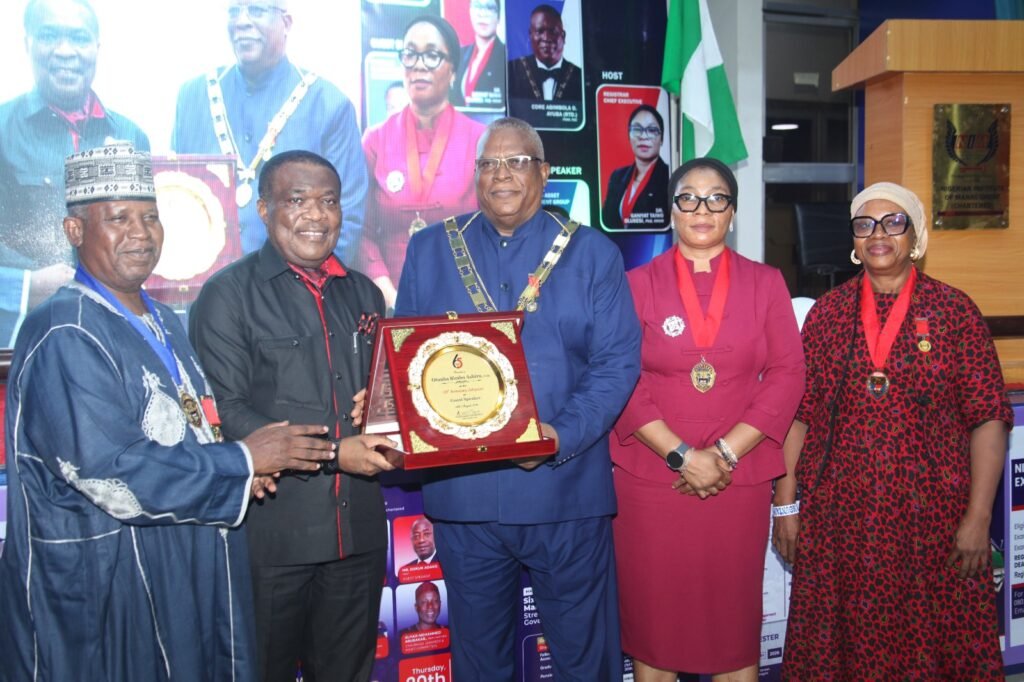
They made this known on Wednesday in Lagos at the Nigerian Institute of Management Chartered (NIM) 65th anniversary colloquium.
The event had the theme, “Celebrating National Impact of Management Excellence in Nigeria.”
The Chairman, Blackcod Asset Management Group, Dr Bimbo Ashiru, said management was central to every human endeavour.
He said effective planning, resource allocation, coordination, accountability and performance measurement were essential to achieving desired outcomes.
According to him, management begins with individuals and extends to organisations, institutions and the wider society.
“When you combine excellent managers with excellent management systems, transformation does not merely happen; it happens faster, more consistently and, importantly, becomes sustainable,” he said.
Ashiru identified corporate governance, capacity building, sustainability, and technology and optimisation as four principles required for sustainable management excellence.
He said the principles reinforced one another, noting that good governance created trust, capacity building developed capability, technology provided leverage, while sustainability ensured continuity.
He described NIM as a repository of management knowledge and experience, as well as a platform for developing professionals capable of influencing institutions positively.
Ashiru said the institute’s responsibility went beyond teaching individuals to manage organisations to contribute to stronger organisations, institutions and the nation.
He said Nigeria had no shortage of intelligent, talented and ambitious people, but needed to organise its people, institutions and resources to consistently convert talent into results.
“People drive change. Systems sustain change. Management connects the two,” he said.
Ashiru urged NIM members to uphold high standards of integrity and excellence, saying management excellence should be regarded as a standard rather than an aspiration.
President, NIM, Retired Commodore Abimbola Ayuba, said the Institute’s 65th anniversary was an opportunity to celebrate its contributions to professional management practice and national development.
Ayuba said about 200,000 individuals and 400 corporate organisations had passed through the Institute’s membership process over the years.
He described NIM as the largest multidisciplinary professional management institute in Africa, adding that it remained committed to management capacity building and leadership development.
According to him, NIM has provided professional management, consultancy, re-engineering and human capital development solutions to organisations across the public and private sectors.
He added that the institute had contributed to governance through public advocacy programmes and activities aimed at providing workable solutions to national challenges.
The Commissioner for Planning and Budget, Kano State, Mr Suleiman Shanono, said effective management was critical to achieving development objectives, particularly in states with large civil services and limited resources.
Shanono said organisations and governments must clearly define their current position and desired destination while ensuring that the right people were deployed to the right positions.
He said applying fundamental managerial skills and principles could help governments achieve significant goals in spite of resource constraints.
The Director-General, Administrative Staff College of Nigeria, Dr Funke Adepoju, said the organisation remained committed to building competencies required to bridge management gaps, particularly in the public sector.
The Managing Director, Elshcon Nigeria Ltd., Dr Emi Membere-Otaji, said Nigeria’s huge potential could only be translated into desirable outcomes through management excellence.
Membere-Otaji identified clear strategies for expansion, diversification and competitive advantage as essential to converting national potential into sustainable economic outcomes.
He also advocated a people-centred healthcare management system, digitalisation, evidence-based healthcare and improved management of access to funding.
He said effective management remained necessary for Nigeria to maximise its resources and deliver better outcomes across critical sectors. (NAN)
Edited by Chinyere Joel-Nwokeoma


Comments