


By Justina Auta
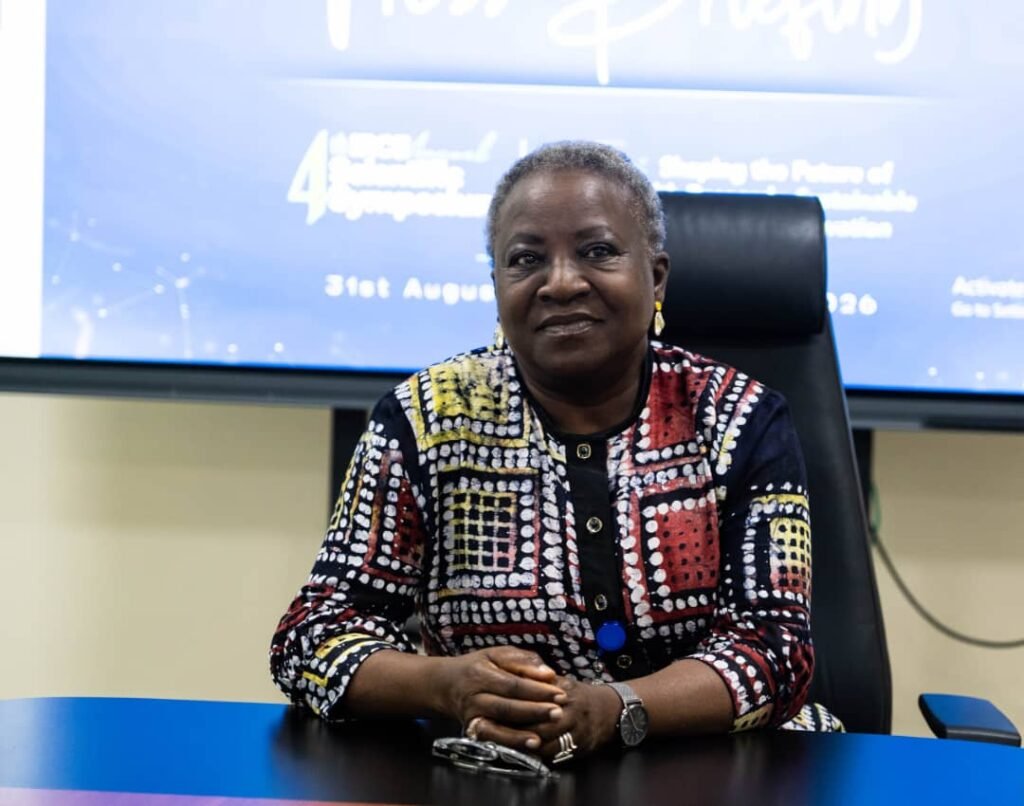
Prof. Alash’le Abimiku, Executive Director of the International Research Centre of Excellence (IRCE), Institute of Human Virology Nigeria (IHVN), made the call at a news conference in Abuja.
The briefing was held ahead of the fourth IRCE Annual Scientific Symposium scheduled to take place from Aug. 31 to Sept. 1.
The symposium, themed “Shaping the Future of Public Health Research through Sustainable Funding, Artificial Intelligence/Machine Learning (AI/ML) and Innovation,” is scheduled to hold from Aug. 31 to Sept. 1.
Abimiku said recent cuts in global health funding, including support from major international donors, underscored the need for Nigeria to strengthen local financing for research and build sustainable capacity.
She said stronger domestic investment would help the country address emerging health challenges and reduce vulnerability to fluctuations in external funding support.
Abimiku said that many Nigerian researchers relied heavily on international grants, warning that shrinking research budgets could weaken the country’s ability to compete for funding and generate locally relevant evidence.
“We are asking government to begin investing in research. It may not be as much as international funding, but it can keep researchers productive, build capacity and sustain innovation.
“Disease outbreaks will not stop because funding has reduced. HIV, cancer, sickle cell disease, Lassa fever and future pandemics will continue to challenge us, so we must prepare,” she said.
According to her, AI presents an opportunity to improve research productivity, accelerate data analysis and strengthen evidence-based decision-making when deployed responsibly and ethically.
She, however, cautioned researchers against overdependence on AI, emphasising that innovation, critical thinking and scientific curiosity must remain central to the research process.
“AI can summarise years of research within seconds, but researchers must continue to ask critical questions, experiment and innovate.
“We must use AI to enhance, not replace, scientific thinking,” she said.
Abimiku explained that the symposium would explore how AI and machine learning could complement reduced research funding by improving efficiency while safeguarding data privacy and ethical standards.
She added that a pre-symposium hackathon had been introduced to expose researchers, healthcare professionals and young innovators to practical AI tools for solving public health challenges.
According to her, the initiative is designed to bridge the gap between experienced researchers and younger professionals already familiar with emerging AI technologies.
Abimiku urged policymakers, industry leaders and researchers to collaborate in developing sustainable research funding mechanisms capable of reducing Nigeria’s dependence on foreign support.
She cited South Africa’s model of competitive government-funded research grants as an example of how countries could sustain scientific innovation in spite of reductions in international funding.
Also speaking, Dr Sophia Osawe, Head of Research Operations at IRCE, said the centre’s Inform Africa programme was already deploying AI and machine learning to strengthen Nigeria’s preparedness for disease outbreaks.
Osawe explained that the programme used big data to predict disease trends and identify communities requiring urgent interventions, including vaccine deployment during pandemics such as HIV and COVID-19.
“These AI-powered tools help government identify where interventions are most needed so resources can be deployed more efficiently and lives protected,” she said.
Similarly, Dr James Onyemata, Head of Molecular Diagnostics at IRCE, emphasised Nigeria’s strategic role in regional disease surveillance and genomic monitoring.
According to him, with Nigeria accounting for about half of West Africa’s population, genomic surveillance data generated in the country are essential for developing vaccines effective against circulating virus strains.
“If we do not provide this information, vaccines developed elsewhere may not adequately protect populations in West Africa because they may not target the variants circulating here,” Onyemata said.
The News Agency of Nigeria (NAN) reports that the symposium will continue with technical sessions on ethical AI, genomic surveillance, pandemic preparedness, sustainable research financing and innovations aimed at strengthening Nigeria’s public health system.(NAN)



Comments