










By Racheal Abujah
Some Behavioural Change Experts say Nigeria needs to institutionalise Social and Behaviour Change Communication (SBCC) as a core government function, with dedicated staffing, sustainable financing and behavioural evidence integrated into routine planning.
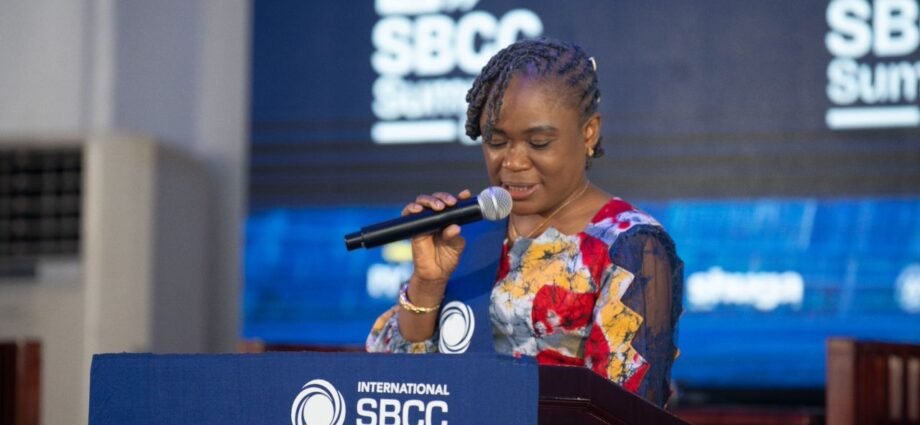
The experts made the call on Tuesday in Abuja at a post-SBCC Summit engagement organised by the Centre for Communication and Social Impact (CCSI).
The News Agency of Nigeria (NAN) reports that the engagement followed the recently concluded 2026 International Social and Behaviour Change Communication (SBCC) Summit in Panama.
The engagement provided an opportunity for practitioners to reflect on lessons from the summit and discuss how SBCC could be strengthened and contextualised within Nigeria’s development and health systems.
Mrs Foyeke Oyedokun-Adebagbo, Population Council Expert, said Nigeria had already made progress toward institutionalising some SBCC activities and should build on existing government structures rather than starting from scratch.
Oyedokun-Adebagbo said some government institutions already had units responsible for health education, health promotion and related communication functions.
She, however, said the existence of such units was not enough without the authority, staffing, technical resources and capabilities required to fulfil their mandates.
She said Nigeria needed to move beyond institutionalising individual SBCC activities to making SBCC a core government function.
According to her, recruitment practices, job descriptions and professional development opportunities should equip government personnel with skills beyond producing messages and information, education and communication materials.
She said practitioners also needed expertise in behavioural analysis, community listening and other approaches required for effective SBCC.
She identified sustainable financing as another critical component of institutionalisation.
She said although some states were beginning to include SBCC-related activities in their budgets, questions remained about whether the allocations were predictable, released and fully utilised.
She called for stronger investment cases to ensure that budgetary provisions for SBCC were maintained and adequately funded.
The population council expert also advocated the integration of behavioural insight and community-listening data into government planning.
She said that while routine health planning already used service, epidemiological, surveillance and community data, behavioural insight data was not always incorporated into such discussions.
“Where is the behavioural insight data? Where are the community listening data?”
She said the true test of institutionalisation was whether the people, learning systems and financial structures needed to sustain the gains of a project remained after a donor or implementing organisation had left.
“If a project ends, a donor leaves, the test of whether we truly institutionalise is whether the people, the learning systems, the financial systems are remaining and sustaining that change that the project has brought,” she said.
Mr Samson Odukogbe, Senior Knowledge and Communications Officer, Association for Reproductive and Family Health (ARFH), said advocacy was needed to secure stronger political commitment to SBCC.
According to Odukogbe, this is particularly as donor funding declines and governments increasingly take on greater responsibility for financing development interventions.
He said that some states still treated health education and SBCC structures as an afterthought, with activities becoming active mainly when donor funding was available.
He called on policymakers to make SBCC an integral part of government planning, programming, budgeting and sustainability.
The communications officer also advocated strategic partnerships with universities, centres of excellence and organisations with expertise in SBCC to strengthen research, capacity development and innovation.
According to him, Nigeria has significant behavioural and social challenges that require more research and evidence to inform effective interventions.
He urged SBCC practitioners to work together to develop sustainable strategies for addressing the country’s challenges.
Mrs Halima Buba, Engagement Manager, Solina Centre for International Development and Research (SCIDaR), called for greater inclusion of unconventional voices in the SBCC ecosystem, particularly young people and community networks.
Buba said young people were often excluded from interventions designed for them because practitioners and older stakeholders assumed that they knew what was best for adolescents.
She said young people needed safe spaces where they could discuss their concerns from their own perspectives rather than simply being given instructions.
She also identified women’s networks, market women and transport networks as important community actors whose access to information could be valuable during health emergencies and other social challenges.
According to her, such networks are often connected to communities in ways that formal interventions do not adequately recognise.
She said practitioners needed to go into communities to identify and engage these informal structures rather than attempting to engage them solely from offices.
She said youth groups often had informal spaces where they met and discussed their concerns, adding that practitioners need to identify those spaces when designing interventions.
Mr Bako Kantiok, Programme Manager, CCSI, stressed the importance of collective responsibility and collaboration in strengthening SBCC in Nigeria.
Kantiok said stakeholders needed to create spaces where government, implementing partners, beneficiaries and other practitioners could learn, conduct research and improve interventions together.
He said the sector needed to move beyond attribution and individual organisational interests to build a collective approach to SBCC.
According to him, stakeholders should be able to examine both successes and failures openly and use the lessons to improve future interventions.
“We need to have a space where we can learn together, we can do research together, we can count and learn from our failures, and also improve together,” he said.
NAN reports that the experts agreed that stronger government ownership, predictable financing, community participation, evidence use and collaboration would be essential to institutionalising SBCC.
They said that those factors were important in ensuring that successful interventions continue beyond individual projects and donor funding cycles. (NAN)
Edited by Kadiri Abdulrahman Source