


By Abdullahi Maku
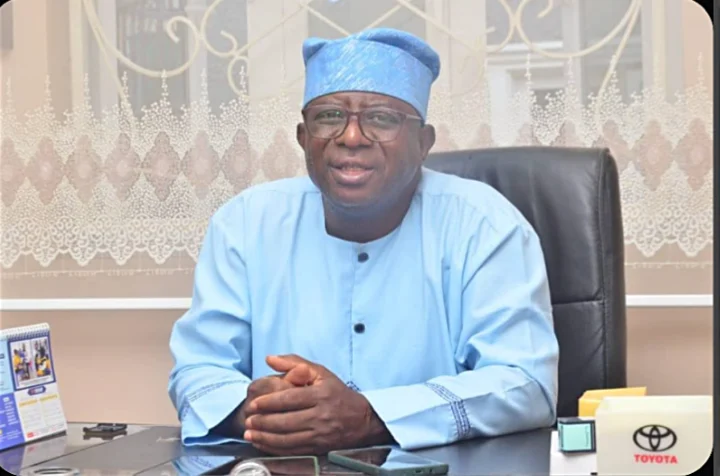
Nigeria needs to strengthen noma prevention and specialised treatment services as improved detection brings more affected patients to hospitals, a Consultant Maxillofacial Surgeon, Dr Seidu Bello, has said.
Bello, Founder and Chief Executive Officer of the Cleft and Facial Deformity Foundation (CFDF), said this in an interview with the News Agency of Nigeria (NAN) on Monday.
He said the increasing number of patients presenting at specialised treatment centres did not necessarily indicate a rise in the disease’s actual prevalence but could reflect improved detection and referrals.
According to him, many children previously affected by noma remained undiagnosed in their communities, while some died without accessing specialised care and others survived with severe facial deformities.
“The fact that we are seeing more noma cases in hospitals today does not necessarily mean that the actual incidence of the disease is increasing in the general population,” he said.
Bello, who has spent nearly 15 years managing noma and other facial deformities, attributed the changing pattern to improved awareness, dedicated treatment facilities and stronger identification and referral networks.
He identified the Noma Children’s Hospital in Sokoto and the noma treatment centre at the National Hospital, Abuja, as facilities helping to identify patients from remote communities.
He added that some patients were referred from neighbouring countries, including Niger and Chad, reflecting the growing reach of specialised noma treatment services across the region.
However, Bello cautioned against interpreting the increased number of hospital cases as evidence of a national outbreak, calling for reliable population-based surveillance and consistent reporting.
He said noma remained closely associated with poverty, malnutrition, poor sanitation, inadequate oral hygiene and limited access to basic healthcare, particularly among children aged between two and six years.
Describing noma as a devastating disease, he said it could rapidly destroy facial tissues, leaving survivors with permanent disfigurement, impaired speech, difficulty eating, restricted mouth opening and psychological trauma.
The surgeon explained that distinguishing active noma from its long-term consequences was important because survivors with established facial deformities required reconstructive surgery, rehabilitation and sustained care.
He said the Cleft and Facial Deformity Foundation, established in 2011 and formally registered in 2012, initially focused on cleft lip and palate before expanding its services to noma survivors.
According to him, the foundation began treating noma survivors encountered during surgical outreaches across the country, many of whom had lived for years with severe facial deformities.
Bello said financial constraints had prevented many survivors from accessing specialised surgical interventions, leaving them among the most neglected patients in Nigeria’s healthcare system.
He expressed concern that Nigeria continued to underinvest in specialised reconstructive services in spite of having trained professionals capable of managing complex facial deformities.
According to him, the major challenge is not necessarily a shortage of skilled surgeons but inadequate infrastructure, equipment, specialised operating theatres, intensive care and rehabilitation facilities.
He said advanced craniofacial procedures required multidisciplinary support, which remained limited in many Nigerian healthcare institutions, restricting access to comprehensive treatment.
Bello also expressed concern over the dependence of some specialised noma treatment facilities on international organisations and development partners for funding and operational support.
He warned that Nigeria could struggle to sustain these services if external funding and assistance were withdrawn, urging the government to invest in long-term domestic treatment capacity.
He said the country needed to take greater ownership of specialised noma treatment by strengthening healthcare institutions and developing sustainable reconstructive services.
To address the gaps, Bello advocated the establishment of a specialised Abuja Craniofacial Hospital to provide comprehensive treatment for noma survivors and patients with cleft lip and palate, facial trauma, tumours, lockjaw and other complex deformities.
He said the proposed hospital would also serve as a centre for specialist training, research, rehabilitation and professional development, reducing the need for Nigerian surgeons to travel abroad for advanced craniofacial training.
According to him, the institution will complement existing teaching hospitals rather than replace their surgical departments, providing specialised services for complex cases requiring advanced expertise and equipment.
Beyond treatment, Bello urged Nigeria to prioritise noma prevention by addressing underlying risk factors through improved nutrition, sanitation, oral healthcare, community awareness and early detection.
“Our responsibility should extend beyond treating the devastating consequences of noma to addressing the circumstances that allow the disease to occur,” he said.
He called for the integration of noma prevention, early identification and referral into primary healthcare services, particularly in vulnerable communities where children face increased exposure to risk factors.
Bello said although reconstructive surgery could restore some facial functions, improve appearance and help survivors regain confidence, preventing children from developing noma should remain the ultimate goal.(NAN)
Edited by Abiemwense Moru



Comments