







By Tosin Kolade
The Federal Government has earned N7 billion from hydropower and agro-allied concessions, while expanding irrigable land nationwide to 154,000 hectares, the Minister of Water Resources and Sanitation, Prof. Joseph Utsev, has said.
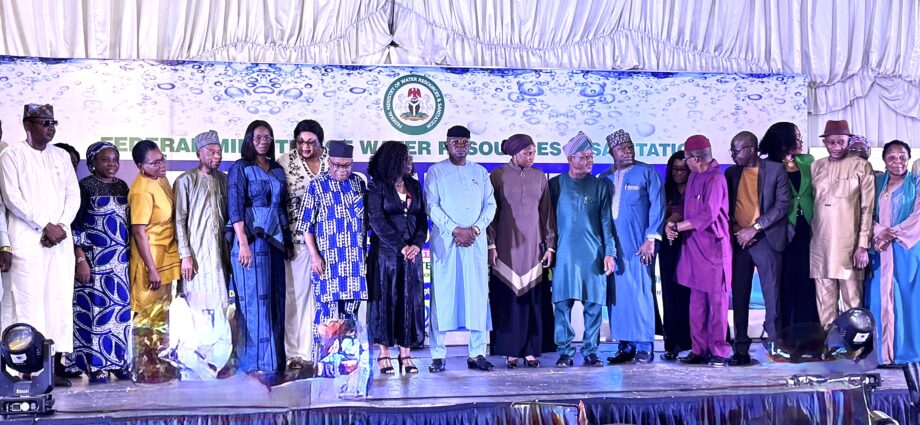
He made the disclosure at the Citizens and Stakeholders’ Engagement on the Achievements of the Ministry’s Projects and Programmes on Wednesday in Abuja.
Utsev said the 40-megawatt Kashimbilla Hydropower Plant and the Kashimbilla Integrated Cargo and Agro-Allied Airport were concessioned in full compliance with the Infrastructure Concession Regulatory Commission Act of 2005.
He said additional concession agreements are being finalised for Farin Ruwa, Katsina-Ala, Dasin Hausa, Manya, and Bawaku Dams, as well as the Azara–Jere Irrigation Scheme, integrating private-sector expertise into agricultural water management.
He said flood preparedness had improved with the 2024 and 2025 Annual Flood Outlooks, which identified 1,249 high-risk communities and 2,187 moderate-risk communities across 33 states and the FCT.
Utsev said initiatives to mitigate disasters include the National Flood Insurance Programme, Integrated Climate Resilience Innovation Project, Niger Flood Project, and Annual Drought Outlook, complementing flood forecasting and climate resilience planning.
He clarified that no water had been released from Lagdo Dam in Cameroon and urged residents in Lokoja, Makurdi, and Wurobokki to rely on verified updates from the Nigeria Hydrological Services Agency.
The minister said the ministry’s agencies had been strengthened.
“The Nigeria Hydrological Services Agency monitors floods and droughts, the National Water Resources Institute trained over 1,500 youths, and the Nigeria Integrated Water Resources Management Commission issued 24 water-use licences”.
The minister said River Basin Development Authorities had been repositioned to develop 154,000 hectares of irrigable land, directly benefiting 1.6 million farmers engaged in dry-season agriculture.
He noted that recent dam completions include Rafin Yashin Dam in Niger, Odo Ape Dam in Kogi, and Amla Otukpo Dam in Benue, with solar-powered drip irrigation systems and strengthened Water Users’ Associations in place.
Utsev said partnerships with the World Bank, African Development Bank, UNICEF, and WaterAid continue to support the Agro-Climatic Resilience in Semi-Arid Landscapes Project, improving land and water sustainability across 19 northern states and the FCT.
He noted that sanitation programmes, including the Sustainable Rural Water Supply and Sanitation Programme (SURWASH), and the Sustainable Power and Irrigation in Nigeria (SPIN) programme, had made huge progress.
Utsev added that 26 states had joined the SPIN programme, while the National Sanitation Conference produced strategies to eradicate open defecation, supported by religious and traditional leaders.
He said 2026 targets include completing Adada, Mangu, and Ogbesse Dams, operationalising the Kashimbilla Water Supply Scheme, expanding micro-irrigation projects, and strengthening structured citizen feedback mechanisms.
Utsev reaffirmed that water, sanitation, irrigation, and hydropower remain central to the Renewed Hope Agenda, advancing food security, clean energy, climate resilience, and national prosperity.
Earlier, the Permanent Secretary of the Ministry, Dr Emanso Umobong, said the Citizens and Stakeholders’ Engagement aims to strengthen accountability, transparency, and stakeholder inclusion.
She noted that the water and sanitation sector is central to public health, economic development, food security, and national well-being.
Umobong said the forum provides a platform for dialogue on sector performance, challenges, and collaboration.
“Close interaction with stakeholders is essential to obtain meaningful feedback and improve service delivery.
“The Ministry values all contributions, and outcomes of today’s session will help refine policies and enhance programme implementation,” she said.
She highlighted that citizen and stakeholder engagement was first anchored in Presidential Executive Order 12 of 2022, later amended by Executive Order 13 to strengthen coordination and accountability in implementing government priorities.
Umobong said ministries are required to hold at least one stakeholder engagement meeting every quarter, chaired by the Minister and supported by Permanent Secretaries, Directors, development partners, and civil society actors.
Highlights of the meeting included questions and feedback from partners on repositioning the Ministry and its agencies to align with its mandate and strengthen the water and sanitation sector. (NAN)
Edited by Abiemwense Moru