


News Analysis by Fortune Abang, News Agency of Nigeria (NAN)
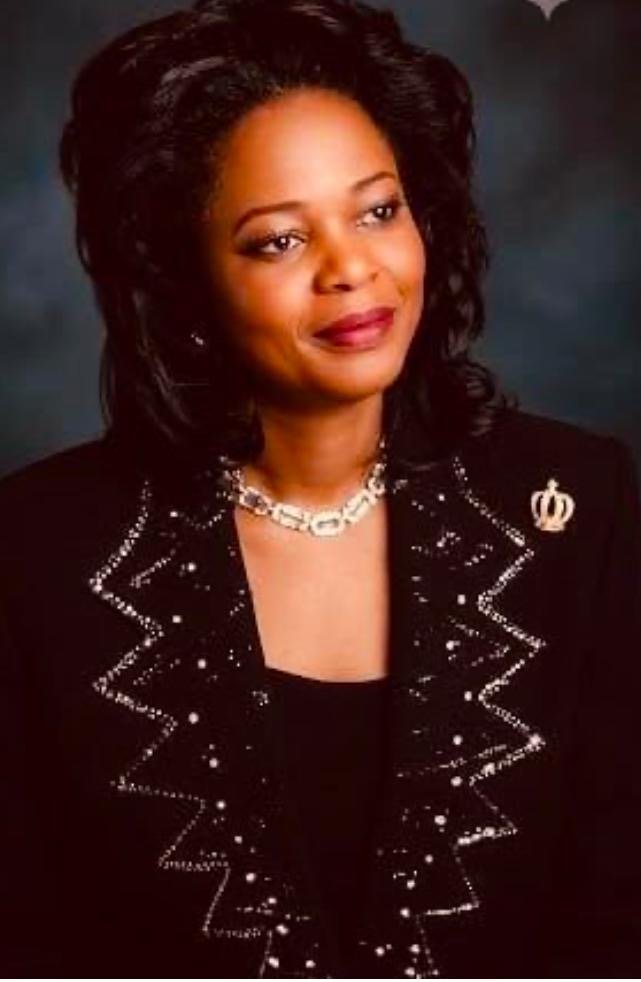
The endorsement of Prof. Akasoba Duke-Abiola by the African Policy and Research Consortium (APRC) for consideration as a candidate for United Nations Secretary-General presents Nigeria with an opportunity for a wider conversation about global leadership.
At its core, the argument for Duke-Abiola’s candidature rests on the breadth of her experience in international law, diplomacy, governance, peace and security, development and public administration.
The APRC, a pan-African policy and research network, has backed her as a potential African candidate to succeed António Guterres, whose second term ends on Dec. 31.
Beyond the endorsement, however, the more important question is whether Nigeria should consider formally putting forward a candidate with the profile and experience required for one of the world’s most demanding diplomatic positions.
Duke-Abiola’s supporters argue that her professional background provides a strong basis for such consideration.
She is a British-trained international lawyer and has worked in government, security, policy and development.
Her experience reportedly includes service as a Director in the Presidency, strategic and legal advisory responsibilities within the Nigeria Police Force, and involvement in peace and conflict resolution.
Equally important is the breadth of her academic and professional interests.
Her work and scholarship span international law, governance, peace and security, sustainable development, human rights, migration, gender equality and community development.
Such a combination, her supporters contend, could be relevant to an organisation confronting interconnected challenges, including armed conflicts, terrorism, forced migration, climate emergencies, inequality and declining confidence in multilateral institutions.
The scale of the challenges facing the next Secretary-General reinforces the importance of such a broad profile.
As of January 2026, UN peacekeeping operations alone involved more than 46,000 uniformed personnel across 11 missions, illustrating the continuing demands placed on the organisation in maintaining international peace and security.
There is also a compelling gender dimension to the argument.
Since the establishment of the UN in 1945, every Secretary-General has been a man.
António Guterres is the ninth person to hold the position, meaning that 80 years after the organisation’s creation, no woman has occupied its highest administrative office.
Consequently, the prospect of appointing the organisation’s first woman to the position has become a prominent issue in discussions around the current selection process.
Against this background, Duke-Abiola’s potential candidature would offer Nigeria and Africa an opportunity to advance both representation and competence in global leadership.
However, the argument should not rest on gender alone.
The stronger case is that Duke-Abiola would be presented first as an international lawyer, governance practitioner, security specialist and development scholar who happens to be a woman.
More importantly, she is an African woman capable of bringing a different perspective to the UN’s highest administrative office.
Her supporters argue that such a distinction is important because appointing a woman should not be treated as an act of concession, but as an expansion of the pool of qualified global leaders.
For Africa, the issue goes beyond the individual candidature.
The continent has long advocated greater representation in international institutions, including the UN Security Council and other key structures of global governance.
The history of the Secretary-General’s office itself provides an important context.
Of the nine substantive Secretaries-General since 1945, two have been Africans; Egypt’s Boutros Boutros-Ghali and Ghana’s Kofi Annan.
Nigeria, as Africa’s most populous country and one of the continent’s major diplomatic and peacekeeping powers, has historically played an influential role in multilateral affairs.
The country has been a major contributor of troops and police to UN peace operations since the 1960s and has served in dozens of missions.
In February 2026, Nigeria had 217 uniformed personnel serving in UN operations, including 171 troops, 21 individual police officers, 14 staff officers and 11 experts on mission.
That record gives Nigeria a credible basis for arguing that its diplomatic and peacekeeping experience should translate into greater influence in global leadership.
Against this background, a Nigerian candidate for the UN Secretary-General position could provide another platform for advancing Africa’s case for greater influence in global decision-making.
Duke-Abiola’s supporters believe her professional experience could enable her to articulate issues affecting both developing and developed countries, while bringing particular attention to the concerns of the Global South.
Her reported proficiency in several Nigerian and international languages could also be an asset in an office where communication, diplomacy and consensus-building are central to the job.
The advocacy for Duke-Abiola comes after the APRC previously urged President Bola Tinubu to consider formally nominating former President Goodluck Jonathan for the position.
Jonathan, however, indicated that he was not interested in contesting for the office.
That development arguably created space for the consortium to identify another Nigerian with the international profile it considers suitable for the position.
In that context, Duke-Abiola’s endorsement represents an attempt to keep Nigeria within the conversation surrounding the succession to Guterres.
There is, however, an important distinction that should not be overlooked.
An endorsement by APRC does not amount to an official nomination for the UN Secretary-General position.
Indeed, the UN’s current selection process provides for Member States to submit nominations, which are then circulated jointly by the Presidents of the General Assembly and Security Council.
Under Article 97 of the UN Charter, the Secretary-General is appointed by the General Assembly upon the recommendation of the Security Council.
The Security Council has 15 members, including five permanent members, while the General Assembly comprises all 193 UN Member States.
For a substantive Security Council decision, at least nine members must vote in favour, with the required concurrence of the permanent members.
The five permanent members; China, France, Russia, the United Kingdom and the United States, therefore retain veto power.
Consequently, the decisive question for Duke-Abiola’s candidature is whether Nigeria, or another UN Member State, is prepared to formally put her name forward and mobilise the diplomatic support required to advance her bid.
The APRC endorsement can therefore provide political and intellectual backing, but cannot substitute for the formal state-level process.
Meanwhile, the race for Guterres’ successor has already moved beyond speculation, with the UN’s formal process listing candidates nominated by Member States.
The current field includes María Fernanda Espinosa of Ecuador, Rafael Mariano Grossi of Argentina, Rebeca Grynspan of Costa Rica, Olara Otunnu of Uganda, Carolyn Rodrigues Birkett of Guyana and Macky Sall of Senegal.
Michelle Bachelet of Chile was also nominated, although Chile withdrew its nomination in March; the UN continues to list her in its selection documentation.
The candidates have already participated in interactive dialogues designed to examine their leadership experience, qualifications, views on UN reform and positions on peace and security, development and human rights.
The presence of such experienced figures underlines the scale of the contest and the diplomatic challenge facing any prospective Nigerian candidate.
For Duke-Abiola, therefore, an endorsement alone would not be sufficient.
Her candidature would require formal sponsorship, sustained diplomatic engagement and the ability to build support across regional and political blocs.
Nevertheless, there is a wider argument for Nigeria to consider.
A successful Nigerian bid would not only elevate an individual candidate; it could reinforce Nigeria’s long-standing ambition to play a larger role in shaping the international system.
For Africa, the candidature could also advance the argument that the continent should be represented at the highest levels of global governance by candidates with the experience and capacity to participate meaningfully in international decision-making.
For women and girls, the emergence of a credible African woman in the race would carry additional symbolic significance, especially in an organisation that has never appointed a woman as Secretary-General.
At the same time, the argument for a woman at the top of the UN is reflected in the organisation’s own leadership debate.
In March 2026, the President of the General Assembly noted that, after 80 years, no woman had served as Secretary-General and argued that the question should be why not.
Ultimately, the case for Duke-Abiola should be assessed on two levels; the strength of her individual credentials and Nigeria’s strategic interest in putting forward a credible African candidate.
It is also an opportunity for Nigeria to strengthen its voice and influence in global multilateral affairs.
The APRC has made its position clear.
The next question is whether Nigeria will consider turning that endorsement into a formal diplomatic initiative.
If it does, Duke-Abiola’s candidature could become more than an individual campaign.
It could form part of Nigeria’s broader effort to strengthen Africa’s voice in the global order.
It could also test the continent’s readiness to put forward a woman for one of the most consequential positions in international affairs. (NAN)
Edited by Tosin Kolade

Comments