


By Moses Kolo
Mr Israel Audu, Executive Director, Kaduna International Film Festival (KADIFF), has urged stakeholders to leverage film to preserve culture, create opportunities and project Nigerian stories globally.
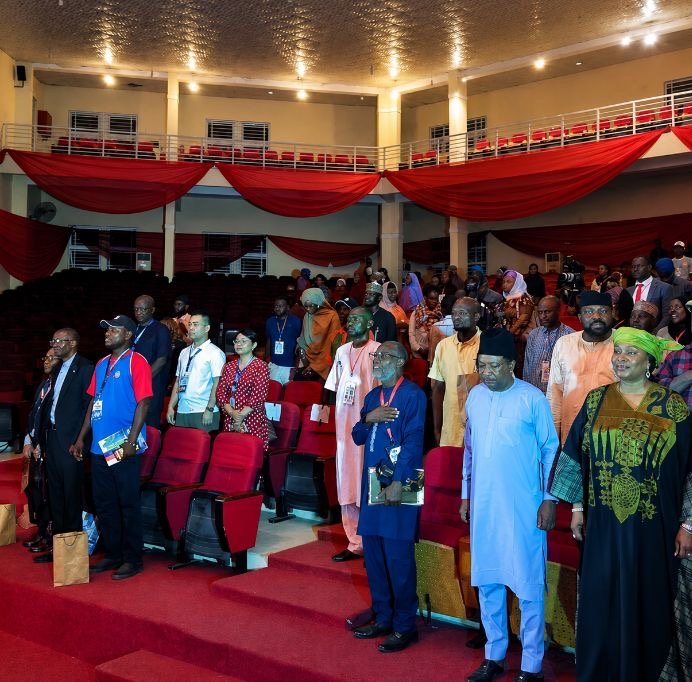
Audu, who is also Vice Chairman, Nigerian Film Festival Association, made the call on Wednesday at the opening of the 9th Kaduna International Film Festival (KADIFF 2026), themed “Cultural Renaissance.”
He noted that film was more than entertainment, describing it as history, culture, education, diplomacy and an instrument of economic and social transformation.
“Film is more than entertainment. Film is history. Film is culture. Film is education.
“Film is an instrument of diplomacy, economic power and social transformation,” he said.
He said the festival had brought together filmmakers, industry professionals, students, cultural institutions, diplomats and audiences from Nigeria, Africa and Europe to screen films, share ideas, build networks and establish partnerships.
He also said KADIFF had grown into a platform for discovering talent, promoting cultural tourism, attracting investment and positioning Northern Nigeria within the global film conversation.
“The true success of a film festival is not only measured by the number of films screened or guests who have attended.
“It is measured by the connections created, opportunities opened and knowledge shared,” Audu said.
Audu revealed that the festival’s jurors had reviewed more than 2,000 films from over 20 countries, while the five-day event would feature screenings, workshops, masterclasses, exhibitions and cultural exchanges.
Prof. Dul Johnson, Dean, Faculty of Arts, Bingham University, who represented the Vice-Chancellor, Prof. Haruna Ayuba, commended KADIFF for sustaining the festival and creating a platform for meaningful engagement between academia and the creative industry.
Johnson said the festival provided an opportunity for stakeholders, particularly young people, to explore the relationship between film, culture, education and national development.
He said the university was interested in initiatives that promoted creativity and encouraged young people to develop skills that could contribute to the growth of Nigeria’s creative economy.
Similarly, Hajiya Nana Tijani, representing the National Gallery of Art, said the festival provided young people and artists with opportunities to showcase their talents, acquire new skills, build networks and access fresh opportunities.
Tijani said collaboration among filmmakers, artists and other creative practitioners would strengthen Nigeria’s economy and cultural bonds.
Mrs Blessing Kwashi, who represented the leadership of the National Film and Video Censors Board (NFVCB), congratulated KADIFF on nine years of consistency.
”It seems like yesterday, and we are counting nine. Congratulations,” Kwashi said, recalling her participation at the inaugural edition of the festival.
She expressed confidence that the festival would provide a valuable platform for meaningful engagement, collaboration and growth within the creative industry.
Former Sen. Shehu Sani commended the organisers for their resilience in promoting film and the arts in Kaduna, saying film was a means of preserving history and projecting Nigerian culture to the world.
“Film is not just art. Film is a preservation of what happened to us in our lifetime,” Sani said.
He urged governments to support filmmakers and other creative practitioners, stressing that the industry had significant potential to generate employment, wealth and cultural influence.
Also speaking, Mrs Patience Fakai, Kaduna State Commissioner for Business and Innovation, who represented Gov. Uba Sani, described culture and stories as economic assets capable of driving tourism, investment, employment and enterprise development.
”Our culture is an economic asset. Our stories are an economic asset,” Fakai said.
She noted that Kaduna’s heritage, festivals, cuisine, music, landscapes and creative talents provided a strong foundation for a thriving creative and tourism economy.
She urged filmmakers to see the state not only as a production location but also as a destination for investment and collaboration, highlighting government efforts in hospitality development and vocational training.
”Every production that comes to Kaduna represents an opportunity to put our people at work and to place our destination before audiences beyond our borders,” Fakai said.
She said more than 4,000 trainees were expected to graduate from the state’s Institute of Vocational Training and Skills Development.
Fakai thereafter declared the 9th Kaduna International Film Festival, themed “Cultural Renaissance” open.(NAN
Edited by Deborah Coker


Comments