




By Linda Ogbonna/Kudirat Habeeb
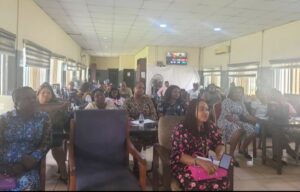
The News Agency of Nigeria (NAN), in partnership with Vethans Diction Consultancy, on Monday trained its editorial staff to improve their diction of spoken English and communication skills.
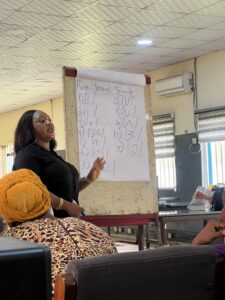
The one-day training held in Lagos, focused on effective speech delivery, correct pronunciation, proper articulation of English sounds and the appropriate use of spoken English in professional communication.
Speaking during the training, the Principal Consultant, Vethans Diction Consultancy, Mrs Loveth Nimkur-Ikilama, said that it was designed to equip journalists with the skills needed to communicate clearly, confidently and effectively through speech.
Nimkur-Ikilama, who facilitated the training, identified mother tongue interference, poor learning environment and inadequate teaching as major factors affecting spoken English among Nigerians.
She explained that English remained a lingua franca for most Nigerians and that indigenous languages could influence the way people pronounced the words.
According to her, the quality of schools attended, the environment where people grow up and the people they interact with can also affect their diction.
“Mother tongue interference is one of the major factors. We are second-language users of English, so the languages we are used to tend to interfere when we speak,” she said.
The consultant explained that good diction involved more than speaking fluently, stressing the need for speakers to understand and correctly produce the sounds that make up English words.
She said that English had 44 speech sounds, comprising of 24 consonant and 20 vowel sounds.
Nimkur-Ikilama noted that some of the sounds could be difficult for Nigerian speakers because they were not found in some indigenous languages.
She demonstrated some of the difficult sounds and words during the training, guiding participants on their correct pronunciation.
The facilitator urged journalists on the need to pay attention to sounds rather than spelling alone.
She also advised journalists to practise speaking English regularly, read books, attend seminars, training programmes and listen to good speakers to improve their diction.
“English is a language, and the more you speak and use it, the more you learn. But when you keep quiet and do not speak, it tends to go away,” Nimkur-Ikilama said.
She also encouraged participants to make use of available learning resources, including the internet and artificial intelligence tools, have role models and mentors whose speeches they could study.
The principal consultant urged journalists to take diction seriously because their profession required them to communicate information clearly to a wide audience.
She also called on schools to strengthen diction, phonics and pronunciation lessons from the foundation level, as early exposure would help children develop better speech habits.
Nimkur-Ikilama advised parents to support their children by providing learning materials and expose them to environments where good English language was spoken.
She further expressed concern over the increasing use of pidgin among students, saying that children were often influenced by the speech patterns of their peers and immediate environment.
Giving his remarks, Mr Kevin Okunzuwa, the Head of Editorial Department, NAN, Lagos Operations, said that the workshop aimed at strengthening participants’ voice projection, public speaking and overall professional communication.
Okunzuwa, a Deputy Editor-in-Chief, said that the workshop, facilitated by Vethans Diction Consultancy, focused on diction and elocution.
He said that the training addressed common pronunciation challenges and introduced practical techniques to improve participants’ confidence in presentations, interviews, news delivery, voice-overs and other professional engagements.
Okunzuwa noted that the workshop focused on another step toward improving the organisation’s professional standards and communication skills.
He described the workshop as highly interactive, expressed participants’ enthusiasm and call for another session. (NAN)
Edited by Florence Onuegbu



Comments