


By Sarafina Christopher
China and Nigeria have reaffirmed their commitment to strengthening cultural diplomacy and people-to-people relations through culinary exchange.
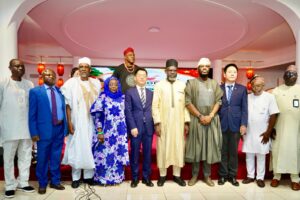
Mr Zhou Hongyou, Chargé d’Affaires of the Chinese Embassy in Nigeria, said this on Thursday in Abuja at the Nigeria-China Food Festival organised to showcase the culinary and cultural heritage of both countries.
Zhou said that the event was more than a celebration of food, adding that it provided opportunity for Nigerians and Chinese to understand and appreciate each other’s cultures through cuisine.
“This is not just a feast for our taste buds, it is also a conversation and a meeting of our cultures,” he said.
Zhou further said that food provides an important window into the geography, culture and lifestyles of a people.
He noted that China’s diverse regions had developed distinct culinary traditions based on their climate, local produce and ways of life.
“Food is really a great window to understand China’s geography, culture and its people.
“We have 14 dishes representing China’s seven major regions, alongside 12 Nigerian dishes representing the country’s six geopolitical zones to experience the tase of each country,”he said.
Zhou added that the festival was significant as Nigeria and China marked the 55th anniversary of their diplomatic relations, established on Feb. 10, 1971.
He said the relationship had continued to expand beyond traditional diplomatic engagement, with both countries deepening cooperation in education, culture, arts, sports and youth affairs.
Zhou also reaffirmed his country’s commitment to working with Nigeria to implement the outcomes of the FOCAC Beijing Summit and the Global Civilisation Initiative.
According to him, both initiatives emphasise the strengthening of people-to-people connections and promoting of shared development.
Nigeria’s Minister of Art, Culture, Tourism and Creative Economy, Hannatu Musawa, said food could serve as a powerful tool for preserving heritage, creating livelihoods and strengthening relations between peoples.
“Food does not merely nourish the body. It tells stories, preserves heritage, creates livelihood and brings people together,” she said.
Musawa was represented by the Permanent Secretary of the ministry, Mr Abdulkarim Ibrahim.
She said that 55 years of Nigeria-China diplomatic relations had evolved into a comprehensive strategic partnership encompassing trade, infrastructure, education, technology, culture and people-to-people exchanges.
Musawa said Nigerian music, food and literature were increasingly gaining audiences in China, while Chinese language, arts, martial arts and other cultural expressions were receiving growing appreciation in Nigeria.
According to her, the ministry recognises the potential of culture, tourism and the creative economy to drive economic growth, create jobs and strengthen Nigeria’s global influence.
The minister said the ministry was working to improve the creative and cultural ecosystem, promote tourism, strengthen investment opportunities and position Nigeria’s rich heritage as an economic asset.
She said festivals such as the Nigeria-China Food Festival also provided platforms for chefs, food entrepreneurs, hospitality businesses and cultural practitioners to exchange knowledge, access new markets and promote Nigeria’s cultural heritage.
He urged both countries to explore new areas of cooperation in gastronomy, tourism, hospitality, culinary education, cultural exchange and creative entrepreneurship.
The Director-General, National Institute for Hospitality and Tourism (NIHOTOUR), Aare Fagade, said the festival demonstrated how culinary heritage could be transformed into cultural and economic opportunities.
Fagade said the event’s theme, “From Farm to Feast,” captured the journey from farmer and producer to chef and consumer, as well as the potential to transform cultural heritage into economic value.
“Today’s celebration is about food, but it is also about culture, friendship and opportunity,” he said.
Fagade said Nigeria possessed an extraordinary culinary heritage, ranging from jollof rice and pounded yam to its diverse soups, spices, grains, seafood and indigenous delicacies.
According to him, Nigeria needs to package, standardise, promote and commercialise its culinary heritage while preserving its authenticity to develop a globally recognised food-tourism industry.
He said partnerships such as the festival could facilitate cultural exchange, knowledge transfer, enterprise development and stronger bilateral relations.
The DG also said that the lasting success of the festival should be reflected in the partnerships it inspired, the businesses it supported, skills it transferred, visitors it attracted and friendships it strengthened.
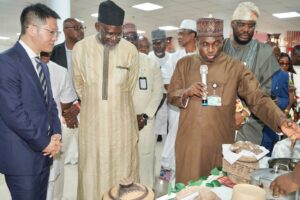
NAN reports that the festival featured culinary displays, music, dance, arts, crafts and cultural exhibitions, providing Nigerians and Chinese an opportunity to experience the traditions of both countries through food.(NAN)
Edited by Mark Longyen

Comments