


By Adeola Akinbobola, News Agency of Nigeria (NAN)
Based on the World Bank data, a newborn in Nigeria will reach only 36 per cent of their future work potential as an adult due to gaps in health and schooling.
Behind that sobering statistic lies a story that began long before a child entered a classroom or the workforce.
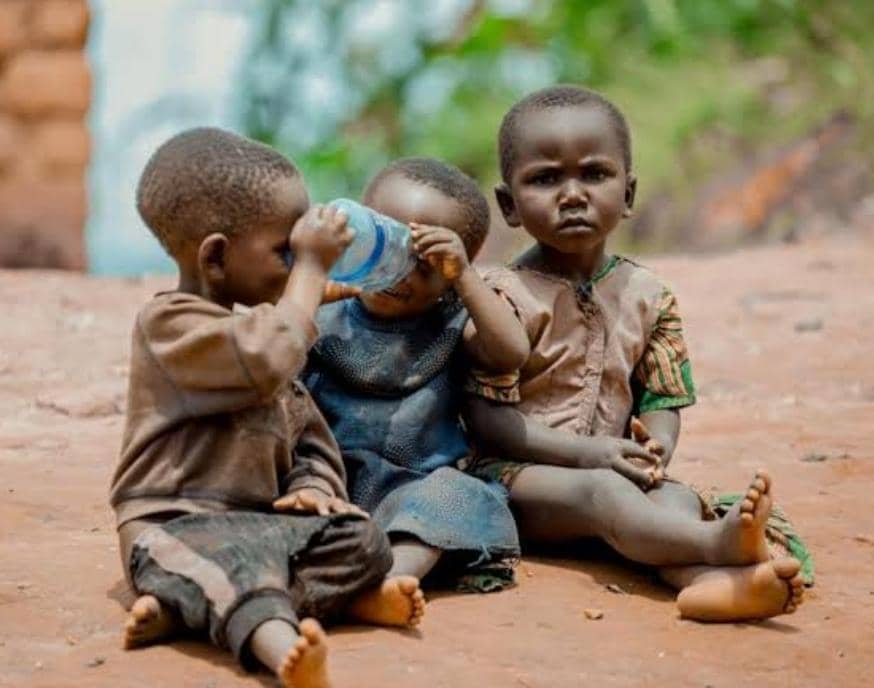
For millions of Nigerian children growing up amid conflict, displacement, climate disasters and deepening poverty, those formative years were marked not by opportunity but by survival.
A new report by the Moving Minds Alliance (MMA) revealed that the greatest challenge may not simply be the scale of the humanitarian crisis, but the fact that these children were virtually invisible in Nigeria’s public financing system.
The report : “Financing Early Childhood Development in Crisis (ECDiC) in Nigeria: From Fiscal Invisibility to Child-Level Results”, recently unveiled at a workshop in Abuja, offered the most detailed examination of how Nigeria finances on early childhood development for children were living in emergencies.
The report regretted that while millions of young children urgently needed support, the Federal Government budget did not specifically recognise them.
The report painted a troubling picture of how nearly 5 million children required life-saving humanitarian assistance.
More than 3 million people had been displaced from their homes; approximately 31 million Nigerian children were under the age of five.
Rates of stunting remained among the highest globally, severe acute malnutrition had surged dramatically, and under-five mortality remained alarmingly high.
In spite these overwhelming needs, Early Childhood Development in Crisis (ECDiC), does not exist as a dedicated budget line at either the federal or state level.
The report analysed these children as “fiscally invisible” a phrase that captured more than an accounting problem.
According to the report, Nigeria’s financing architecture has not evolve to respond adequately to these realities.
Rather than focusing resources around children’s needs, the report identified existing systems, prioritised institutions and administrative structures.
The report also identified that budget implementation remained weak, with approved allocations often released late or only partially disbursed.
Also in the report, public spending remained heavily weighted towards recurrent costs rather than services that directly benefitted children.
Humanitarian financing was also geographically uneven, with the overwhelming majority concentrated in Borno, Adamawa, and Yobe States, leaving vulnerable communities in the North-West and North-Central significantly underserved
Together, these weaknesses created a financing system where even available resources struggled to reach children when they need them most.
The unveiling of the report also marked the formal inauguration of the Nigerian chapter of the Reporters for Early Childhood in Humanitarian Crisis (REACH) network.
Speaking at the event, Interim Director and Co-Chair of Moving Minds Alliance, Dr Katie Murphy, described the report as the first comprehensive assessment of financing gaps affecting early childhood development in humanitarian settings in Nigeria.
She explained that the report gave them a clear picture of where Nigeria’s investment in its youngest children in crisis was falling short and exactly what it would take to close that gap.
In her submission, Mr Arome Agenyi, the Coordinator of the Nigeria Early Childhood Development in Crisis Coalition, said the future of millions of Nigerian children depended on decisions made during their earliest years.
He said behind every successful adult was an early childhood story, adding that the question was not whether children were developing.
The question was whether they were developing to their full potential.
Agenyi said that journalists had a critical role in shaping public policy by highlighting the realities facing young children in crisis-affected communities.
On his part, the Global Co-Chair of the REACH network, Mr Mojeed Alabi, said children living through conflict, displacement and economic hardship often became invisible in public policy because they were invisible in public finance.
Alabi said that when children became fiscally invisible, they risk becoming politically invisible as well.
He said every naira invested in nutrition, health, protection and early learning during a child’s earliest years could generate long-term social and economic benefits through improved education, productivity and reduced healthcare costs.
“When children become fiscally invisible, they also risk becoming politically invisible.
“The unveiling of the REACH network in Nigeria is a commitment by journalists to change that narrative through sustained, evidence-based reporting,” he said.
Mojeed expressed optimism that discussions at the planned Act for Early Years Financing Summit in 2027 would help translate the report’s recommendations into practical reforms.
The unveiling also marked the formal inauguration of the Nigerian chapter of the REACH network.
He said the network would strengthen media coverage of early childhood development and hold governments and development partners accountable for commitments to vulnerable children.
For a country seeking to strengthen its human capital and accelerate development, the report suggested that investing earlier may ultimately prove more effective than spending later to address preventable deficits.(NAN Features)
Edited by Chijioke Okoronkwo
***If used, please credit the writer and the News Agency of Nigeria.


Comments