


By Mubarak Gana
The Civil Society Legislative Advocacy Centre (CISLAC) says the increased taxation on tobacco products without effective administration, transparent revenue collection, monitoring and enforcement will have limited impact.
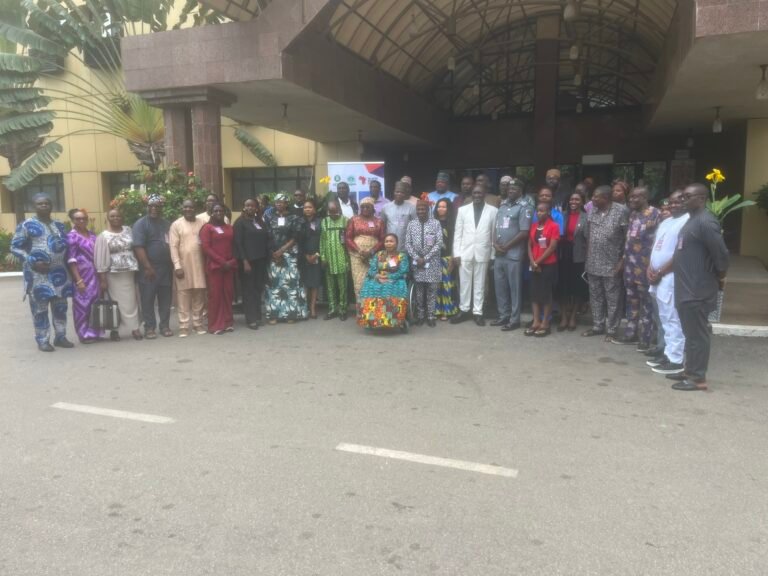
Auwal Rafsanjani, Executive Director, CISLAC, disclosed this at the Second National Tobacco Tax Summit organised by CISLAC in Abuja on Wednesday.
According to him, government must strengthen measures against tax evasion, illicit trade, under-declaration and other abuses in the tobacco sector.
“A strong tobacco tax policy on paper means very little if enforcement is weak, revenue administration is opaque and powerful interests are allowed to undermine implementation.
“Nigeria, therefore, needs more than higher taxes. We need effective administration, transparent revenue collection, strong monitoring, tougher enforcement and credible sanctions against tax evasion, illicit trade, under-declaration and other abuses.
“CISLAC also believes that accountability must be at the heart of tobacco taxation. Nigerians have a right to know how tobacco taxes are designed.
“How much revenue is generated, whether companies are fully complying, what sanctions are imposed when violations occur and how government ensures that public health remains the overriding consideration,” Rafsanjani said.
He said tobacco taxation should be viewed not only as a revenue generator but also as a public health intervention and a tool for protecting citizens.
The CISLAC official said higher taxes could make tobacco products less affordable and help reduce consumption, particularly among children and young people.
Rafsanjani further urged stronger safeguards against undue industry influence in public health policymaking.
He said the success of tobacco tax policy should not be measured only by revenue generated but also by the number of lives protected and diseases prevented.
He called for stronger coordination among the Federal Ministries of Finance and Health, Nigeria Revenue Service, Nigeria Customs Service, National Assembly, regulatory institutions, civil society, researchers and other stakeholders.
On her part, Mrs Sarah Bwala, Assistant Director, Federal Ministry of Finance, said government had launched a new tobacco tax regime covering 2026 to 2028, with progressive increases in specific excise tax rates on tobacco products.
Bwala, who represented the Minister of Finance and Coordinating Minister of the Economy, Mr Taiwo Oyedele, said the new regime represented another step in the government’s efforts to strengthen fiscal policy and achieve public health objectives.
She said Nigeria had, since 2018, operated a mixed excise tax system on tobacco products in line with global best practices and the recommendations of the World Health Organisation Framework Convention on Tobacco Control (WHO-FCTC).
According to her, tobacco taxation remains a critical policy instrument for discouraging the consumption of harmful tobacco products, protecting public health and mobilising sustainable revenue.
“The recent announcement of the new tobacco tax regime covering the period 2026 to 2028, with progressive increment in specific excise tax rates, represents another important step in government’s effort to strengthen the country’s fiscal and public health objectives,” she said.
Bwala said the effective formulation and implementation of tobacco tax policy required continuous consultation, sound empirical evidence and collaboration among relevant stakeholders.
She said the ministry expected deliberations at the summit to provide useful insights into the new regime and its potential impact on tobacco control, government revenue, industry operations and the wider economy.
The ministry, she added, remained committed to fiscal policies that were equitable, efficient and responsive to the developmental needs of the country.
Also speaking, Mr John Thomi, Tax Policy Officer, Tax Justice Network Africa (TJNA), said effective tobacco taxation could help African countries address challenges in financing healthcare and other development priorities.
Thomi, who delivered a goodwill message on behalf of TJNA Executive Director, Chenai Mukumba, said tobacco, sugar-sweetened beverage and alcohol taxes were important tools for supporting public health and domestic resource mobilisation.
He said taxes that effectively reduced the affordability of harmful products could contribute to lower consumption and consequently, reduce the burden of non-communicable diseases and healthcare costs.
Thomi commended Nigeria for introducing the new tobacco tax regime, saying TJNA would continue to support stakeholders in monitoring and evaluating its implementation and impact.
“We hope that as the government rolls out the new recommendations and starts its implementation, we will be able to support, analyse because monitoring and evaluating the proposed policies is very critical and just see what the impact is,” he said.
Also, Comptroller of the Nigeria Customs Service, Abubakar Yunusa, said effective tobacco control required collaboration among government agencies, industry operators and civil society.
Yunusa said tobacco control was not solely about revenue but also about saving lives, protecting young people and ensuring a sustainable future.
He said the Customs Service was committed to supporting a system that protected public health while promoting predictability, fairness and trust for legitimate businesses and investors.
The summit brought together representatives of government agencies, civil society organisations, development partners, researchers, public health experts and other stakeholders to deliberate on tobacco taxation and its implications for public health and revenue mobilisation.(NAN)(www.nannews.ng)
Edited by Francis Onyeukwu



Comments