


By Sarafina Christopher
The United Nations has admonished Nigerian youths to actively promote peace and counter factors capable of escalating tensions as the country approaches the 2027 general elections.
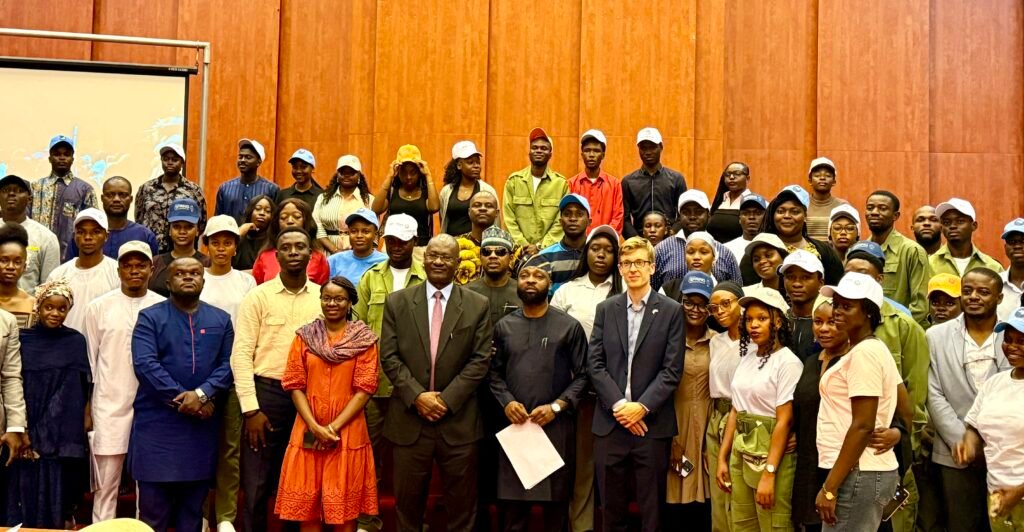
Ms Grace Kpohazounde, Peace and Development Adviser, UN Resident Coordinator’s Office, gave the charge on Thursday in Abuja at the opening of a two-day training programme for National Youth Service Corps (NYSC) members, SIWES participants, interns and volunteers.
The training, organised under the Renewed Hope Agenda for Young Peacebuilders, seeks to equip young Nigerians with skills to identify, prevent, manage and transform conflicts for sustainable peace and national development.
Kpohazounde warned that the election period could heighten tensions, with youths particularly vulnerable to manipulation into activities capable of undermining peace.
She urged the participants to make it their responsibility to address signs of conflict, including exclusion, injustice and hate speech, whether encountered physically or online.
“In a few months, we’re going to have elections in Nigeria. We’re already doing the campaign period. And I know that this is a period of heightened tension,” she said.
The UN adviser called on the youths to use the knowledge and skills acquired during the two-day training to contribute to peacebuilding efforts in their communities.
She said the attitude young people adopted towards situations capable of generating conflict could determine whether such tensions escalated or were resolved peacefully.
“Wherever you see injustice, you have to be able to speak up.
“Wherever you see that there are exclusions, you have to be able to say, even though I am young, I have a word to say, I need a seat at the table,” Kpohazounde said.
She also urged young Nigerians to regard peacebuilding as a long-term commitment rather than an avenue for quick financial gains.
According to her, the UN is working with several Nigerian institutions, including IPCR, as well as ministries at national and state levels, to support peacebuilding initiatives across the country.
Earlier, the Director-General of IPCR, Dr Joseph Ochogwu, said the training was designed to empower young Nigerians with the knowledge, skills and values required to identify, prevent, manage and transform conflicts.
Ochogwu said young Nigerians should not be viewed merely as beneficiaries of peacebuilding programmes but as partners, leaders and drivers of peacebuilding efforts.
He said Nigeria’s ethnic, religious, linguistic and cultural diversity remained a major strength but could become a source of tension when poorly managed.
“Peace is not simply the absence of war. Peace is the presence of justice. Peace is the presence of dialogue. Peace is respect for human dignity,” Ochogwu said.
He urged the participants to take the lessons from the training beyond the classroom and apply them in their communities, workplaces, schools, places of primary assignment, homes and social networks.
Ochogwu also cautioned youths against spreading rumours, misinformation and hate speech, noting that responsible communication could help prevent tensions from escalating.
“When you hear a rumour capable of provoking violence, do not become part of its distribution. Verify,” he said.
He also urged young Nigerians to use their digital platforms to promote tolerance, challenge falsehoods and strengthen national unity.
He said peacebuilding skills had become essential life skills as political disagreements, community grievances and misinformation could quickly escalate through social media.
Ochogwu also linked peacebuilding with national development, saying sustainable development could not thrive where communities lived in constant fear.
“There can be no sustainable development where communities live in constant fear. There can be no meaningful investment where violence destroys businesses and infrastructure,” he said.
Also speaking, Dr David Rinnert, Senior Conflict Adviser, British High Commission, urged young peacebuilders to adopt three principles of leadership: understanding issues before acting, creating and communicating a clear vision, and delivering consistently.
Rinnert said peacebuilders must first understand the evidence, people and circumstances surrounding a conflict before attempting to provide solutions.
He stressed the importance of working with others to address complex peace and conflict challenges.
“There’s no silver bullet. For me, it’s really those three things: understand deeply, create and communicate a clear vision, deliver consistently, work with others,” he said.
The Minister of State for Foreign Affairs, Amb. Sola Enikanolaiye, represented by Amb. Muyiwa Aiyedun, said peacebuilding remains critical to national unity and economic development.
He urged the young participants to contribute to preventing violence, strengthening social cohesion and promoting national development.(NAN)
Edited by Mark Longyen
Comments