


By Folasade Akpan
Dr Kunle Kakanfo, the Founder and Chief Executive Officer, Africa Hub for Innovation and Development (AHFID), says Artificial Intelligence (AI) can reduce out-of-pocket health spending by improving access and efficiency.
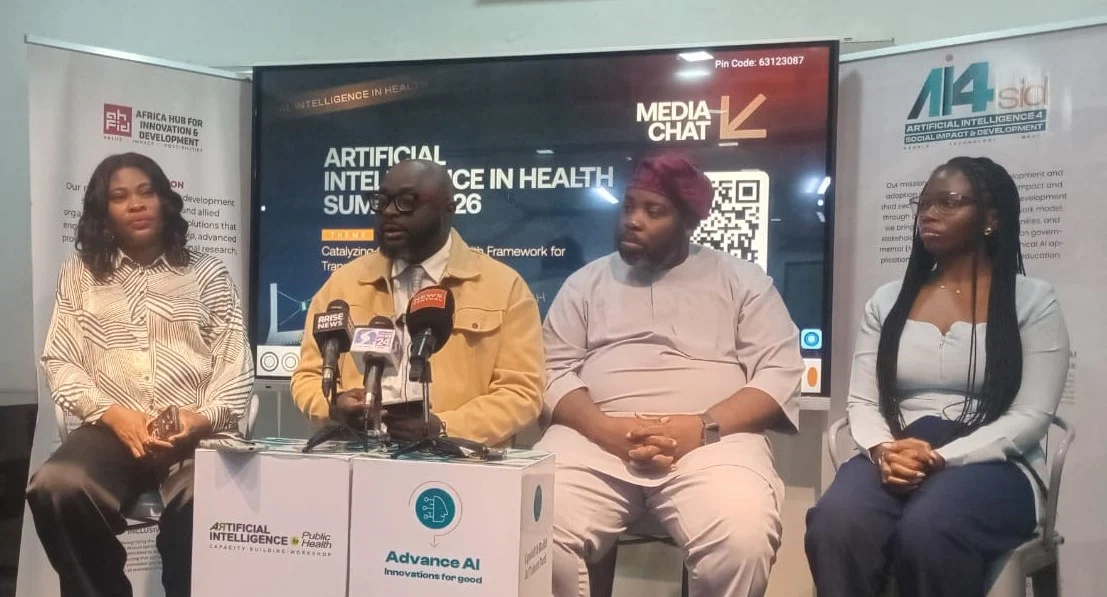
Kakanfo said this at a media conference organised by AHFID in Abuja ahead of the Artificial Intelligence in Health Summit scheduled for Oct. 19 and Oct. 20.
He said faster processing of health insurance claims could enable Health Maintenance Organisations (HMOs) to expand coverage, while AI-assisted documentation could increase the number of patients seen at primary health care centres.
“Access to healthcare is more important than the money that we spend in healthcare,” Kakanfo said.
He said more than 70 per cent of Nigerians still paid for healthcare out-of-pocket, meaning about seven in every 10 people financed their healthcare directly.
He said AI could help reduce such expenditure by automating claims verification, which could enable HMOs to recover payments faster and consequently expand services.
Kakanfo said AI-supported ambient documentation could also enable doctors at primary health care centres to increase their patient load from about 40 to 60 people.
He said this could improve access to services that might otherwise force patients to seek care at private facilities and pay out-of-pocket.
He said AI could help address Nigeria’s health workforce challenges, noting that the World Health Organization still put the country at about 3.8 doctors per 1,000 people.
Kakanfo said a 15-year cohort study showed that although medical schools continued to graduate doctors, many subsequently emigrated from the country.
“Every claim that we have made and that is being made about AI has to also be measured not just on the basis of the hype of AI.
“It is to be on the basis of the fact, is it able to move our indices forward, and is it able to improve health outcomes for the people?”
The AHFID chief executive said AI was already being used by doctors, citing a study indicating that more than 70 per cent of doctors used ChatGPT to support consultations.
He, however, emphasised the need for governance, safety measures and human oversight, saying AI should augment healthcare workers rather than replace them.
“A tool that reads X-ray does not staff the hospital. A tool that reads X-ray still needs a human in the loop,” Kakanfo said.
He said government should streamline the production and development of AI tools and ensure that patient safety remained central to their design and deployment.
Kakanfo said AI tools deployed on Nigerian patients must undergo evidence-based scrutiny, safety checks, validation and proper regulation before use.
He said locally generated data was also needed to train AI models that could respond more accurately to Nigeria’s health needs.
Kakanfo said AHFID had begun collecting cough sounds in hospitals within the Federal Capital Territory to develop locally trained models for tuberculosis detection.
He said more than 30 AI innovations were received following a two-week call, with between 12 and 15 selected to showcase their solutions at the summit.
Kakanfo said one locally trained cervical cancer screening tool could analyse images of a woman’s cervix, reporting an estimated 80 per cent accuracy compared with 30 per cent for a trained clinician’s eye.
He said the summit would therefore bring innovation, regulation and governance together, with discussions on data sovereignty, procurement, validation, safety and locally developed AI models.
Dr Abiola Oshunniyi, the Senior Technical Adviser to the Director-General, Nigeria Centre for Disease Control and Prevention (NCDC), said Nigeria needed to domesticate AI for healthcare rather than wait for other countries.
Oshunniyi said AI components should be incorporated into the e-health Bill before the National Assembly and that outcomes from the summit could feed into deliberations at the National Council on Health (NCH).
“How do we bring memos to the NCH as an output of this conference that can then become a national resolution and create a national roadmap?” he asked.
He said Nigeria also needed pathways for government and partners to adopt and scale locally developed health technology solutions that met international standards.
Ms Liss Yori, Technology Law Counsel, AHFID/AI4SID and Coordinator, AI in Health Summit, said patient needs must remain central to the deployment of AI in healthcare.
Yori said responsible use required protection of patients’ data and safeguards against AI applications that could misrepresent patients or provide unsafe healthcare information.
She said the summit would help drive conversations around ethical AI use and ensure that health applications were developed and deployed responsibly.
The News Agency of Nigeria (NAN) reports that the AI in Health Summit will bring together health, technology, regulatory, government, development and private-sector stakeholders to discuss the use of AI in improving healthcare delivery in Nigeria.(NAN)
Edited by Abiemwense Moru



Comments