


By Franca Ofili
The Federal Government has allocated funds for the establishment of a state-of-the-art 3D prosthetics training centre at the Medical Rehabilitation Therapists Board (MRTB) in Abuja.
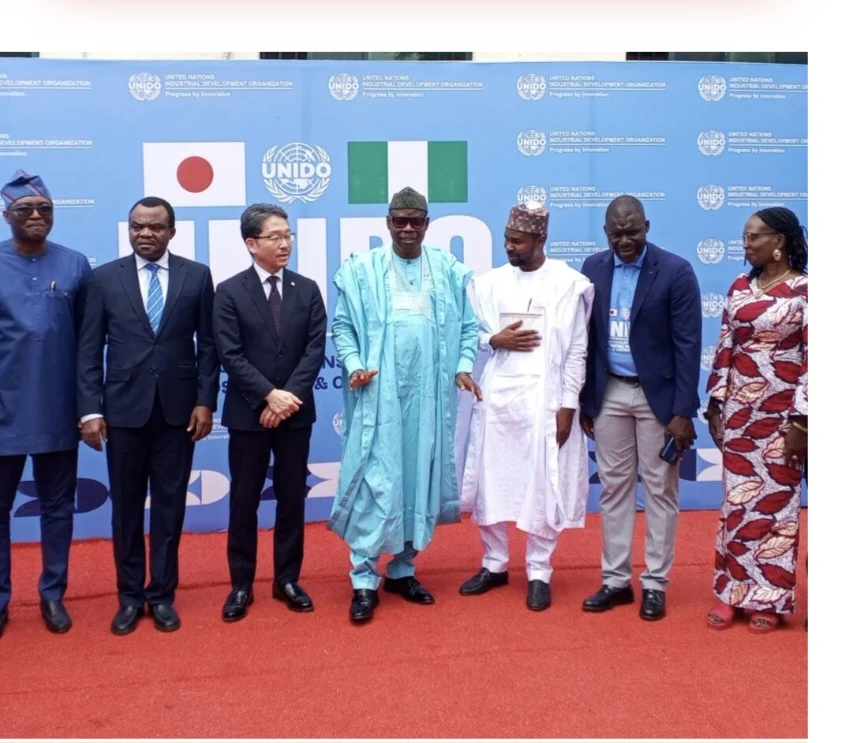
The Minister of State for Health and Social Welfare, Dr Iziaq Salako, disclosed this on Thursday in Abuja at the 3D-Printed Prosthetics Technology Showcase, saying the centre would support training, technology transfer and professional development.
Salako said the initiative was part of efforts to modernise prosthetics and orthotics services, improve rehabilitation outcomes and expand access to assistive technology.
He said the United Nations Industrial Development Organisation (UNIDO) project, funded by the Government of Japan, demonstrated how international partnerships and technology transfer could address critical rehabilitation needs, particularly for landmine victims and other amputees.
The minister said the equipment supplied under the project included 3D printers, scanners, testing devices, replacement components and specialised printing consumables.
Salako said people requiring prostheses often faced high costs, long distances to treatment centres, shortages of skilled professionals and lengthy production periods, barriers which could affect their mobility, education, employment and participation in community life.
He said the digital workflow involving scanning, computer-aided design and 3D printing could improve design consistency, shorten production timelines and potentially reduce costs, while enabling professionals to respond more effectively to individual patient needs.
He, however, stressed that technology must remain patient-centred and complement, rather than replace professional assessment, appropriate fitting, patient education, follow-up, maintenance and other comprehensive rehabilitation services.
The Registrar, MRTB, Prof. Rufai Ahmad, said the adoption of 3D-printed prosthetics technology would strengthen rehabilitation services, build local technical capacity and improve access to quality prosthetic care.
Ahmad said the showcase represented an important step in implementing the UNIDO project and provided an opportunity for technology transfer, professional training and institutional development in Nigeria.
He said the technology used digital scanning, computer-aided design and 3D printing to support the design and production of prosthetic devices, with the potential to improve efficiency, reduce production costs and shorten delivery timelines.
The registrar said MRTB would work with relevant institutions and stakeholders to promote professional compliance and develop a competent workforce capable of using the technology safely and effectively.
Ahmad said sustainability would require continuous training, equipment maintenance, replacement parts, printing consumables, technical support, adequate resources and reliable partnerships.
He urged stakeholders to ensure that the benefits of the initiative reached people affected by landmines and other injuries, as well as Nigerians requiring prosthetic and orthotic services.
The registrar called for rehabilitation services to be accessible, affordable, appropriate and respectful, urging the involvement of persons with disabilities, service users and their families in decisions concerning service improvement.
Ahmad said the Board would continue to support professional development and ensure that practitioners were adequately equipped to meet emerging demands in digital prosthetics technology.
He said the initiative would also provide opportunities for Nigerian rehabilitation professionals to acquire practical skills in digital scanning, computer-aided design, 3D printing and fitting of prosthetic devices.
Ahmad said stronger collaboration among regulatory bodies, training institutions, healthcare facilities, technology providers and development partners would be required to sustain the gains of the project.
He stressed that effective regulation and professional standards would be critical to ensuring that 3D-printed prosthetics were safely and appropriately integrated into clinical practice.
Mr Philbert Johnson, UNIDO Regional Director and Representative in Nigeria, said the technology transferred from Japan was improving access to faster, more precise and affordable artificial limbs for amputees.
Johnson said 700 applicants, comprising 400 amputees in Maiduguri and 300 in Kano, were recorded within two weeks of mobilisation, reflecting significant demand for prosthetic services.
According to him, 200 amputees were selected to receive prostheses, with 30 already receiving artificial limbs during the training phase, while the remaining 170 were being processed.
He said 20 Nigerian prosthetists and orthotists had been selected for a Training of Trainers programme delivered by Japanese experts in collaboration with Instalimb and the Nigerian Government through the MRTB.
Johnson said the University of Maiduguri Teaching Hospital and National Orthopaedic Hospital, Kano, had been equipped with the technology, while the Federal University of Technology, Owerri, would train 500 prosthetists and orthotists annually on digital equipment.
He said the MRTB would serve as a hub for continuing professional development, regulation and national standards, adding that more than 1,000 professionals were awaiting training.
Johnson said the project had two major pillars: providing quality prostheses through seven partners across northern and southern Nigeria and developing the wider prosthetics ecosystem through private-sector participation, curricula, standards and continuing professional development.
He urged Nigerian trainees to take ownership of the technology and called for investment in local supply chains, materials and services to expand the prosthetics model across Nigeria and other African countries.(NAN)
Edited by Folasade Akpan

Comments