


Connecting the labyrinth of roads to national development in Kogi
By Ismail Abdulaziz, News Agency of Nigeria (NAN)
Aliyu Haruna, a 15-year-old indigene of Ankpa in Kogi, remembers a time when navigation through his neighborhood was an everyday hazard.
”As of the beginning of this year, two motorcycles could not simultaneously pass the 24-kilometer stretch of the road.
“Since I was born, it has been like that. But now, with the erosion control measures in place in the Adejoh area, all the people who abandoned their houses are coming back,” Haruna said.
What Haruna witnessed is a piece of a larger infrastructure puzzle currently reshaping Kogi.
Across the state, a deliberate synergy between the Federal and Kogi State Government is turning ecological threats into agricultural corridors and converting dilapidated transit routes into drivers of socio-economic growth.
Speaking at the Adejoh project site, Joseph Oluwasegun, Kogi State Commissioner for Environment and Ecological Management, described the road network as a legacy project executed through the Agro-Climatic Resilience in Semi-Arid Landscape (ACReSAL)—a World Bank counterpart-funding initiative.
Oluwasegun, who also chairs the state ACReSAL committee, explained that the intervention encompasses land reclamation, soil stabilisation, and channelisation.
”The project is a strategic intervention to reclaim degraded environments, control erosion, and free up more land for agriculture and other economic purposes, thereby enhancing food sufficiency,” Oluwasegun said.
He commended Gov. Usman Ododo for prioritising counterpart funds, noting that World Bank funding is contingent on state contributions for compensation and ancillaries.
Beyond physical infrastructure, the initiative incorporates a micro-loan component that has disbursed over 2 million dollars to local cooperative groups, significantly boosting rural livelihoods and mitigating poverty.
Echoing this sentiment, the Chairman of Ankpa Local Government Council, Ademu Yahaya, said the project is the largest and most impactful government intervention in the history of the local government area.
Similarly, Elder Yahaya Samuel, Secretary of the Olubojo Community, noted that the intervention has relieved residents of decades of economic losses caused by severe gully erosion and broken roadways.
These testimonies were captured during an inspection tour led by the Presidential Media Team under the auspices of the Presidential Communications Team.
Sunday Dare, Special Adviser to the President on Media and Public Communications, who led the delegation, emphasised that developmental strides across the state demonstrate that “the hopes of Nigerians are being renewed.”
The inspection tour covered a wide array of vital state and federal projects, including: Road Infrastructure: Inspection of the ongoing dualization of the Lokoja–Benin Federal Highway (Section I – Phase One) using continuously reinforced concrete pavement, the reconstruction of the Kabba–Egbe–Omuo–Ilorin Road, a 15-kilometer asphalted internal road network with drainage, and rural road networks in Okene.
Healthcare Expansion: Assessment of the Federal Teaching Hospital in Lokoja and the Confluence University of Science and Technology (CUSTECH) Teaching Hospital in Okene, equipped with modern diagnostic facilities including MRI systems, CT scanners, hyperbaric oxygen chambers, and dedicated power generators.
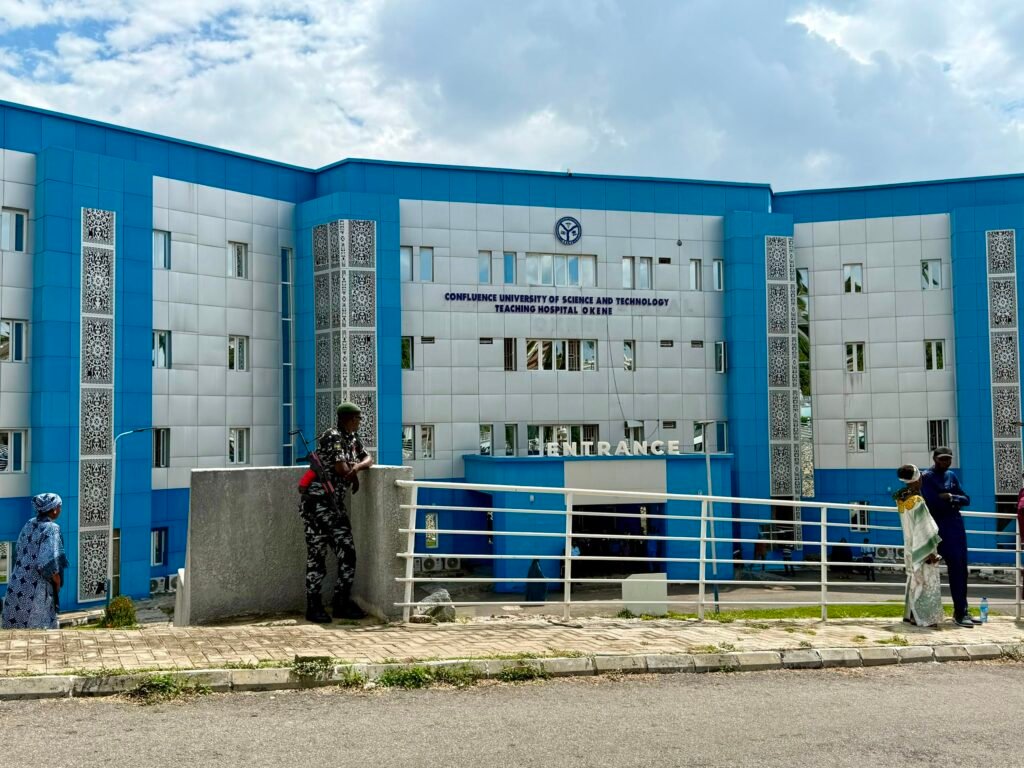
Commerce & Education: Inspection of the Lokoja International Market (currently at 50 per cent completion on a 16-hectare site) and the newly commissioned GYB Model Science Secondary School, Nagazi—a state-of-the-art STEM facility housing 18 modern classrooms, advanced laboratories, and a 326-seat CBT centre serving over 1,700 students.
A major highlight of the tour was the visit to the Barefoot Renewable Energy College and the Green Hydrogen Research & Demonstration Pilot Plant at CUSTECH, Osara.
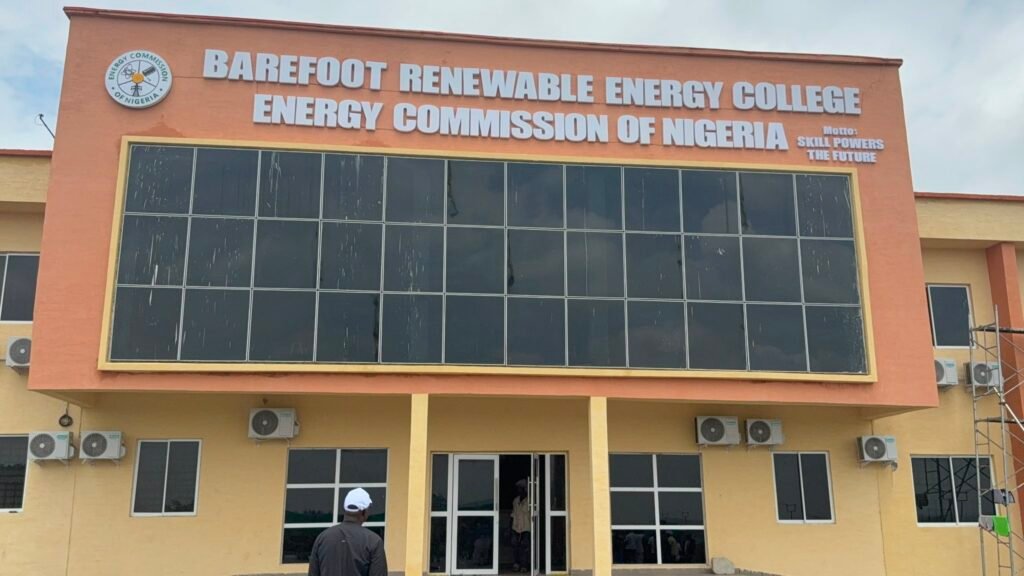
Established by the Energy Commission of Nigeria (ECN), these institutions position Kogi at the forefront of Nigeria’s clean energy transition.
Abdullahi Yakassai, Special Assistant to the President on Community Engagement, noted that the Barefoot College focuses on building a skilled local workforce capable of installing and maintaining solar, mini-grid, and energy-storage systems tailored for rural access.
Also, O’tega Ogra, Senior Special Assistant to the President on Digital and New Media, highlighted that the Green Hydrogen Plant will serve as a hub for research into clean fuel production, aligning Nigeria with the global green economy while reducing industrial carbon emissions.
Dare summed up the impact of the facilities, stating:
”These two facilities reaffirm the Federal Government’s resolve to diversify Nigeria’s energy mix, strengthen indigenous technological capabilities, support climate-resilient development, and prepare a new generation of professionals.”
Roads remain the central economic arteries of Nigeria, carrying over 90 per cent of all internal freight and passenger movement.
By linking farms to urban markets, reducing transit overheads, and unlocking access to critical health and educational services, strategic road networks serve as primary catalysts for poverty reduction.
As both the Kogi State Government and the Federal Government continue to expand rural and urban transportation networks, the residents of the Confluence State are beginning to reap the tangible dividends of governance, charting a clearer path toward sustainable national development.(NAN)
If used, please credit the writer and the News Agency of Nigeria (NAN)
***If used, please credit the writer and the News Agency of Nigeria (NAN).

Comments