



by Angela Atabo
The Federation of Construction Industry (FOCI) says Nigeria’s construction sector has lost about 41,000 workers in the last two years, seeking urgent intervention to prevent further decline.
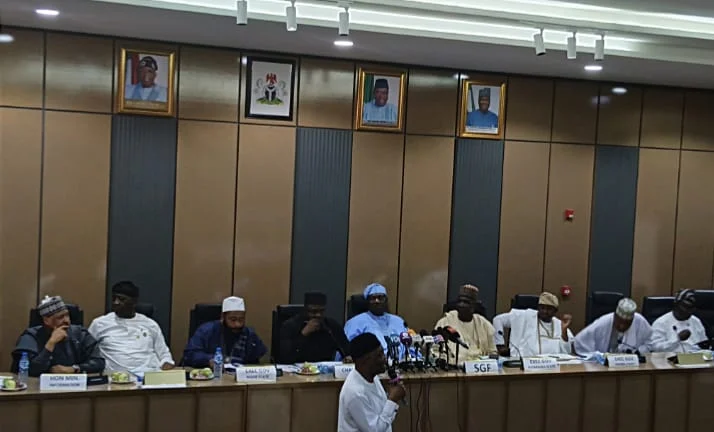
FOCI President and Chairman of Council, High Chief Vincent Barrah, said this at the federation’s 70th Annual General Meeting (AGM), in Abuja on Wednesday.
Barrah said the construction industry, in spite of its strategic importance to Nigeria’s economy, was experiencing significant slowdown due to inadequate funding, delayed payments and rising costs.
He also cited high interest rates, foreign exchange fluctuations and increasing prices of construction materials among factors affecting contractors’ operations and project implementation across the country.
According to him, many FOCI members handling government projects were currently unable to work, while those operating were doing so at very low capacity.
He attributed the situation largely to non-payment for certified jobs, saying the disparity between annual budget provisions and actual cash releases had worsened contractors’ challenges.
Barrah said delayed payments had resulted in accumulation of certified debts, suspension of projects, reduced construction activities and significant losses in employment across the country.

“Many infrastructure projects are awarded without multi-year funding, resulting in delayed payments, accumulation of certified debts, reduced construction activities, and in some cases, suspension of projects.
“Most of our members handling various projects are not working as we speak, and those working are operating at a very low capacity due to non-payment of certified jobs.
“It is on record that our members suffered arbitrary termination of contracts by the Ministry of Works.
“Although the termination of those contracts were done by mutual consent, it was mainly due to inadequate funding that delayed execution of those projects.”
Barrah explained that contractors could not be expected to continue working without the necessary funds from employers because infrastructure projects were capital intensive.
He said constant funding was necessary for contracts to be completed within schedule, adding that delays, suspensions or abandonment of projects were not contractors’ fault.
“So if projects are delayed, suspended, or even abandoned, it is not the fault of contractors.
“More so, determination, suspension, or delayed payment of our member contracts has resulted in significant loss of employment across the country, thereby increasing the unemployment rate in the society.
“Situational reports from our unions show that about 1,000 workers in the senior staff category and 40,000 workers in the junior staff category lost their jobs within the period under review.
“Imagine the consequences and the multiplier effect. To their families, the market women, and the economy at large.”
On contract administration, Barrah called for strict compliance with standard conditions of contracts, saying proposed changes should involve relevant professional bodies and government institutions.
He also urged authorities to ensure contract prices reflected prevailing economic conditions, noting that inflation and foreign exchange fluctuations had increased construction costs significantly.
Barrah listed cement, steel, bitumen, diesel, equipment and spare parts among construction inputs whose prices had risen significantly, making project execution increasingly difficult for contractors.
He said prolonged delays in approving contract variations could force contractors to execute projects at rates substantially below prevailing market prices, resulting in financial losses.
The FOCI president emphasised that contract pricing should consider material costs, labour, geographical location and soil conditions, noting that each construction project had unique requirements.
He further identified delayed certification and payment as major factors affecting contractors’ liquidity, saying lengthy administrative processes placed pressure on working capital.
According to him, contractors were often compelled to finance substantial portions of projects while awaiting payment, thereby incurring additional financing costs and weakening their operations.
Barrah also expressed concern over the high cost of borrowing, particularly for indigenous construction companies seeking financing to execute projects and sustain their operations.
He said lending rates in the banking sector remained high, ranging from about 20 per cent to 46 per cent, making affordable financing increasingly difficult for contractors.
According to him, FOCI, incorporated in 1954, represents companies and stakeholders in Nigeria’s construction industry and promotes industrial harmony and regulation within the sector.
Barrah said the construction industry was the second-largest employer of labour in Nigeria after government, employing millions directly and indirectly while contributing significantly to Gross Domestic Product (GDP).
He said Nigeria’s infrastructure deficit presented significant opportunities for the industry, but translating increased capital budgets into completed projects required effective funding and prioritisation.
He also emphasised the need for payment discipline and sound contract administration to ensure that infrastructure projects were delivered within agreed timelines and at sustainable costs.
“We, therefore, use this medium to call on all relevant stakeholders to intervene urgently in this dire situation to save the construction industry from total collapse,” he said.(NAN)
Edited by Abiemwense Moru


Comments