


By Justina Auta
Stakeholders have called on the National Assembly and state governments to accelerate legislative and policy reforms to strengthen sustainable domestic health financing and reduce Nigeria’s dependence on donor support.
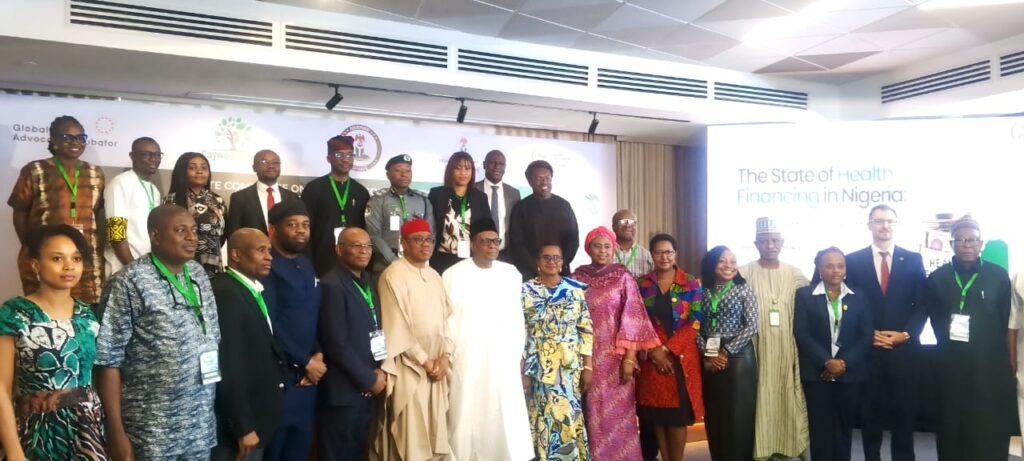
The call was made in Abuja during the National Convergence on Sustainable Health Financing, organised by the Senate Committee on Health in collaboration with the Caywood Brown Foundation and other partners.
The stakeholders urged the speedy passage of pending health financing bills, increased investment in the Basic Health Care Provision Fund (BHCPF), expansion of the Sugar-Sweetened Beverage (SSB) levy, and domestication of health financing reforms across the states.
The Coordinating Minister of Health and Social Welfare, Prof. Muhammad Pate, said Nigeria had reached a critical moment when political will, legislative backing and stakeholder collaboration could transform the country’s health sector.
Pate emphasised that sustainable healthcare required deliberate investment by governments at all levels.
“Health is not cheap. If you want quality healthcare, society must choose to pay for it.
“When we spent less than 20 dollars per capita for decades, it reflected the choices we made as a nation. We cannot expect world-class healthcare with token investments,” he said.
He said the government was pursuing reforms to maximise available resources while improving efficiency and accountability.
Pate urged lawmakers to pass the proposed health financing reforms, while calling on state legislatures to domesticate similar laws.
The minister said only a few states had provided counterpart funding for the BHCPF in recent years, urging governors to fulfil their commitments.
He also advocated increased investment in primary healthcare, strategic purchasing through the National Health Insurance Authority (NHIA), local manufacturing of health commodities and stronger epidemic preparedness.
According to him, efficient allocation of resources and greater domestic ownership were essential to building a resilient and sustainable health system.
Chairman of the Senate Committee on Health, Sen. Ipalibo Harry-Banigo, said the proposed reforms would establish a more predictable and domestically funded health financing architecture.
Harry-Banigo, sponsor of Senate Bills 713 and 886, said Nigeria must progressively rely on domestic resources to finance healthcare, while development assistance complemented national investments.
She said the growing burden of non-communicable diseases, including hypertension and diabetes, underscored the need to invest more in prevention.
Chairman of the House Committee on Healthcare Services, Rep. Amos Magaji, said universal health coverage could not be financed through temporary measures.
“We need sustainable resources, strong institutions and accountability.
“The Basic Health Care Provision Fund must become a reliable instrument for strengthening primary healthcare and protecting our poorest and most vulnerable citizens,” he said.
Magaji said legislators would continue to provide the legal framework and oversight needed to ensure healthcare services reached Nigerians.
Dr Jide Idris, Director-General of the Nigeria Centre for Disease Control and Prevention (NCDC), called for a shift from service-based healthcare financing to prevention-focused investments.
Similarly, the Director-General of the NHIA, Dr Kelechi Ohiri, said legislative support remained critical to achieving sustainable financing for universal health coverage.
Ohiri said the convergence built on the momentum generated by the National Health Financing Dialogue 2025 and reflected growing collaboration between the health and finance sectors.
Ms Ibim Banigo, Executive Director of the Caywood Brown Foundation, urged the House of Representatives to quickly concur with the Senate on the pending bills.
She said that, with the 10th National Assembly nearing the end of its legislative tenure, urgent action was needed to conclude the legislative process and secure presidential assent.
Banigo said the convergence sought to mobilise political commitment, technical institutions and development partners to strengthen investments in the BHCPF and SSB levy reforms.
Also speaking, Prof. Emmanuel Alhassan, Country Lead for Health Systems Strengthening at the Global Health Advocacy Incubator, urged the House to expedite concurrence on the bills and the National Assembly to transmit them promptly for presidential assent.
He said proceeds from the SSB tax would provide sustainable funding for tackling non-communicable diseases.
Mr Ademuyiwa Damilola, Director of Programmes at the Legislative Initiative for Sustainable Development (LISDEL), said declining donor funding and economic constraints made domestic health financing imperative.
Damilola said expanding the BHCPF and effectively utilising revenues from the SSB levy would provide sustainable resources to address Nigeria’s growing burden of non-communicable diseases.
He urged the House of Representatives to complement the Senate’s action by passing the bills without delay to enable their implementation.(NAN)
Edited by Abiemwense Moru


Comments